
Red flowers are the perfect way to infuse passion and energy into your outdoor haven. In this guide, we’ll explore a dazzling array of 75 red flowers that can elevate your garden aesthetics. From the classic Red Rose to the exotic Red Beehive Ginger, these blooms add visual appeal and a touch of nature’s artistry to your doorstep.
Imagine a garden adorned with the timeless elegance of Red Roses (Rosa spp.) or the festive charm of Poinsettias (Euphorbia pulcherrima). Each flower tells a unique story through its vibrant hues and distinct features. With its mounding habit, the Zonal Geranium (Pelargonium x horatum) is a showstopper in containers or borders. Meanwhile, the Red Calla Lily (Zantedeschia spp.) graces your garden with its sleek, trumpet-shaped blooms. Others, such as the Red Canna Lily (Canna spp.), thrive in warmer climates, making them perfect for gardens in Mexico or the southern United States.
Red flowers are not just eye candy; they offer practical benefits, too. The Chrysanthemum is not only a showy garden favorite but also a key ingredient in herbal teas. Consider the Red Balloon Flower (Platycodon grandiflorus), a delightful addition to window boxes or containers. These flowers, when strategically placed, invite hummingbirds and butterflies, enhancing the biodiversity of your garden.
Whether your garden receives direct sunlight or is nestled in partial shade, there’s a red flower waiting to bloom and captivate. Here are the best 66 red flowers that you can add to your garden:
-
Red Rose (Rosa spp.)

- Botanical Name: Rosa spp.
- Mature Size: Varied, depending on the cultivar
- Bloom Time: Spring to fall
- Leaf Color: Green
- Flower Color: Red (varies with cultivars)
- Light: Full sun
- Soil Needs: Well-drained, slightly acidic soil
- USDA HardinessZones: 4-9
The Red Rose, belonging to the genus Rosa, is a classic symbol of love and beauty. With a wide range of cultivars, these perennial flowering shrubs exhibit various shades of red blooms. Roses are known for their fragrant flowers and are often used in gardens, bouquets, and floral arrangements. They thrive in full sun and well-drained soil.
-
Poinsettia (Euphorbia pulcherrima)

- Botanical Name: Euphorbia pulcherrima
- Mature Size: 2-10 feet tall
- Bloom Time: Late fall to winter
- Leaf Color: Dark green with red bracts
- Flower Color: Small yellow flowers surrounded by red bracts
- Light: Bright, indirect light
- Soil Needs: Well-draining potting mix
- USDA Hardiness Zones: 9-11
The Poinsettia, scientifically known as Euphorbia pulcherrima, is a popular holiday plant known for its vibrant red bracts. These bracts, often mistaken for flowers, surround the inconspicuous yellow flowers. Poinsettias are commonly used as decorative houseplants during the festive season, requiring bright, indirect light and well-draining soil.
-
Tulip (Tulipa spp.)

- Botanical Name: Tulipa spp.
- Mature Size: 6 inches to 2 feet tall
- Bloom Time: Spring
- Leaf Color: Green
- Flower Color: Various shades of red
- Light: Full sun to part shade
- Soil Needs: Well-drained, fertile soil
- USDA Hardiness Zones: 3-8
Tulips (Tulipa spp.) are bulbous perennials that produce cup-shaped flowers in a wide array of colors, including striking red varieties. Blooming in spring, tulips add vibrant color to gardens and landscapes. These plants prefer full sun to part shade and well-drained, fertile soil. Tulips are a favorite for spring gardens and are often used in floral arrangements.
-
Poppy (Papaver spp.)

- Botanical Name: Papaver spp.
- Mature Size: 1-4 feet tall
- Bloom Time: Late spring to early summer
- Leaf Color: Blue-green
- Flower Color: Various shades of red
- Light: Full sun
- Soil Needs: Well-drained, sandy soil
- USDA Hardiness Zones: 3-9
Poppies (Papaver spp.) are herbaceous plants known for their distinctive, papery flowers in shades of red. Blooming in late spring to early summer, these colorful flowers add a touch of elegance to gardens. Poppies prefer full sun and well-drained, sandy soil. They are often used in ornamental gardening and are symbolic in various cultures.
-
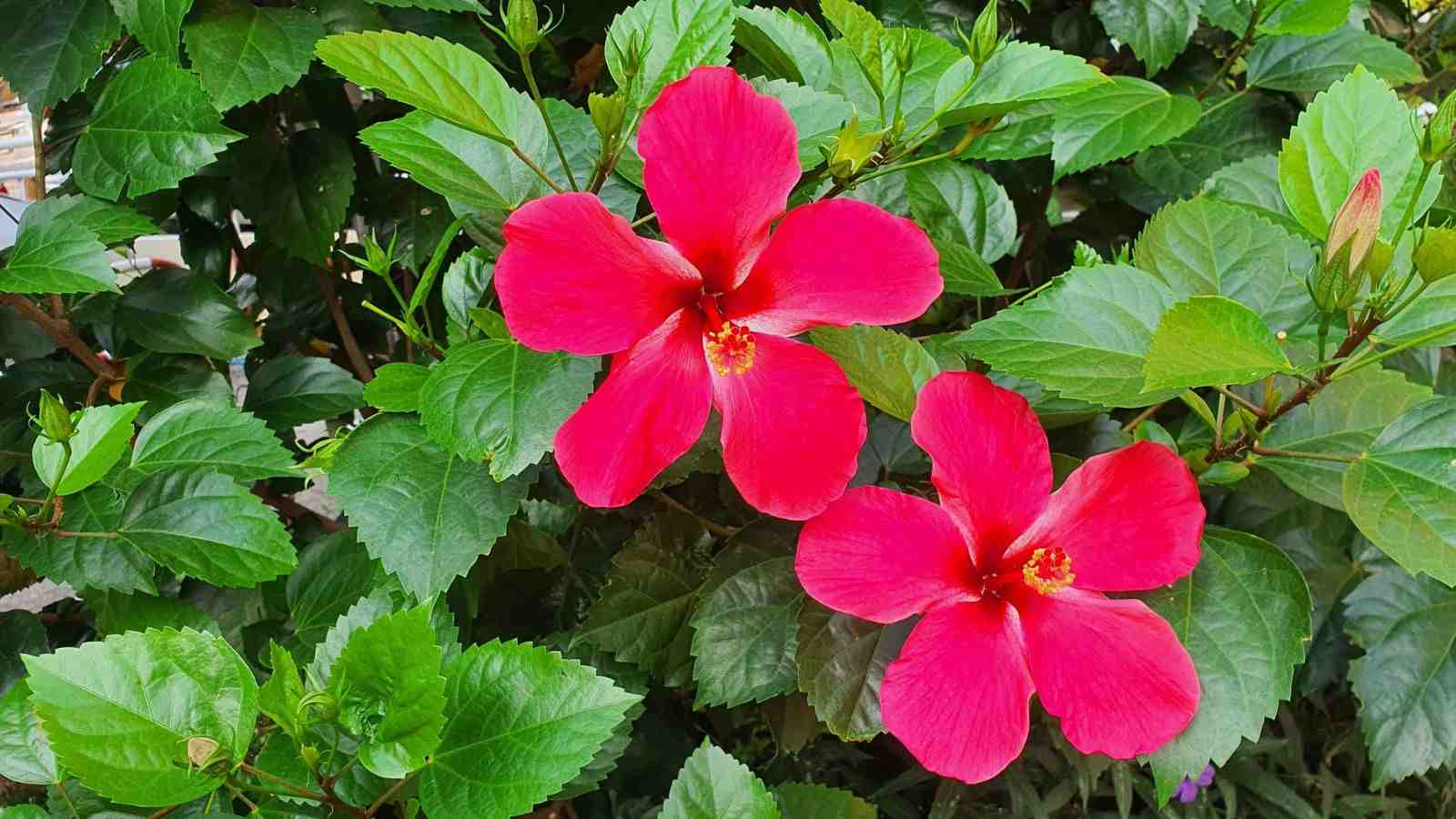
Hibiscus (Hibiscus spp.)
- Botanical Name: Hibiscus spp.
- Mature Size: 3-15 feet tall
- Bloom Time: Summer to fall
- Leaf Color: Green
- Flower Color: Various shades of red
- Light: Full sun
- Soil Needs: Well-drained, moist soil
- USDA Hardiness Zones: 4-11
Hibiscus (Hibiscus spp.) is a diverse genus with many species featuring large, showy flowers in different shades of red. These tropical and hardy shrubs add a tropical flair to gardens, thriving in full sun and well-drained, moist soil. With their vibrant blooms and attractive foliage, hibiscus plants are popular choices for landscaping and potted plants.
-
Zonal Geranium (Pelargonium x horatum)

- Botanical Name: Pelargonium x horatum
- Mature Size: 1-3 feet tall
- Bloom Time: Spring to fall
- Leaf Color: Green with dark zones
- Flower Color: Various shades of red
- Light: Full sun to part shade
- Soil Needs: Well-drained, moderately fertile soil
- USDA Hardiness Zones: 10-11
Zonal Geraniums (Pelargonium x horatum) are popular flowering plants known for their distinctive zoned leaves and clusters of red flowers. These perennials are commonly used in gardens, hanging baskets, and containers. Zonal geraniums prefer full sun to part shade and well-drained, moderately fertile soil. They are valued for their long-lasting blooms and ease of care.
-
Dahlia (Dahlia spp.)

- Botanical Name: Dahlia spp.
- Mature Size: 1-6 feet tall, depending on the variety
- Bloom Time: Summer to fall
- Leaf Color: Green to burgundy
- Flower Color: Various shades of red
- Light: Full sun
- Soil Needs: Well-drained, fertile soil
- USDA Hardiness Zones: 8-11
Dahlias (Dahlia spp.) are tuberous perennials known for their diverse and vibrant blooms, including stunning shades of red. Flowering from summer to fall, dahlias are popular for their use in gardens and floral arrangements. They thrive in full sun and well-drained, fertile soil, making them a favorite among gardeners for their showy and long-lasting flowers.
-
Begonia (Begonia spp.)

- Botanical Name: Begonia spp.
- Mature Size: 6 inches to 2 feet tall
- Bloom Time: Spring to fall
- Leaf Color: Green to bronze
- Flower Color: Various shades of red
- Light: Part shade to full shade
- Soil Needs: Well-drained, moist soil
- USDA Hardiness Zones: 6-11
Begonias (Begonia spp.) are versatile flowering plants that come in various shapes and sizes, with many featuring attractive red blooms. These annuals or perennials are well-suited for shaded areas in gardens, adding color with their vibrant flowers and unique foliage. Begonias prefer part shade to full shade and well-drained, moist soil.
-
Carnation (Dianthus caryophyllus)

- Botanical Name: Dianthus caryophyllus
- Mature Size: 1-3 feet tall
- Bloom Time: Late spring to summer
- Leaf Color: Gray-green
- Flower Color: Red, pink, white, or bi-colored
- Light: Full sun
- Soil Needs: Well-drained, neutral to alkaline soil
- USDA Hardiness Zones: 5-9
Carnations (Dianthus caryophyllus) are classic perennials known for their fragrant, ruffled flowers in various colors, including shades of red. Blooming in late spring to summer, carnations are often used in bouquets and floral arrangements. They prefer full sun and well-drained, neutral to alkaline soil, making them a popular choice for gardens and cut flower production.
-
Amaryllis (Hippeastrum spp.)

- Botanical Name: Hippeastrum spp.
- Mature Size: 1-2 feet tall
- Bloom Time: Late winter to early spring
- Leaf Color: Green
- Flower Color: Various shades of red
- Light: Bright, indirect light
- Soil Needs: Well-drained potting mix
- USDA Hardiness Zones: 9-11
Amaryllis (Hippeastrum spp.) are bulbous plants known for their large, trumpet-shaped flowers in various colors, including striking red varieties. Blooming in late winter to early spring, amaryllis bulbs are often forced indoors for winter blooms. They require bright, indirect light and a well-drained potting mix.
-
Ranunculus (Ranunculus spp.)

- Botanical Name: Ranunculus spp.
- Mature Size: 6-12 inches tall
- Bloom Time: Spring
- Leaf Color: Green
- Flower Color: Various shades of red
- Light: Full sun to part shade
- Soil Needs: Well-drained, fertile soil
- USDA Hardiness Zones: 8-11
Ranunculus (Ranunculus spp.) are cool-season flowers known for their densely layered, rose-like blooms in various colors, including vivid reds. Blooming in spring, ranunculus adds charm to gardens and makes excellent cut flowers. They prefer full sun to part shade and well-drained, fertile soil.
-
Zinnia (Zinnia elegans)

- Botanical Name: Zinnia elegans
- Mature Size: 6 inches to 4 feet tall
- Bloom Time: Summer to fall
- Leaf Color: Green
- Flower Color: Various shades of red
- Light: Full sun
- Soil Needs: Well-drained, fertile soil
- USDA Hardiness Zones: 3-10
Zinnias (Zinnia elegans) are annual flowering plants valued for their profusion of colorful, daisy-like flowers, including vibrant red hues. Blooming from summer to fall, zinnias are easy to grow and attract pollinators to gardens. They thrive in full sun and well-drained, fertile soil, making them popular choices for borders and cutting gardens.
-
Gladiolus (Gladiolus spp.)

- Botanical Name: Gladiolus spp.
- Mature Size: 2-5 feet tall
- Bloom Time: Summer
- Leaf Color: Green
- Flower Color: Various shades of red
- Light: Full sun
- Soil Needs: Well-drained, sandy soil
- USDA Hardiness Zones: 7-10
Gladiolus (Gladiolus spp.) are perennial cormous plants known for their tall spikes of vibrant, sword-shaped flowers, including striking red varieties. Blooming in summer, gladioli add vertical interest to gardens and make excellent cut flowers. They prefer full sun and well-drained, sandy soil.
-
Anemone (Anemone spp.)

- Botanical Name: Anemone spp.
- Mature Size: 1-3 feet tall
- Bloom Time: Spring to fall, depending on the species
- Leaf Color: Green
- Flower Color: Various shades of red
- Light: Part shade to full sun
- Soil Needs: Well-drained, humus-rich soil
- USDA Hardiness Zones: 4-8
Anemones (Anemone spp.) are herbaceous perennials with delicate, cup-shaped flowers in various colors, including charming red shades. Blooming from spring to fall, anemones are versatile plants suitable for borders and woodland gardens. They prefer part shade to full sun and well-drained, humus-rich soil.
-
Camellia (Camellia spp.)

- Botanical Name: Camellia spp.
- Mature Size: 6-20 feet tall, depending on the species
- Bloom Time: Fall to spring
- Leaf Color: Dark green
- Flower Color: Various shades of red
- Light: Part shade to full shade
- Soil Needs: Well-drained, acidic soil
- USDA Hardiness Zones: 6-10
Camellias (Camellia spp.) are evergreen shrubs or small trees admired for their elegant, waxy blooms, including stunning red varieties. Blooming from fall to spring, camellias are often used as ornamental plants in gardens. They prefer part shade to full shade and well-drained, acidic soil.
-
Chrysanthemum (Chrysanthemum spp.)

- Botanical Name: Chrysanthemum spp.
- Mature Size: 1-3 feet tall
- Bloom Time: Late summer to fall
- Leaf Color: Green
- Flower Color: Various shades of red
- Light: Full sun to part shade
- Soil Needs: Well-drained, fertile soil
- USDA Hardiness Zones: 5-9
Chrysanthemums (Chrysanthemum spp.) are popular perennial plants known for their abundant, daisy-like flowers in various colors, including vibrant reds. Blooming in late summer to fall, chrysanthemums are valued for their longevity and are often used in floral arrangements and garden displays. They prefer full sun to part shade and well-drained, fertile soil.
-
Peony (Paeonia spp.)

- Botanical Name: Paeonia spp.
- Mature Size: 2-4 feet tall
- Bloom Time: Late spring to early summer
- Leaf Color: Green
- Flower Color: Various shades of red
- Light: Full sun to part shade
- Soil Needs: Well-drained, fertile soil
- USDA Hardiness Zones: 3-8
Peonies (Paeonia spp.) are herbaceous perennials appreciated for their large, fragrant blooms, including exquisite red varieties. Blooming in late spring to early summer, peonies are popular for gardens, borders, and cut flowers. They prefer full sun to part shade and well-drained, fertile soil.
-
Cardinal Flower (Lobelia cardinalis)

- Botanical Name: Lobelia cardinalis
- Mature Size: 2-4 feet tall
- Bloom Time: Late summer to early fall
- Leaf Color: Green to burgundy
- Flower Color: Brilliant red
- Light: Full sun to part shade
- Soil Needs: Moist to wet soil
- USDA Hardiness Zones: 3-9
The Cardinal Flower (Lobelia cardinalis) is a native perennial known for its vibrant red spikes of tubular flowers. Blooming from late summer to early fall, it attracts hummingbirds and adds a splash of color to moist or wet areas in gardens. Cardinal flowers prefer full sun to partial shade and consistently moist soil.
-
Bee Balm (Monarda didyma)

- Botanical Name: Monarda didyma
- Mature Size: 2-4 feet tall
- Bloom Time: Summer
- Leaf Color: Dark green
- Flower Color: Red to pink
- Light: Full sun to part shade
- Soil Needs: Well-drained, moist soil
- USDA Hardiness Zones: 4-9
Bee Balm (Monarda didyma) is a perennial herbaceous plant known for its spiky clusters of tubular flowers in shades of red. Blooming in summer, bee balm attracts pollinators, especially bees and butterflies. It thrives in full sun to part shade and well-drained, moist soil, making it a valuable addition to pollinator gardens.
-
Red Calla Lily (Zantedeschia spp.)

- Botanical Name: Zantedeschia spp.
- Mature Size: 1-3 feet tall
- Bloom Time: Late spring to early summer
- Leaf Color: Green
- Flower Color: Various shades of red
- Light: Part shade to full sun
- Soil Needs: Moist, well-drained soil
- USDA Hardiness Zones: 8-10
Red Calla Lilies (Zantedeschia spp.) are rhizomatous perennials prized for their elegant, funnel-shaped blooms in various shades of red. Blooming from late spring to early summer, these lilies add a touch of sophistication to gardens. They prefer part shade to full sun and moist, well-drained soil.
-
Gerbera Daisy (Gerbera spp.)

- Botanical Name: Gerbera spp.
- Mature Size: 8-18 inches tall
- Bloom Time: Spring to fall
- Leaf Color: Green
- Flower Color: Various shades of red
- Light: Full sun
- Soil Needs: Well-drained, fertile soil
- USDA Hardiness Zones: 8-11
Gerbera Daisies (Gerbera spp.) are herbaceous perennials known for their large, colorful flowers, including vibrant red hues. Blooming from spring to fall, gerbera daisies are popular as cut flowers and in gardens. They prefer full sun and well-drained, fertile soil.
-
Crocosmia (Crocosmia spp.)

- Botanical Name: Crocosmia spp.
- Mature Size: 2-4 feet tall
- Bloom Time: Summer to fall
- Leaf Color: Green
- Flower Color: Various shades of red
- Light: Full sun to part shade
- Soil Needs: Well-drained, fertile soil
- USDA Hardiness Zones: 5-9
Crocosmia (Crocosmia spp.) is a genus of cormous perennials known for their arching stems and clusters of tubular flowers, including shades of vibrant red. Blooming from summer to fall, crocosmia adds a vertical element to gardens and attracts hummingbirds. They thrive in full sun to part shade and well-drained, fertile soil.
-
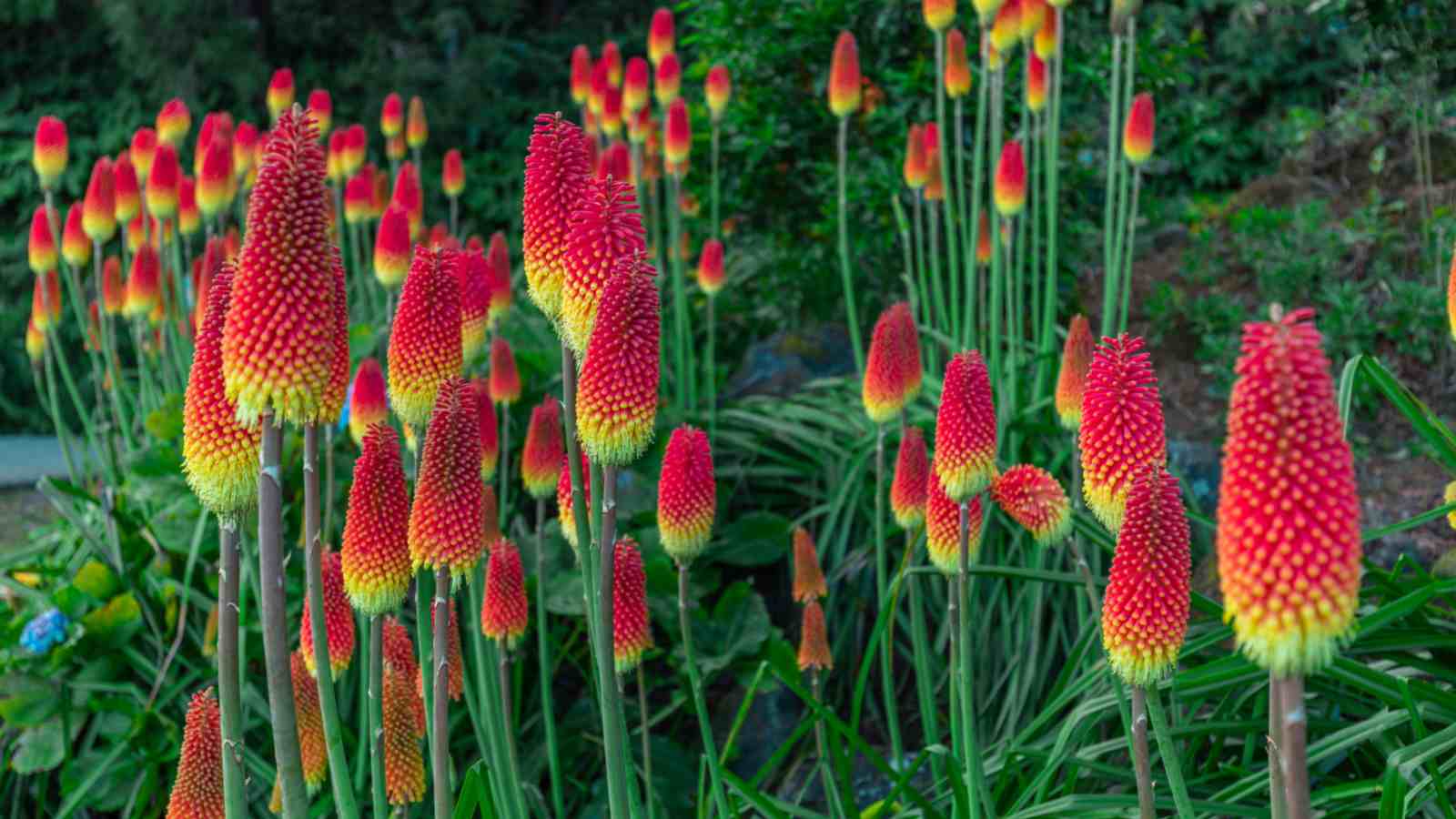
Red Hot Poker (Kniphofia spp.)
- Botanical Name: Kniphofia spp.
- Mature Size: 2-5 feet tall
- Bloom Time: Summer to fall
- Leaf Color: Green to blue-green
- Flower Color: Red, orange, or yellow spikes
- Light: Full sun
- Soil Needs: Well-drained, sandy to loamy soil
- USDA Hardiness Zones: 5-9
Red Hot Poker (Kniphofia spp.) is a striking perennial known for its tall spikes of tubular flowers in shades of red, orange, or yellow. Blooming from summer to fall, this plant adds drama to gardens and is attractive to hummingbirds. Red Hot Poker prefers full sun and well-drained, sandy to loamy soil.
-
Blanket Flower (Gaillardia spp.)

- Botanical Name: Gaillardia spp.
- Mature Size: 1-3 feet tall
- Bloom Time: Summer to fall
- Leaf Color: Green
- Flower Color: Red with yellow or orange tips
- Light: Full sun
- Soil Needs: Well-drained, sandy soil
- USDA Hardiness Zones: 3-10
Blanket Flower (Gaillardia spp.) is a drought-tolerant perennial known for its daisy-like flowers with striking red centers and yellow or orange-tipped petals. Blooming from summer to fall, blanket flowers are excellent for attracting pollinators and adding color to gardens. They prefer full sun and well-drained, sandy soil.
-
Spider Lily (Lycoris spp.)

- Botanical Name: Lycoris spp.
- Mature Size: 1-3 feet tall
- Bloom Time: Late summer to fall
- Leaf Color: Green
- Flower Color: Various shades of red
- Light: Part shade to full sun
- Soil Needs: Well-drained, fertile soil
- USDA Hardiness Zones: 6-10
Spider Lilies (Lycoris spp.) are bulbous perennials admired for their spider-like, starburst-shaped flowers in shades of red. Blooming from late summer to fall, these unique flowers add a touch of exotic beauty to gardens. They prefer part shade to full sun and well-drained, fertile soil.
-
Red Orchid (Cattleya spp.)

- Botanical Name: Cattleya spp.
- Mature Size: Varies by species
- Bloom Time: Spring to fall, depending on the species
- Leaf Color: Green
- Flower Color: Various shades of red
- Light: Bright, indirect light
- Soil Needs: Well-drained orchid mix
- USDA Hardiness Zones: 10-12
Red Orchids (Cattleya spp.) are epiphytic or lithophytic orchids known for their large, showy blooms in various shades of red. Blooming from spring to fall, these tropical beauties are popular in orchid collections. Red Orchids prefer bright, indirect light and well-drained orchid mix.
-
Firecracker Plant (Russelia equisetiformis)

- Botanical Name: Russelia equisetiformis
- Mature Size: 3-6 feet tall
- Bloom Time: Spring to fall
- Leaf Color: Fine, needle-like foliage
- Flower Color: Bright red tubular flowers
- Light: Full sun to part shade
- Soil Needs: Well-drained, sandy soil
- USDA Hardiness Zones: 9-11
The Firecracker Plant (Russelia equisetiformis) is a slender, arching shrub known for its cascading branches of bright red tubular flowers. Blooming from spring to fall, it adds a burst of color to gardens and is attractive to hummingbirds. This plant thrives in full sun to part shade and well-drained, sandy soil.
-
Chinese Lantern (Physalis alkekengi)

- Botanical Name: Physalis alkekengi
- Mature Size: 1-3 feet tall
- Bloom Time: Late summer to fall
- Leaf Color: Green
- Flower Color: Red papery husks
- Light: Full sun to part shade
- Soil Needs: Well-drained, average soil
- USDA Hardiness Zones: 3-9
Chinese Lantern (Physalis alkekengi) is a perennial plant celebrated for its unique, lantern-like seed pods. Blooming from late summer to fall, this plant adds interest to gardens and is often used in dried floral arrangements. Chinese Lanterns prefer full sun to part shade and well-drained, average soil.
-
Red Campanula (Campanula spp.)

- Botanical Name: Campanula spp.
- Mature Size: Varies by species
- Bloom Time: Late spring to fall, depending on the species
- Leaf Color: Green
- Flower Color: Various shades of red
- Light: Full sun to part shade
- Soil Needs: Well-drained, moist soil
- USDA Hardiness Zones: 3-8
Red Campanulas (Campanula spp.) are herbaceous perennials known for their bell-shaped flowers in various colors, including charming red varieties. Blooming from late spring to fall, these plants are valued for their versatility in gardens and borders. They prefer full sun to part shade and well-drained, moist soil.
-
Red Columbine (Aquilegia canadensis)

- Botanical Name: Aquilegia canadensis
- Mature Size: 1-3 feet tall
- Bloom Time: Spring
- Leaf Color: Blue-green
- Flower Color: Red and yellow spurred flowers
- Light: Part shade to full sun
- Soil Needs: Well-drained, moist soil
- USDA Hardiness Zones: 3-8
Red Columbine (Aquilegia canadensis) is a perennial wildflower known for its distinctive red and yellow flowers and nodding. Blooming in spring, it attracts hummingbirds and butterflies to the garden. Red Columbine thrives in part shade to full sun and well-drained, moist soil.
-
Scarlet Sage (Salvia splendens)

- Botanical Name: Salvia splendens
- Mature Size: 1-3 feet tall
- Bloom Time: Summer to fall
- Leaf Color: Green
- Flower Color: Bright red spikes
- Light: Full sun
- Soil Needs: Well-drained, fertile soil
- USDA Hardiness Zones: 9-11
Scarlet Sage (Salvia splendens) is an annual or tender perennial admired for its vibrant, spiky clusters of bright red flowers. Blooming from summer to fall, it attracts pollinators and adds a bold splash of color to gardens. Scarlet Sage prefers full sun and well-drained, fertile soil.
-
Red Ginger Lily

- Botanical Name: Hedychium spp.
- Mature Size: 4-8 feet tall
- Bloom Time: Late summer to fall
- Leaf Color: Green
- Flower Color: Red, fragrant spikes
- Light: Part shade to full sun
- Soil Needs: Moist, well-drained soil
- USDA Hardiness Zones: 8-11
Red Ginger Lily is a tropical perennial known for its showy, fragrant spikes of red flowers. Blooming from late summer to fall, it adds a touch of exotic beauty to gardens. Red Ginger Lily prefers part shade to full sun and moist, well-drained soil.
-
Red Hellebore (Helleborus spp.)

- Botanical Name: Helleborus spp.
- Mature Size: 1-2 feet tall
- Bloom Time: Late winter to early spring
- Leaf Color: Dark green
- Flower Color: Various shades of red
- Light: Part shade to full shade
- Soil Needs: Well-drained, humus-rich soil
- USDA Hardiness Zones: 4-9
Red Hellebores (Helleborus spp.) are evergreen perennials appreciated for their nodding, cup-shaped flowers in various shades of red. Blooming in late winter to early spring, they add color to shade gardens. Red Hellebores prefer part shade to full shade and well-drained, humus-rich soil.
-
Red Valerian (Centranthus ruber)

- Botanical Name: Centranthus ruber
- Mature Size: 1-3 feet tall
- Bloom Time: Late spring to early summer
- Leaf Color: Gray-green
- Flower Color: Deep red to pink
- Light: Full sun to part shade
- Soil Needs: Well-drained, average soil
- USDA Hardiness Zones: 4-8
Red Valerian (Centranthus ruber) is a drought-tolerant perennial known for its clusters of small, tubular flowers in shades of deep red to pink. Blooming from late spring to early summer, it’s ideal for rock gardens and dry areas. Red Valerian prefers full sun to part shade and well-drained, average soil.
-
Nasturtium (Tropaeolum majus)

- Botanical Name: Tropaeolum majus
- Mature Size: 6-12 inches tall (dwarf varieties) to 10 feet or more (trailing varieties)
- Bloom Time: Late spring to fall
- Leaf Color: Green
- Flower Color: Various shades of red, orange, and yellow
- Light: Full sun
- Soil Needs: Well-drained, poor to average soil
- USDA Hardiness Zones: 2-11 (depends on the variety)
Nasturtium (Tropaeolum majus) is an annual plant celebrated for its vibrant, edible flowers in various colors, including shades of red. Blooming from late spring to fall, nasturtiums are easy to grow and add a cheerful touch to gardens. They thrive in full sun and well-drained, poor to average soil.
-
Red Lily (Lilium spp.)

- Botanical Name: Lilium spp.
- Mature Size: 2-6 feet tall, depending on the species
- Bloom Time: Late spring to summer
- Leaf Color: Green
- Flower Color: Various shades of red
- Light: Full sun to part shade
- Soil Needs: Well-drained, fertile soil
- USDA Hardiness Zones: 3-9
Red Lilies (Lilium spp.) are perennial bulbs known for their elegant, trumpet-shaped flowers in various shades of red. Blooming from late spring to summer, they are popular in gardens and floral arrangements. Red Lilies prefer full sun to part shade and well-drained, fertile soil.
-
Red Sunflower (Helianthus spp.)

- Botanical Name: Helianthus spp.
- Mature Size: 3-10 feet tall, depending on the species
- Bloom Time: Summer to fall
- Leaf Color: Green
- Flower Color: Various shades of red, orange, and yellow
- Light: Full sun
- Soil Needs: Well-drained, fertile soil
- USDA Hardiness Zones: 3-9
Red Sunflowers (Helianthus spp.) are vibrant, annual plants known for their large, daisy-like flowers in various warm colors, including shades of red. Blooming from summer to fall, they bring a burst of color to gardens. Red Sunflowers prefer full sun and well-drained, fertile soil.
-
Red Freesia (Freesia spp.)

- Botanical Name: Freesia spp.
- Mature Size: 1-2 feet tall
- Bloom Time: Spring to early summer
- Leaf Color: Green
- Flower Color: Various shades of red, pink, and white
- Light: Full sun to part shade
- Soil Needs: Well-drained, sandy soil
- USDA Hardiness Zones: 9-11
Red Freesias (Freesia spp.) are fragrant, cormous perennials known for their graceful spikes of tubular flowers in various colors, including shades of red. Blooming from spring to early summer, they are popular in gardens and as cut flowers. Red Freesias prefer full sun to part shade and well-drained, sandy soil.
-
Red Canna Lily (Canna spp.)

- Botanical Name: Canna spp.
- Mature Size: 3-8 feet tall, depending on the variety
- Bloom Time: Summer to fall
- Leaf Color: Green to bronze
- Flower Color: Various shades of red, orange, and yellow
- Light: Full sun to part shade
- Soil Needs: Moist, well-drained soil
- USDA Hardiness Zones: 7-11
Red Canna Lilies (Canna spp.) are rhizomatous perennials known for their bold, tropical-looking foliage and vibrant, lily-like flowers. Blooming from summer to fall, they add drama to gardens and are attractive to hummingbirds. Red Canna Lilies prefer full sun to part shade and moist, well-drained soil.
-
Red Balloon Flower (Platycodon grandiflorus)

- Botanical Name: Platycodon grandiflorus
- Mature Size: 1-2 feet tall
- Bloom Time: Summer
- Leaf Color: Green
- Flower Color: Balloon-shaped buds open to reveal red, pink, or white flowers
- Light: Full sun to part shade
- Soil Needs: Well-drained, average soil
- USDA Hardiness Zones: 3-8
The Red Balloon Flower (Platycodon grandiflorus) is a herbaceous perennial known for its unique, balloon-shaped buds that open into star-shaped flowers. Blooming in summer, it adds whimsy to gardens. The Red Balloon Flower prefers full sun to part shade and well-drained, average soil.
-
Red Alpine Aster (Aster alpinus)

- Botanical Name: Aster alpinus
- Mature Size: 6-12 inches tall
- Bloom Time: Late spring to early summer
- Leaf Color: Green
- Flower Color: Red or purple daisy-like flowers
- Light: Full sun
- Soil Needs: Well-drained, average soil
- USDA Hardiness Zones: 4-8
The Red Alpine Aster (Aster alpinus) is a low-growing perennial known for its profusion of daisy-like flowers in shades of red or purple. Blooming from late spring to early summer, it’s perfect for rock gardens. The Red Alpine Aster prefers full sun and well-drained, average soil.
-
Red Fuchsia (Fuchsia spp.)

- Botanical Name: Fuchsia spp.
- Mature Size: 1-3 feet tall, depending on the variety
- Bloom Time: Summer to fall
- Leaf Color: Green to purple
- Flower Color: Drooping, tubular flowers in shades of red, pink, and purple
- Light: Part shade to full shade
- Soil Needs: Moist, well-drained soil
- USDA Hardiness Zones: 6-11
Red Fuchsias (Fuchsia spp.) are deciduous or evergreen shrubs known for their pendulous, tubular flowers in various vibrant colors, including shades of red. Blooming from summer to fall, they are popular in hanging baskets and containers. Red Fuchsias prefer part shade to full shade and moist, well-drained soil.
-
Red Lupine (Lupinus spp.)

- Botanical Name: Lupinus spp.
- Mature Size: 1-4 feet tall, depending on the species
- Bloom Time: Late spring to early summer
- Leaf Color: Green
- Flower Color: Spikes of pea-like flowers in shades of red, blue, or purple
- Light: Full sun to part shade
- Soil Needs: Well-drained, sandy to loamy soil
- USDA Hardiness Zones: 3-9
Red Lupines (Lupinus spp.) are herbaceous perennials known for their spiky clusters of pea-like flowers in various colors, including captivating red hues. Blooming from late spring to early summer, they are excellent for naturalizing landscapes. Red Lupines prefer full sun to part shade and well-drained, sandy to loamy soil.
-
Red Maltese Cross (Lychnis chalcedonica)

- Botanical Name: Lychnis chalcedonica
- Mature Size: 2-4 feet tall
- Bloom Time: Late spring to early summer
- Leaf Color: Green
- Flower Color: Clusters of bright red, cross-shaped flowers
- Light: Full sun to part shade
- Soil Needs: Well-drained, fertile soil
- USDA Hardiness Zones: 3-8
The Red Maltese Cross (Lychnis chalcedonica) is a herbaceous perennial admired for its clusters of vivid red, cross-shaped flowers. Blooming from late spring to early summer, it adds a bold splash of color to cottage gardens. The Red Maltese Cross prefers full sun to part shade and well-drained, fertile soil.
-
Red Azalea (Rhododendron spp.)

- Botanical Name:Rhododendron spp.
- Mature Size: 3-10 feet tall, depending on the variety
- Bloom Time: Spring
- Leaf Color: Green
- Flower Color: Various shades of red
- Light: Part shade to full shade
- Soil Needs: Moist, well-drained, acidic soil
- USDA Hardiness Zones: 4-9
Red Azaleas (Rhododendron spp.) are broadleaf evergreen shrubs valued for their stunning clusters of flowers in various shades of red. Blooming in spring, they are popular in woodland gardens and as foundation plants. Red Azaleas prefer part shade to full shade and moist, well-drained, acidic soil.
-
Red Wax Begonia (Begonia semperflorens)

- Botanical Name: Begonia semperflorens
- Mature Size: 6-12 inches tall
- Bloom Time: Summer to fall
- Leaf Color: Green to bronze
- Flower Color: Clusters of red, pink, or white flowers
- Light: Part shade to full shade
- Soil Needs: Well-drained, fertile soil
- USDA Hardiness Zones: 10-11
Red Wax Begonias (Begonia semperflorens) are tender perennial plants known for their waxy, shiny leaves and clusters of small, colorful flowers. Blooming from summer to fall, they are popular for borders and container gardens. Red Wax Begonias prefer part shade to full shade and well-drained, fertile soil.
-
Red Coneflower (Echinacea purpurea)

- Botanical Name: Echinacea purpurea
- Mature Size: 2-5 feet tall
- Bloom Time: Summer to fall
- Leaf Color: Green
- Flower Color: Red daisy-like flowers with prominent cones
- Light: Full sun to part shade
- Soil Needs: Well-drained, average soil
- USDA Hardiness Zones: 3-8
The Red Coneflower (Echinacea purpurea) is a perennial herbaceous plant known for its prominent, cone-shaped centers surrounded by vibrant red-purple petals. Blooming from summer to fall, it attracts pollinators and adds color to wildflower gardens. Red Coneflowers prefer full sun to part shade and well-drained, average soil.
-
Red Beehive Ginger (Zingiber spectabile)

- Botanical Name: Zingiber spectabile
- Mature Size: 4-6 feet tall
- Bloom Time: Late summer to fall
- Leaf Color: Green
- Flower Color: Red, beehive-shaped bracts
- Light: Part shade to full shade
- Soil Needs: Moist, well-drained soil
- USDA Hardiness Zones: 8-11
The Red Beehive Ginger (Zingiber spectabile) is a tropical perennial admired for its unique, beehive-shaped bracts in shades of red. Blooming from late summer to fall, it adds a touch of exotic flair to gardens. Red Beehive Ginger prefers part shade to full shade and moist, well-drained soil.
-
Red Hyacinth (Hyacinthus spp.)

- Botanical Name: Hyacinthus spp.
- Mature Size: 6-12 inches tall
- Bloom Time: Spring
- Leaf Color: Green
- Flower Color: Dense spikes of red, fragrant flowers
- Light: Full sun to part shade
- Soil Needs: Well-drained, fertile soil
- USDA Hardiness Zones: 4-8
Red Hyacinths (Hyacinthus spp.) are bulbous perennials appreciated for their dense spikes of fragrant flowers in various colors, including shades of red. Blooming in spring, they are popular for borders and containers. Red Hyacinths prefer full sun to part shade and well-drained, fertile soil.
-
Red Cyclamen (Cyclamen spp.)

- Botanical Name: Cyclamen spp.
- Mature Size: 4-6 inches tall
- Bloom Time: Late winter to early spring
- Leaf Color: Green with silver markings
- Flower Color: Upswept red, pink, or white petals
- Light: Part shade to full shade
- Soil Needs: Well-drained, humus-rich soil
- USDA Hardiness Zones: 5-9
Red Cyclamens (Cyclamen spp.) are small, tuberous perennials known for their distinctive, upswept petals in shades of red. Blooming in late winter to early spring, they add charm to shaded areas. Red Cyclamens prefer part shade to full shade and well-drained, humus-rich soil.
-
Red Snapdragon (Antirrhinum majus)

- Botanical Name: Antirrhinum majus
- Mature Size: 6-36 inches tall, depending on the variety
- Bloom Time: Spring to fall
- Leaf Color: Green
- Flower Color: Tubular flowers in various shades of red, pink, yellow, and white
- Light: Full sun to part shade
- Soil Needs: Well-drained, average soil
- USDA Hardiness Zones: 4-10
Red Snapdragons (Antirrhinum majus) are annual or perennial plants known for their distinctive, snap-like tubular flowers in various colors, including shades of red. Blooming from spring to fall, they are popular in garden borders and as cut flowers. Red Snapdragons prefer full sun to part shade and well-drained, average soil.
-
Red Yarrow (Achillea millefolium)

- Botanical Name: Achillea millefolium
- Mature Size: 1-3 feet tall
- Bloom Time: Late spring to early summer
- Leaf Color: Green
- Flower Color: Flat clusters of tiny red, pink, or white flowers
- Light: Full sun
- Soil Needs: Well-drained, average to poor soil
- USDA Hardiness Zones: 3-9
Red Yarrow (Achillea millefolium) is a herbaceous perennial appreciated for its flat clusters of tiny flowers in shades of red, pink, or white. Blooming from late spring to early summer, it is a favorite for pollinator gardens. Red Yarrow prefers full sun and well-drained, average to poor soil.
-
Red Aloe Vera (Aloe barbadensis miller)

- Botanical Name: Aloe barbadensis miller
- Mature Size: 1-2 feet tall
- Bloom Time: Summer
- Leaf Color: Green with red edges
- Flower Color: Tubular red flowers on tall spikes
- Light: Full sun to part shade
- Soil Needs: Well-drained, sandy soil
- USDA Hardiness Zones: 9-11
Red Aloe Vera (Aloe barbadensis miller) is a succulent plant known for its fleshy leaves with red edges and tubular orange or red flowers on tall spikes. Blooming in summer, it is not only ornamental but also has medicinal uses. Red Aloe Vera prefers full sun to partial shade and well-drained, sandy soil.
-
Red Bougainvillea (Bougainvillea spp.)

- Botanical Name: Bougainvillea spp.
- Mature Size: 1-30 feet tall, depending on the variety
- Bloom Time: Spring to fall
- Leaf Color: Green
- Flower Color: Papery bracts in various shades of red, pink, purple, or orange
- Light: Full sun
- Soil Needs: Well-drained, average soil
- USDA Hardiness Zones: 9-11
Red Bougainvillea (Bougainvillea spp.) is a climbing or trailing shrub celebrated for its vibrant papery bracts in shades of red, pink, purple, or orange. Blooming from spring to fall, it adds a burst of color to gardens and landscapes. Red Bougainvillea prefers full sun and well-drained, average soil.
-
Red Monkey Flower (Mimulus spp.)

- Botanical Name: Mimulus spp.
- Mature Size: 6 inches to 3 feet tall, depending on the variety
- Bloom Time: Late spring to fall
- Leaf Color: Green
- Flower Color: Tubular flowers in shades of red, orange, yellow, or pink
- Light: Full sun to part shade
- Soil Needs: Moist to wet soil
- USDA Hardiness Zones: 4-9
Red Monkey Flowers (Mimulus spp.) are herbaceous perennials known for their tubular flowers in shades of red, orange, yellow, or pink. Blooming from late spring to fall, they thrive in moist to wet soil and add a splash of color to water features. Red Monkey Flowers prefer full sun to part shade.
-
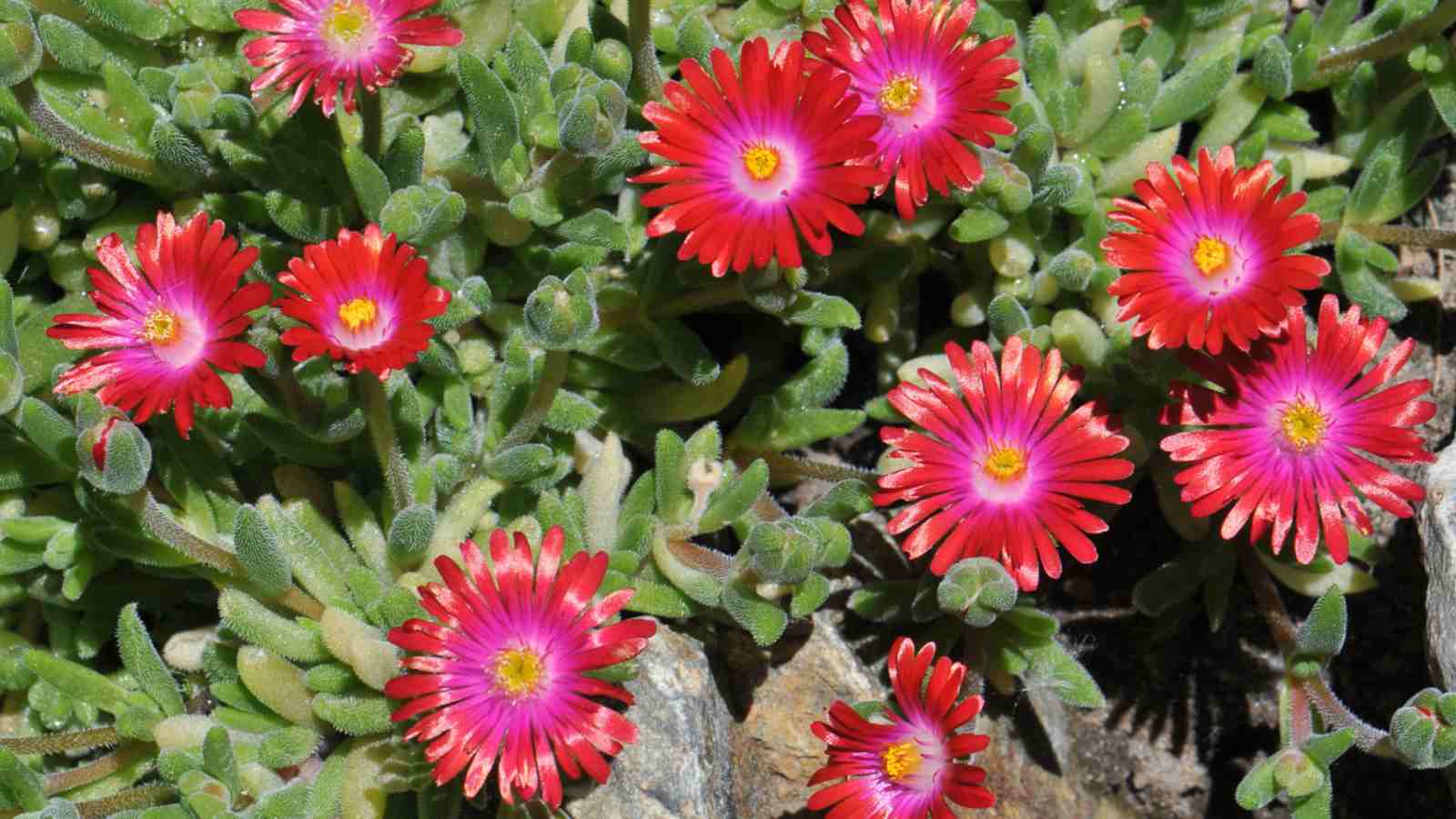
Red Ice Plant (Delosperma spp.)
- Botanical Name: Delosperma spp.
- Mature Size: 2-6 inches tall, spreading
- Bloom Time: Spring to fall
- Leaf Color: Green to blue-green
- Flower Color: Daisy-like flowers in shades of red, pink, orange, or purple
- Light: Full sun
- Soil Needs: Well-drained, sandy to rocky soil
- USDA Hardiness Zones: 5-10
Red Ice Plants (Delosperma spp.) are low-growing succulent perennials appreciated for their daisy-like flowers in shades of red, pink, orange, or purple. Blooming from spring to fall, they are excellent ground covers for sunny, well-drained areas. Red Ice Plants prefer full sun and well-drained, sandy to rocky soil.
-
Red Asiatic Lily (Lilium asiaticum)

- Botanical Name: Lilium asiaticum
- Mature Size: 2-4 feet tall
- Bloom Time: Late spring to early summer
- Leaf Color: Green
- Flower Color: Large, upward-facing, trumpet-shaped flowers in shades of red
- Light: Full sun to part shade
- Soil Needs: Well-drained, fertile soil
- USDA Hardiness Zones: 3-8
Red Asiatic Lilies (Lilium asiaticum) are perennial bulbs known for their large, upward-facing, trumpet-shaped flowers in various shades of red. Blooming from late spring to early summer, they are popular in gardens and cut flower arrangements. Red Asiatic Lilies prefer full sun to part shade and well-drained, fertile soil.
-
Red Rock Rose (Cistus spp.)

- Botanical Name: Cistus spp.
- Mature Size: 2-5 feet tall
- Bloom Time: Spring to early summer
- Leaf Color: Gray-green
- Flower Color: Large, saucer-shaped flowers in shades of red, pink, or white
- Light: Full sun
- Soil Needs: Well-drained, poor to average soil
- USDA Hardiness Zones: 8-11
Red Rock Roses (Cistus spp.) are evergreen shrubs appreciated for their large, saucer-shaped flowers in shades of red, pink, or white. Blooming from spring to early summer, they are drought-tolerant and suitable for Mediterranean-style gardens. Red Rock Roses prefer full sun, well-drained, poor-to-average soil,
-
Red Water Lily (Nymphaea spp.)

- Botanical Name: Nymphaea spp.
- Mature Size: Varies by species, typically 2-12 inches in height
- Bloom Time: Late spring to fall
- Leaf Color: Green
- Flower Color: Large, cup-shaped flowers in shades of red
- Light: Full sun
- Soil Needs: Still or slow-moving water, typically in ponds
- USDA Hardiness Zones: Varies by species
Red Water Lilies (Nymphaea spp.) are aquatic plants known for their large, cup-shaped flowers in various shades of red. Blooming from late spring to fall, they add elegance to ponds and water gardens. Red Water Lilies thrive in still or slow-moving water and are adapted to various USDA Hardiness Zones, depending on the species.
-
Red Sage (Salvia spp.)

- Botanical Name: Salvia spp.
- Mature Size: 1-5 feet tall, depending on the species
- Bloom Time: Spring to fall
- Leaf Color: Green to gray-green
- Flower Color: Tubular flowers in shades of red, purple, pink, or blue
- Light: Full sun
- Soil Needs: Well-drained, average soil
- USDA Hardiness Zones: 4-11, depending on the species
Red Sages (Salvia spp.) are herbaceous perennials known for their spikes of tubular flowers in various colors, including shades of red. Blooming from spring to fall, they attract pollinators and are valuable additions to garden borders. Red Sages thrive in full sun and well-drained, average soil, with hardiness varying by species.
-
Red Malva (Malva spp.)

- Botanical Name: Malva spp.
- Mature Size: 1-4 feet tall, depending on the species
- Bloom Time: Late spring to summer
- Leaf Color: Green
- Flower Color: Five-petaled flowers in shades of red, pink, purple, or white
- Light: Full sun to part shade
- Soil Needs: Well-drained, fertile soil
- USDA Hardiness Zones: 3-9, depending on the species
Red Malvas (Malva spp.) are herbaceous perennials known for their attractive, five-petaled flowers in various colors, including shades of red. Blooming from late spring to summer, they are versatile and suitable for various garden settings. Red Malvas prefer full sun to part shade and well-drained, fertile soil.
-
Red Geum (Geum spp.)

- Botanical Name: Geum spp.
- Mature Size: 1-3 feet tall, depending on the species
- Bloom Time: Late spring to early summer
- Leaf Color: Green
- Flower Color: Semi-double to double flowers in shades of red, orange, yellow, or white
- Light: Full sun to part shade
- Soil Needs: Well-drained, fertile soil
- USDA Hardiness Zones: 4-9, depending on the species
Red Geums (Geum spp.) are herbaceous perennials known for their semi-double to double flowers in shades of red, orange, yellow, or white. Blooming from late spring to early summer, they are attractive to pollinators and suitable for cottage gardens. Red Geums prefer full sun to part shade and well-drained, fertile soil.
-
Red Delphinium (Delphinium spp.)

- Botanical Name: Delphinium spp.
- Mature Size: 3-6 feet tall, depending on the variety
- Bloom Time: Late spring to early summer
- Leaf Color: Green
- Flower Color: Tall spikes of red, blue, purple, or white flowers
- Light: Full sun
- Soil Needs: Rich, well-drained soil
- USDA Hardiness Zones: 3-7, depending on the variety
Red Delphiniums (Delphinium spp.) are tall, majestic perennials known for their impressive spikes of flowers in shades of red, blue, purple, or white. Blooming from late spring to early summer, they add vertical interest to garden borders. Red Delphiniums thrive in full sun and rich, well-drained soil.
-
Red Alstroemeria (Alstroemeria spp.)

- Botanical Name: Alstroemeria spp.
- Mature Size: 1-3 feet tall, depending on the variety
- Bloom Time: Late spring to fall
- Leaf Color: Green
- Flower Color: Unique, lily-like flowers in various shades of red, orange, yellow, or pink
- Light: Full sun to part shade
- Soil Needs: Well-drained, fertile soil
- USDA Hardiness Zones: 8-10, depending on the variety
Red Alstroemerias (Alstroemeria spp.) are perennial plants celebrated for their unique, lily-like flowers in various shades of red, orange, yellow, or pink. Blooming from late spring to fall, they make excellent cut flowers and container plants. Red Alstroemerias prefer full sun to part shade and well-drained, fertile soil.
-
Red Portulaca (Portulaca grandiflora)

- Botanical Name: Portulaca grandiflora
- Mature Size: 4-8 inches tall, spreading
- Bloom Time: Summer to fall
- Leaf Color: Green to reddish stems
- Flower Color: Vibrant, cup-shaped flowers in shades of red, pink, orange, yellow, or white
- Light: Full sun
- Soil Needs: Well-drained, sandy soil
- USDA Hardiness Zones: 2-11, depending on the variety
Red Portulacas (Portulaca grandiflora) are low-growing annuals known for their vibrant, cup-shaped flowers in shades of red, pink, orange, yellow, or white. Blooming from summer to fall, they are excellent ground covers for sunny areas and tolerate drought. Red Portulacas thrive in full sun and well-drained, sandy soil.
-
Red Stargazer Lily (Lilium ‘Stargazer’)

- Botanical Name: Lilium ‘Stargazer’
- Mature Size: 2-4 feet tall
- Bloom Time: Mid to late summer
- Leaf Color: Green
- Flower Color: Large, upward-facing, trumpet-shaped flowers with red, pink, and white markings
- Light: Full sun to part shade
- Soil Needs: Well-drained, fertile soil
- USDA Hardiness Zones: 4-9
The Red Stargazer Lily (Lilium ‘Stargazer’) is a hybrid lily known for its large, upward-facing flowers with distinctive red, pink, and white markings. Blooming in mid to late summer, it is a popular choice for gardens and floral arrangements. Red Stargazer Lilies prefer full sun to part shade and well-drained, fertile soil.
Other Flower Guides from Planet Natural:
17 Mesmerizing Flowers that Bloom After Dusk


