

The compost bag is waiting. Before you open it, ask a more specific question than whether compost is generally good for a garden: what does this particular bed need before its next planting?
An autumn laboratory soil sample can help answer that question. It gives you a reason to pause before adding nutrients or changing pH, while there is still time to plan the next season’s work.
The useful task is not scooping a little dirt from the nearest corner. It is selecting a laboratory, following its collection instructions, and giving the sample a clear identity.
More organic material is not always the next step
Compost can contribute organic matter and nutrients. Repeated additions can also contribute more of a nutrient than a bed needs. The history of the growing area matters.
University of Minnesota Extension’s soil-testing guidance explains the value of testing and notes that repeated compost or manure use can build excessive phosphorus. A laboratory report can help you replace a general annual habit with a recommendation fitted to the soil and the intended planting.
That does not mean a tired-looking plant proves there is too much phosphorus. Nor does it mean a fertile report answers every drainage, compaction, or disease question. A routine fertility test measures the items included in that laboratory’s service.
If you are concerned about contamination, including lead in an urban garden, ask about the appropriate separate testing. Do not assume that a standard garden report includes it.
Planet Natural’s soil-testing introduction provides background. For the actual collection, the chosen laboratory’s current directions should be beside the bucket.
Choose the laboratory first
Locate a suitable extension or other reputable laboratory that serves your area. Read its garden-sample instructions and check what the test includes. Ask about the amount to submit, the sampling depth, drying or handling requirements, the information form, and any restrictions on containers.
Also check the submission process and cost directly. A fee remembered from an old article may not be the current fee. Processing times can change, too.
The depth is part of the protocol, not a national number you should apply to every sample. Minnesota’s garden instructions offer one example; a lawn or a different laboratory may use a different method.
You are aiming for a sample the lab can interpret as collected. An improvised procedure can weaken the usefulness of a precise-looking report.
Draw the boundaries before filling the bucket
Separate areas with meaningfully different management histories or conditions. A heavily amended vegetable bed, a relatively untouched border, and a lawn do not necessarily belong in one bag.
Consider this illustrative scenario: two garden beds have received different amendments over several seasons. Mixing soil from both into one submission could hide the difference you wanted to investigate. Separate, identified samples give the report a chance to answer the question for each bed.
Write a simple map or description before sampling. “Back bed” may work today and become confusing after you rearrange the garden. A label tied to a permanent feature or a sketch can preserve the location.
Tell the laboratory what you intend to grow and provide the requested history. Keep unusual patches or problem areas separate if the lab recommends it. Do not let one exceptional spot stand in for the entire growing area.
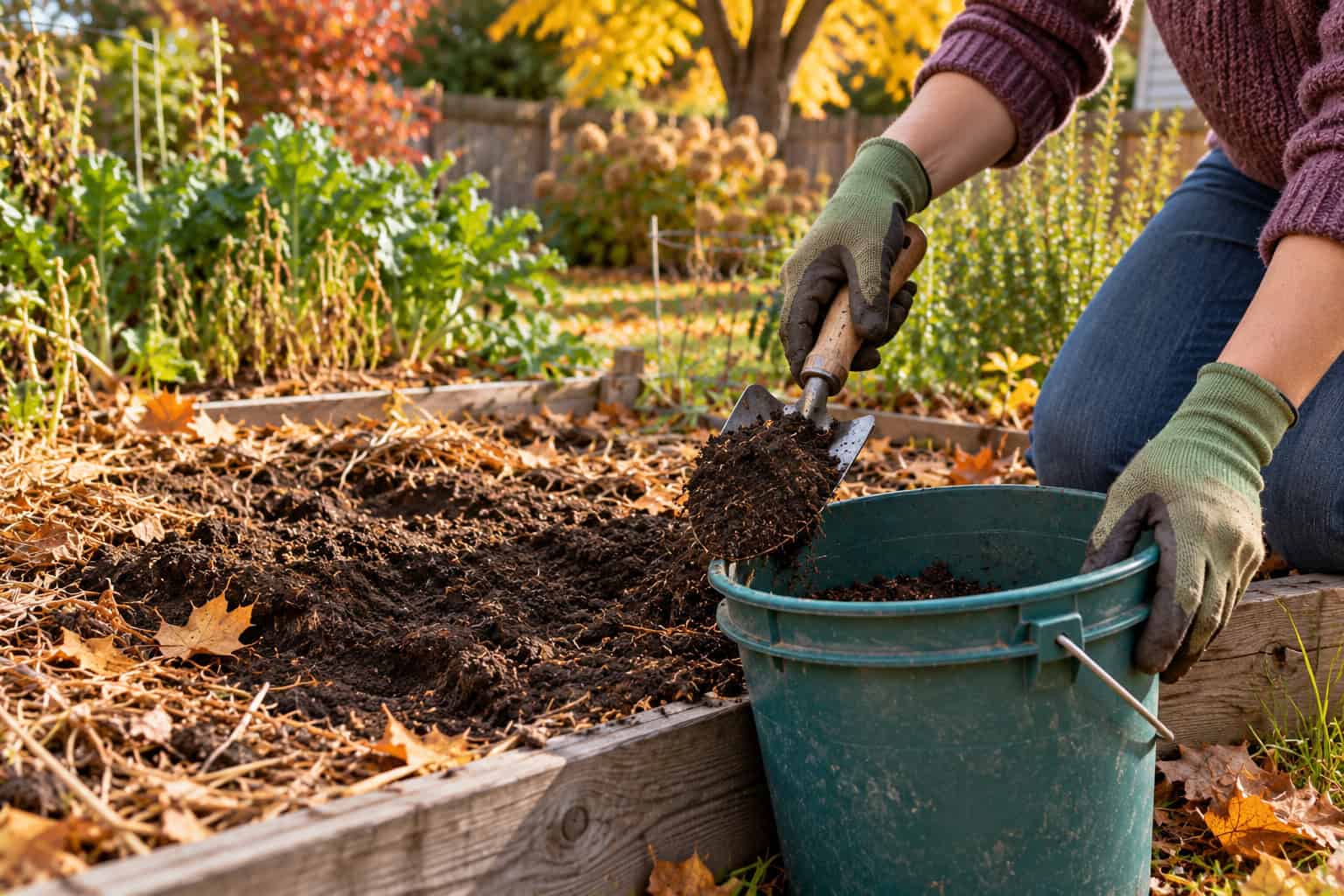
Collect a representative composite
A composite sample combines equal amounts from several representative places within one comparable area. Thorough mixing helps the submitted portion reflect that area more fairly than a single handful would.
Use the clean tools and container specified or accepted by the laboratory. Follow its directions about removing surface material, collecting to the correct depth, avoiding unsuitable spots, and handling the soil afterward.
Minnesota’s step-by-step garden sampling guide uses at least six inches of depth, four to six garden subsamples, and two cups for submission. Those are a Minnesota example, not instructions to override your own lab’s protocol.
If the garden is too wet to work comfortably without damaging it, arrange collection when the conditions are suitable. Avoid trampling or digging simply to meet an arbitrary date. Autumn testing is useful; it is not a demand to sample on the rainiest afternoon of the season.

Keep the record with the sample
Label the submission exactly as directed and retain a matching record. Include the date, location, requested test, and relevant amendment history. Photograph the sample map if that helps you keep it accessible.
Check the paperwork before mailing or delivering the sample. The best-collected soil becomes harder to interpret when its label disagrees with the form or the intended crop is missing.
Keep any remaining records where you will find them with the returned report. If you later compare tests over time, use consistent sampling methods and seasons. Minnesota recommends sampling in the same season for those comparisons.
| Before submitting | Check |
|---|---|
| Area identity | This sample represents one defined growing area |
| Collection | Depth, subsamples, handling, and amount follow the chosen lab |
| Form | Intended planting and requested history are included |
| Record | Label, map, date, and submission agree |
Read the recommendation before shopping
When the report arrives, read the explanation and crop-specific recommendations. If the units or instructions are unclear, ask the lab or your extension office to interpret them.
Do not convert a pH number directly into a lime purchase without the relevant recommendation. Do not add a balanced fertilizer merely because its label sounds complete. A report may indicate that some nutrients are already plentiful while another action is appropriate.
The report is also not an order to carry out every change immediately. Match the recommended work to the planting schedule and local guidance. Keep the report with notes about what you actually apply so the next test has a useful history.
Our article on late-season garden tasks includes the value of checking soil before amending. That pause is especially helpful when autumn makes every bag on the garden-center shelf look like preparation for spring.
You can leave the compost bag closed for a little longer. Choose the lab, define the area, and collect according to its instructions. Then give this bed what the evidence says it needs.


