
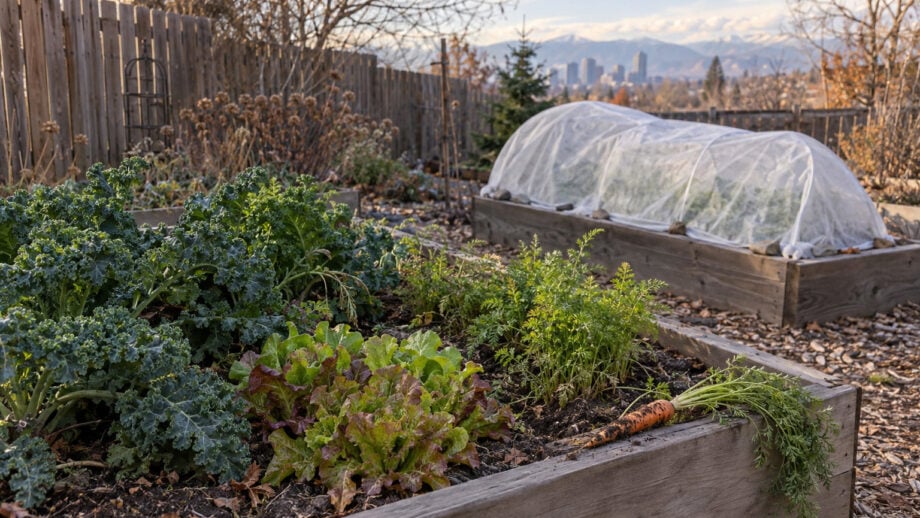
Harvest today, protect tonight, or leave it standing? In the last week before Thanksgiving, those are three separate decisions—not one order to empty the vegetable bed.
In fall 2024, I sorted ripe produce from sound mature green tomatoes and left the kale for a separate inspection. Making those decisions before carrying everything indoors kept the kitchen manageable.
That is the useful habit here: decide crop by crop. A holiday menu is not a weather forecast, and a cover folded in the shed is not protection.
For a Denver-area garden, start with what is still growing, including crops already under protection. Don’t assume an uncovered November bed should still be productive. Elsewhere, conditions may be much milder—or colder. Thanksgiving falls on November 26 this year, but the date alone is no reason to clear healthy crops.
First, read the forecast beside the bed
Look beyond the overnight low. Note how long freezing conditions are expected to last, whether daytime temperatures recover, and whether wind is coming. Then walk outside and check:
- Readiness: Are there usable leaves? Are the carrots a useful size for the dish you have in mind?
- Condition: Are leaves frozen now? What will need another look after thawing?
- Exposure: Which plants are out in the wind? Which sit behind a barrier? Observe those positions separately; shelter does not come with a guaranteed temperature bonus.
- Protection: What fabric do you actually have, and can you secure it before dark?
- Follow-up: Will someone be home to inspect the bed tomorrow?
Also note whether plants have already experienced cold or are meeting it after mild weather. That history is context, not a reliable extra allowance of degrees. Neither maturity nor previous cold exposure gives you a simple survival formula.
If the vegetables are ready and essential to dinner, uncertain protection is a good reason to harvest the portion you need while it is unfrozen. You need not settle the fate of the entire bed today.
The harvest, protect, or wait decision tree
Read this as a planning aid, not a crop-survival calculator. Before choosing, check how long freezing conditions are expected to last, whether temperatures will recover during the day, how exposed the bed is to wind, what protection you have, and who can inspect the bed tomorrow. Light-freeze guidance does not promise survival through prolonged severe cold.
Kale and lettuce
- If the leaves are frozen, wait. Let them thaw naturally on the plant before handling or harvesting. Then reassess. Thawing alone does not establish recovery or suitability to eat.
- If the greens are unfrozen, usable, and needed for dinner, but protection or follow-up is uncertain, harvest the needed portion. Decide separately what to do with the rest.
- If the greens are unfrozen, usable, and needed for dinner, and you can secure and inspect suitable fabric, protect and reassess. You can harvest the dinner portion first. If the forecast goes well beyond a light freeze, don’t count on the covered crop for an essential dish.
- If healthy, unfrozen greens aren’t needed yet, consider leaving them standing. Check kale and lettuce separately. Both can remain harvestable after light freezes, but that does not mean they have the same cold tolerance.
- If the greens aren’t usable, don’t count them as a dinner ingredient. Reassess the plants separately and put any missing ingredients on the shopping list.
Carrots
Check a sample root for a size useful to your recipe. Frost alone does not require immediate harvest.
- If the roots are usable and essential to the menu, harvest what you need. Don’t count on being able to dig them later if the bed freezes.
- If the roots are too small or not needed yet, consider leaving them standing. Base that choice on bed conditions and whether you expect to be able to dig later. Small roots won’t grow larger after harvest. If the bed can’t supply usable carrots when you need them, plan to buy them.
Kale: inspect it on its own merits
Healthy kale can remain harvestable after light freezes, according to Iowa State University Extension’s late-season harvest guidance. If the leaves are frozen, wait for natural thawing on the plant before handling or harvesting them.
For usable, unfrozen kale, choose between picking what you need and protecting what remains. If the forecast goes well beyond a light freeze, don’t make the holiday side dish depend entirely on the standing crop.
Lettuce: give it a separate decision
Iowa State also includes healthy lettuce among greens that can remain harvestable after light freezes. That does not mean lettuce and kale have the same cold tolerance.
Inspect the lettuce separately, even if it shares a bed with kale. Follow the same wait-for-thaw rule for frozen leaves. When lettuce is ready and you cannot maintain its cover, harvesting the needed portion is a reasonable way to reduce uncertainty—not a prediction that every remaining plant will die.
Carrots: check a root, not just the calendar
Frost alone does not require an immediate carrot harvest. Check a sample root for a size useful to your recipe. Roots do not continue to mature after harvest, so pulling small carrots now will not turn them into larger ones indoors.
Leaving carrots standing is different from promising you can dig them whenever you like. The guidance here does not establish how long roots will remain accessible as a Denver-area bed freezes. If carrots are essential to the menu, harvest the usable roots you need rather than relying on later access.
Make the cover do its actual job
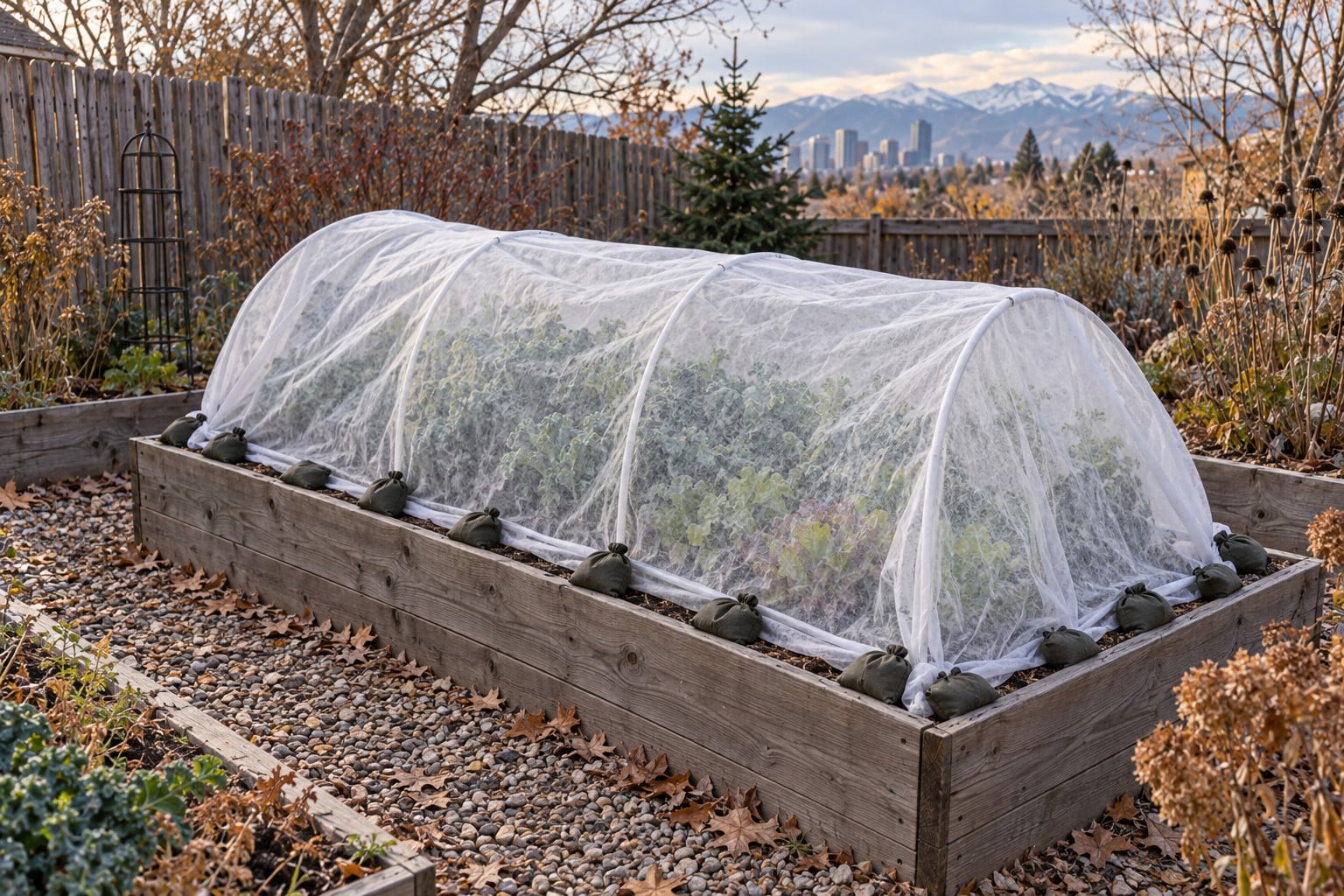
Fabric row cover offers limited frost protection, and the amount varies with the material’s weight. It is not a portable guarantee.
For this plan, use garden row-cover fabric—not an assumed equivalent made from plastic, insect mesh, or a spare bedsheet. University of Maryland Extension’s cover guidance supports these practical steps:
- Support the fabric. Use suitable hoops or a frame, especially for medium- and heavyweight material, with room for the plants underneath.
- Secure both long sides and both ends at ground level. Use suitable weights, pins, or soil. Clips on the hoops alone do not secure the ground edges.
- Check for rubbing. Wind-driven fabric can injure leaves and stems. Adjust loose material and inspect places where it contacts plants.
- Return after wind. Look for lifted edges, tears, and shifted fasteners. A cover can still look present while no longer being properly secured.
- Look underneath. Inspect the plants and check moisture rather than judging the bed from outside.
On sunny days, check conditions beneath the fabric. Pull it back temporarily if needed to inspect the crop or relieve apparent overheating, then secure it again when appropriate. That is not a rule to remove every fabric cover every morning.
These instructions concern fabric. A hinged cold frame needs its own routine; Planet Natural’s cold-frame midday check addresses that different setup.
Wait for thawing, then look again
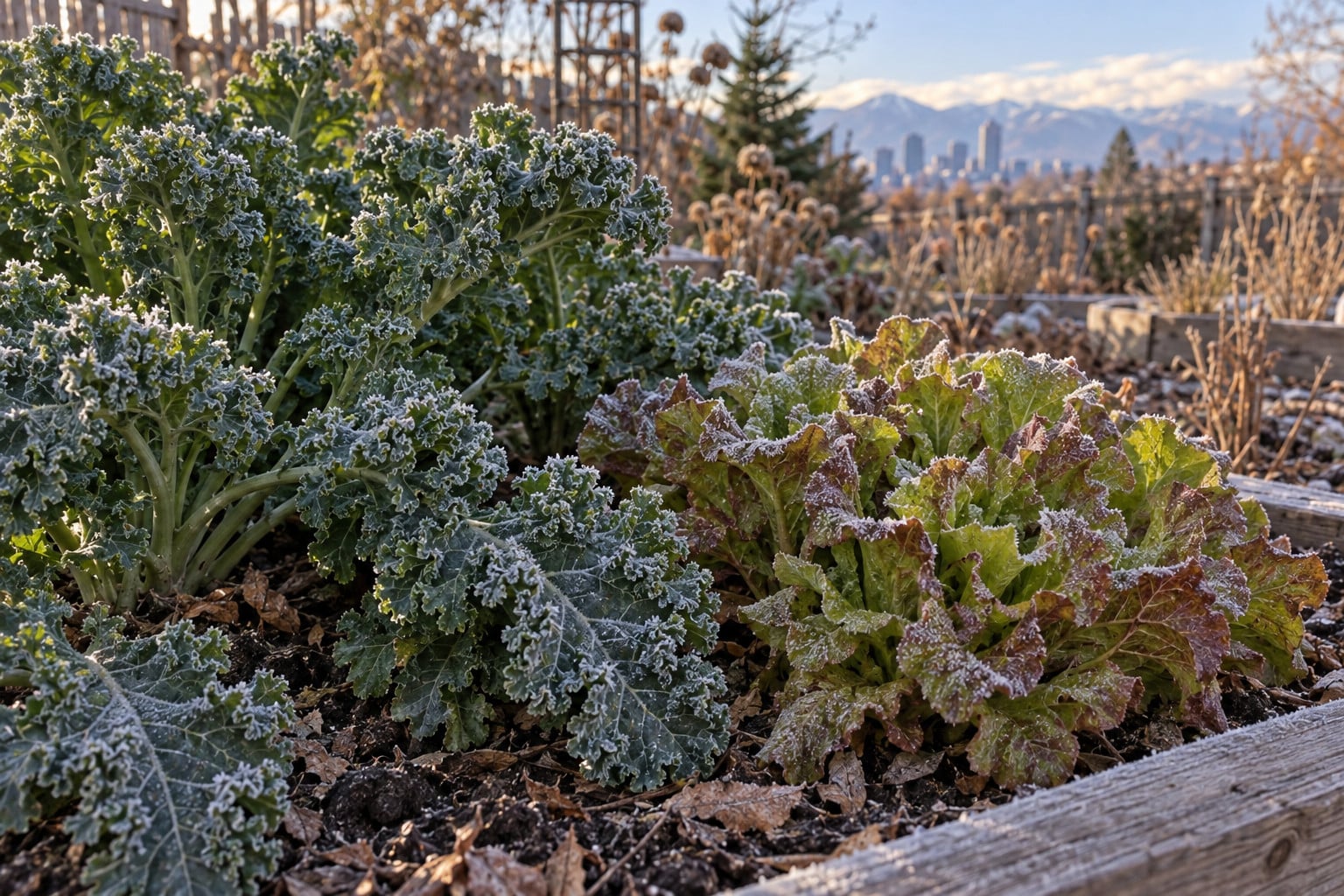
A frozen leaf is not, by itself, proof that the plant is lost. That is why the first branch of the decision tree says wait, not clear the bed.
But thawing is not a certificate of recovery, either. Reassess the crop before choosing leaves for the kitchen. A late-season change in appearance is not a diagnosis: don’t automatically label every changed leaf as freeze injury, and don’t treat green color as proof that produce is suitable to eat.
Keep the questions separate: Can this plant remain in the bed? and Is this particular leaf or root suitable for the meal? Plant survival does not answer both.
Your last-week harvest checklist
The goal is a dependable ingredient list, not the largest possible pile on the counter. This is a picking plan—not a crop-by-crop storage protocol or a promise that anything harvested today will keep until Thanksgiving.
- Mark each crop harvest, protect, or wait.
- Let frozen kale and lettuce thaw naturally on the plant before handling.
- Check a sample carrot before harvesting the quantity your recipe needs.
- Decide where each harvested crop will go and how you will store it before picking; don’t assume one method or keeping time fits all three.
- Secure cover sides and ends, then arrange the next inspection.
- Recheck harvested ingredients before committing them to the meal. Don’t assume cold tolerance establishes food safety.
- Put the missing ingredients on the shopping list.
Leave healthy crops standing when conditions and follow-up make that a reasonable choice. Harvest the portion you need when uncertainty is doing most of the planning. And buy the lettuce if the bed cannot reliably provide it. Dinner is not a final exam for the garden.


