

In autumn 2024, the cold morning was the part I had prepared for. The sunshine that followed needed more attention.
Our small, unheated cold frame in Denver held lettuce and radishes. I had closed it against the overnight chill. When the sun returned, I checked inside instead of trusting the air outside and opened the lid for ventilation. That became the beginning of a more useful routine. During my library shifts, Joel and I arranged a midday check.
A cold frame gives you another gardening task at lunchtime. It is worth knowing that before you fill one.
The thermometer belongs inside
A jacket-worthy morning can turn into a bright afternoon while the air inside a closed frame warms much faster than you expect. The lid admits sunlight and limits the movement of air. That shelter is useful at night. By day, you need to manage it.
Put a thermometer where it helps you judge the conditions around the crop, following its instructions for placement. A reading taken in strong direct sun may mislead you about the surrounding air. You want useful information, rather than a dramatic number to worry over.
Then learn what the crop needs. Cool-season greens do not become heat lovers because they are growing under a lid. The University of Missouri’s cold-frame guidance gives roughly 65–70°F as a preferred daytime air range for cool-season plants. That is a growing preference, not a promise that every crop suffers at the next degree.
Start checking and adjusting before the frame becomes excessively hot. Open it enough to release warmth, secure the lid, and read the thermometer again. The amount of opening will change with sunshine, wind, the frame itself, and what is growing in it.
Looking at the leaves helps, too. But waiting for a plant to wilt makes the plant your alarm. I would rather look at the thermometer first.

Give the day three small jobs
My useful question changed from “Did I close the frame?” to “What does the frame need next?” Those are different questions.
In the morning, look at the forecast and the plants. Check the mix before watering. Notice whether the lid is secure and whether anything is blocking the hinge or the opening. Decide who can return later, especially if a cold start is followed by strong sunshine.
At midday, read the temperature inside and adjust the ventilation. A little opening may be enough in some conditions; other days require more. Recheck after changing it. Outside air can feel pleasant while the sheltered crop needs a larger opening.
Toward evening, reassess. Close the lid after excess daytime warmth has passed so the frame can conserve useful heat overnight. Secure it before you leave. If the forecast has changed, your evening plan may need to change as well.
| When you check | What you are deciding |
|---|---|
| Morning | Does the crop need water, and who can check as sunlight strengthens? |
| Midday | How much ventilation do the conditions inside require? |
| Evening | Has excess warmth passed, and what protection is realistic tonight? |
This is a rhythm, not a timetable that works in every yard. A frame shaded by a fence will behave differently from one in uninterrupted sun. In Denver, I also have to think about wind. Your local weather gets a vote.
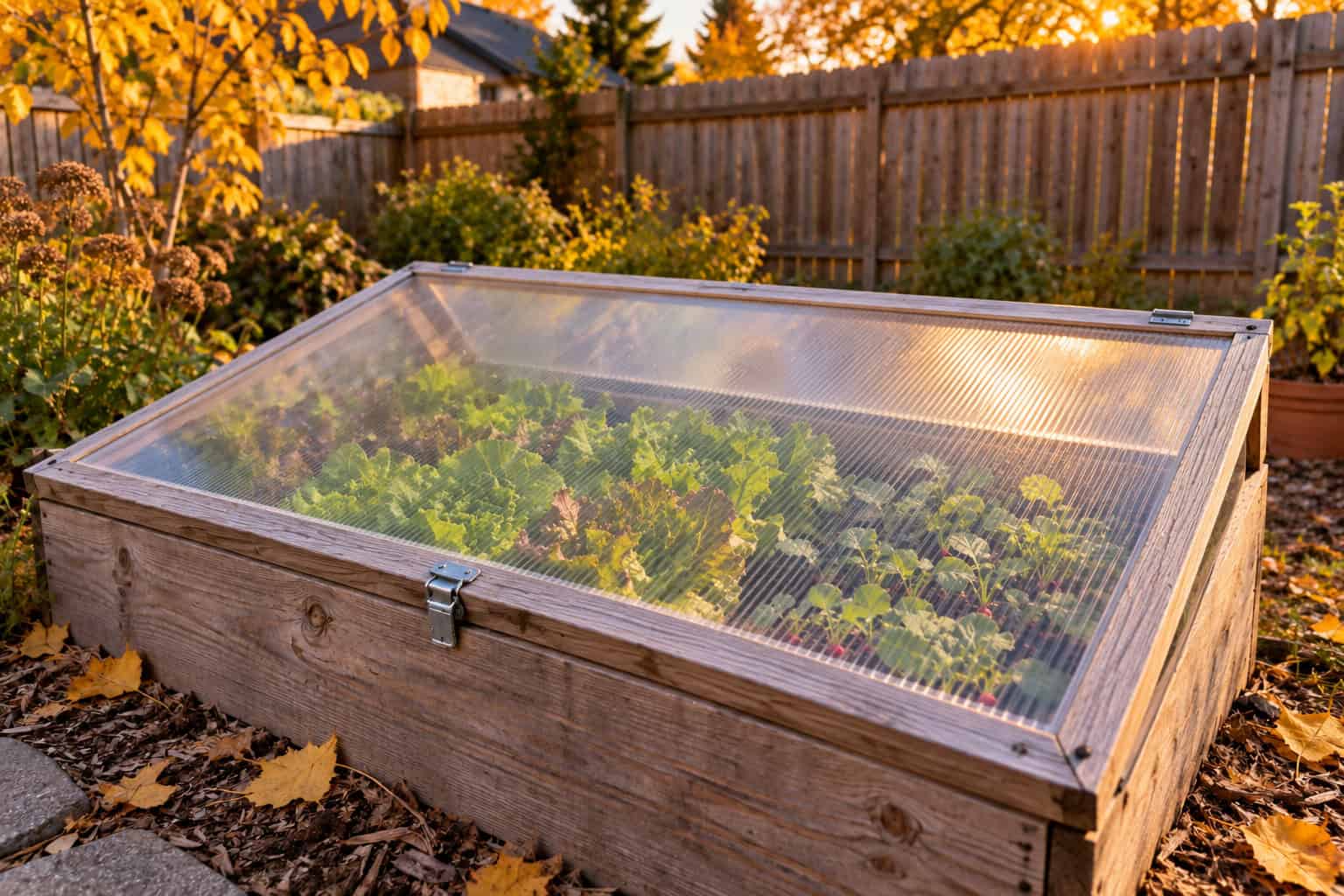
A lid prop is part of the equipment
A propped lid needs to stay where you put it. An improvised object that slips or lets the lid slam can injure you, damage plants, or break the cover.
Use a sound prop suited to the frame and its lid. Check the hinges and whatever holds the opening in place. Follow the frame maker’s instructions if you have them. In windy conditions, consider the direction of the opening and whether the lid is catching the wind. Do not leave a heavy or glazed cover in an arrangement you cannot trust.
Our broader cold-frame guide explains where these structures fit into the garden. Once yours is built, the hardware deserves the same attention as the plants beneath it. A lovely little box with an unreliable lid is still an unreliable box.
Plan for the day you cannot come home
Joel’s midday check helped because it answered a specific problem: I could be at the library when conditions changed. “Keep an eye on the garden” would have been a much less useful arrangement than checking the frame and its opening.
If nobody can check, decide that before the morning rush. Some frames can take a compatible automatic vent opener. These devices respond to warming conditions, but you still need to install, adjust, and observe them. They are equipment to maintain, not a reason to stop looking.
Iowa State’s cold-frame management advice discusses both manual ventilation and automatic openers. Our guide to cold frames and hot boxes also introduces venting options.
When reliable daytime attention is impossible, it may be better to use the frame less intensively or change the planting plan. The sensible setup is the one you can operate on an ordinary workday.
Water without sealing in a problem
Check moisture rather than assuming a protected crop needs none. The lid changes how rain reaches the soil, and ventilation changes how the frame behaves during the day.
When watering is needed, do it early enough for wet foliage to dry before the lid is tightly closed. Avoid turning a cold evening into a wet, sealed night. Condensation is a reason to inspect conditions and air movement; it is not proof that the roots have all the water they need.
Missouri’s guidance also cautions against widely opening a frame for watering when the outside air is below freezing. That is a useful reminder to organize the job around the weather instead of a habitual hour.
Know what the box cannot do
An unheated cold frame has no endless supply of warmth. A long, severe freeze can exceed what it offers. The crop, the frame, its site, and the weather all matter. A closed lid cannot make an unsuitable planting suitable.
I do not ask ours to prove that winter has been defeated. I ask whether I can give this small crop reasonable conditions today.
Before the next bright fall day, find the thermometer, check the lid prop, and settle the lunchtime arrangement. The cold night may be what gets your attention. The sunny afternoon deserves its own plan.


