

If you have a sizable garden and live near high deer populations, you’re probably familiar with deer trying to eat your plants.
Though naturally shy and often harmless, deers are notorious for treating a garden like a salad bar. Many gardeners struggle to plant flowers and evergreen shrubs when deer eat their plants shortly afterward.
To fight off deer and keep your garden zone safe, these ten deer-resistant plants have strong scents, rough textures, bitter taste, and various growing conditions that deer hate.
From a few inches tall to reaching a grown adult’s height, the flowers, shrubs, and small trees in this guide quickly deter deer while adding more variety and color to your garden all year round.
-
Butterfly Bush

- Scientific Name: Buddleja davidii (has various cultivars)
- Exposure: Full sun to partial shade
- Bloom Time: Summer to early fall
- Hardiness Zone: Zones 5 to 9
The buddleja plant, known as the butterfly bush, often attracts butterflies and other pollinators due to their vibrant flower colors and sweet fragrance.
These tall, deciduous shrubs range from 18 inches tall to a staggering 7 feet tall height, making them immediately noticeable to many animals.
However, they are popular deer-resistant plants as deer hate their distinctive scent. Deer tend to avoid any strongly scented shrubs or flowers.
The buddleja leaves have a coarse texture and contain mildly toxic components that may hurt them if ingested in large amounts.
If your garden is near local wildlife, the overabundance of other plants will help with deer proofing, as deer tend to prefer softer, less fragrant plants to eat.
By getting these deer-resistant plants, you repel deer from invading your garden while adding the beautifully vibrant colors of B. davidii to your garden.
-
Daphne

- Scientific Name: Daphne sp.
- Exposure: Partial shade to full sun
- Bloom Time: Late winter to early spring (some species bloom in summer)
- Hardiness Zone: Varies by species, generally Zones 4 to 9
The daphne plant blooms throughout the summer and ranges in height from 4 to 6.5 feet tall. Its dynamic colored flowers grow beautifully in well-draining soil, and its lavender petals attract pollinators while remaining deer-proof.
Many Daphne species have a heavenly fragrance that deers cannot stand. They have mildly toxic chemicals, like daphnetoxin or mezerein, within their leaves or stems.
Once deer try to eat them, they immediately avoid their toxic chemicals, reducing deer damage in your garden.
Their tough and leather-like texture also pushes deer away. They prefer to eat softer flowers, so keeping these deer-resistant plants around helps beautify your garden through the summer.
-
Barberry

- Scientific Name: Berberis sp.
- Exposure: Full sun to partial shade
- Bloom Time: Spring to early summer
- Hardiness Zone: Depends on the specific species but is generally Zones 4 to 9
Barberry plants are evergreen shrubs found throughout temperate to hot climates worldwide. At 3-6 feet tall, barberries bloom from mid to late spring and are reliably deer-resistant.
Though their varying shades of yellow, green, and burgundy make these trees beautiful additions to any garden, their thorny leaves make them deer-resistant.
Additionally, barberries have alkaloid compounds within their leaves and stems, giving them a bitter taste. The combination of its bitterness and thorny texture quickly keeps deer away.
With its many species and varying colors, barberry is a great deer-resistant addition that protects your garden from cloven-hooved intruders.
-
Catmint

- Scientific Name: Nepeta cataria/nepeta sp.
- Exposure: Full sun to partial shade
- Bloom Time: Late spring to early fall
- Hardiness Zone: Zones 3-9
Catmint’s beautiful purple colors and fuzzy foliage attract many people and animals when planted. From 10-24 inches tall, catmint plants are perennials with over 250 variants.
However, their strong fragrance and fuzziness help make them popular deer-resistant flowers.
Deer avoid plants with a distinct odor and texture that their bodies cannot handle. Catmint ticks these boxes with its bitter flavor and mildly toxic chemicals.
This combination of odor, texture, and taste makes this plant a must-have near forested areas.
-
Bee Balm

- Scientific Name: Monarda didyma
- Exposure: Full sun to dappled shade
- Bloom Time: Summer
- Hardiness Zone: Zones 3-9
These deer-resistant plants are popular for their vibrant pink to purple flowers and rapid growth under sun exposure. At 1-4 feet tall, this colorful plant easily attracts various pollinators throughout the early to late summer.
Though the bee balm leaves’ sweet and strong fragrance attracts bees and butterflies, they quickly push deer away. Its bitter flavors reduce the chances of deer trying to eat its flowers.
The reason why bee balms have such sweet fragrances is because of their natural compounds, such as thymol and carvacrol. These compounds naturally attract pollinators to spread their pollen across various locations.
However, its natural scent is too strong for deer, and its coarse texture is another reason deer stay away from it.
If you want vibrantly colored flowers to populate your garden without attracting white-tailed deer or other herbivores, then bee balms are a great plant option.
-
Peony

- Scientific Name: Paeonia lactiflora/paeonia sp.
- Exposure: Full sun to partial shade
- Bloom Time: Late spring to early summer
- Hardiness Zone: Zones 3-8
Peonies are popular perennials that bloom into large flowers with a beautiful pink shade, and are fortunately considered deer-resistant plants.
One of the biggest reasons peony flowers are so deer-resistant is their big, colorful petals. Deer prefer smaller plants, like tiny white flowers that are easier to chew on.
Peony leaves and stems are also coarse and tough, which deer cannot handle.
Not only are these spring plants famous for their beautiful colors and naturally larger flowers, but they also cause deer to avoid getting close to surrounding plants.
To preserve peonies’s natural deer-deterrent qualities, keep them in well-drained soil within the specified zones.
-
Spider Flower

- Scientific Name: Cleome hassleriana/Cleome sp.
- Exposure: Full sun to partial shade
- Bloom Time: Late spring to fall
- Hardiness Zone: Zones 2-11
The soft pink, seemingly heart-shaped flowers of this deer-resistant plant have a strong odor that, while normally pleasant for humans, causes deer to shy away from them.
At 1 to 5 feet tall, the spider flower’s unique petal shape is its natural shield against deer. Most deer prefer smaller plants without vibrant colors or a large shape.
Besides the shape of its flowers, its leaf stalks are covered by sharp spines and thorns. These spikes naturally protect the flower from various animals, especially deer.
Thanks to its natural features, spider flower plants grow well under the sun, boosting your garden’s beauty.
-
Astilbe
- Scientific Name: Astilbe sp.
- Exposure: Partial to full shade
- Bloom Time: Late spring to early summer
- Hardiness Zone: Zones 4-9
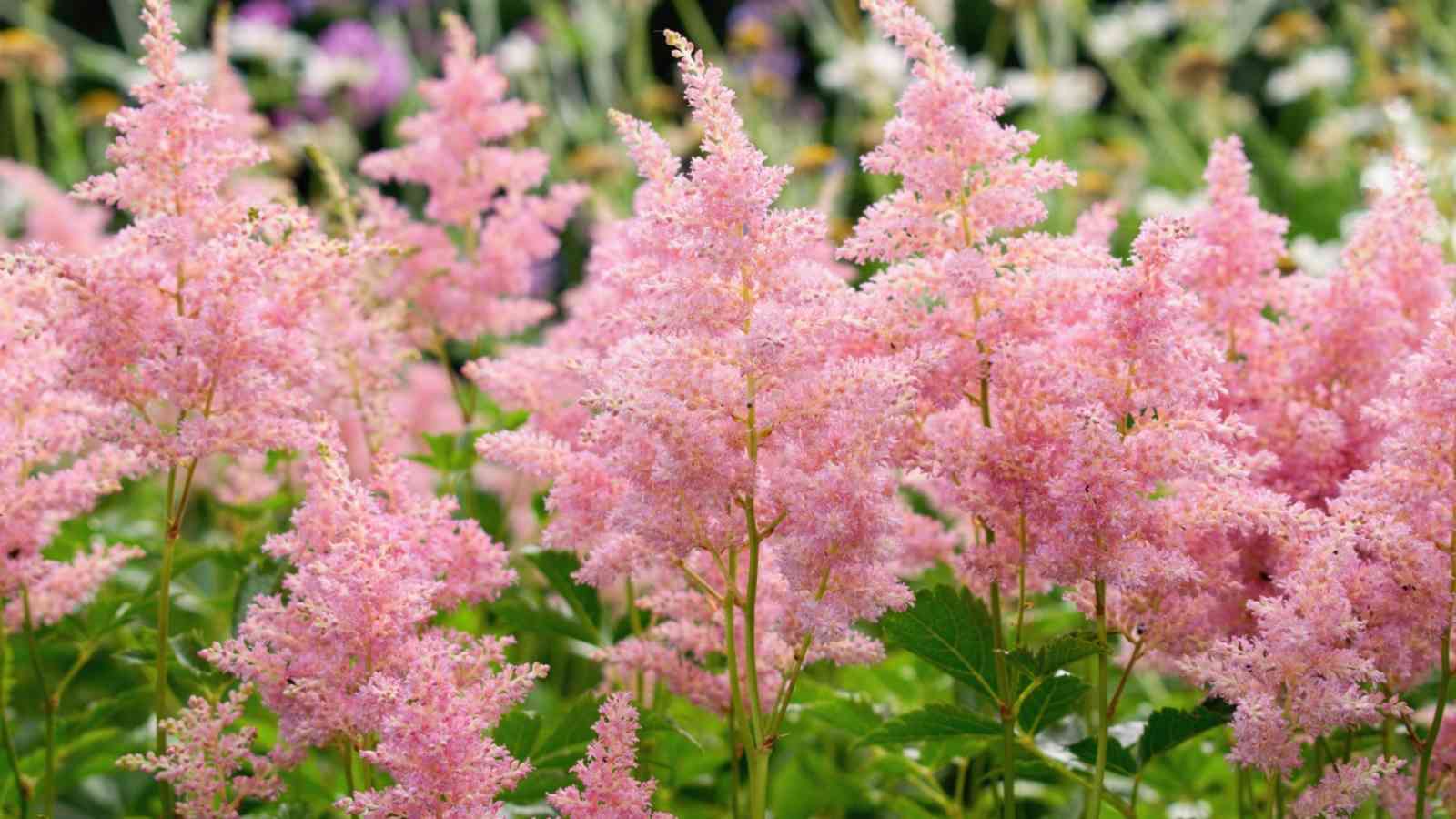
Astilbe plants have tall, vertical flowers with vibrant colors. Like many of the plants in this list, its coarse texture and bitter flavor are naturally deer-resistant.
Though various insects and animals love the astilbe’s flowers and leaves, they are too rough and hairy for deer to eat.
While not as fragrant as other deer-resistant plants, astilbe also has a faint odor that pushes deer away. Due to their lack of nutritional value, they are used more as decorative plants in ornamental grasses and other floral designs.
Astilbe’s natural components and growing conditions keep them and surrounding plants safe from deer. When cultivating this gorgeous spring plant, remember to grow it in well-drained soil.
-
Lavender

- Scientific Name: Lavandula angustifolia
- Exposure: Full sun
- Bloom Time: Late spring to early summer
- Hardiness Zone: Zones 5-9
The lavender plant is a highly popular option for gardeners worldwide. Their naturally fragrant scent, beautiful color, and manageable growing conditions make them a popular target for butterflies and other insects.
However, these same features are key reasons deer cannot eat lavender. Its coarse texture, scent, and strong flavor make it unpalatable to deer, protecting its leaves and surrounding plants.
These plants also have a natural defense mechanism through their chemical compounds, and planting them in well-drained soil strengthens this natural defense.
-
Ferns
- Scientific Name: Polystichum acrostichoides
- Exposure: Partial to full shade
- Bloom time: Nonflowering plant
- Hardiness zone: Zones 3-8
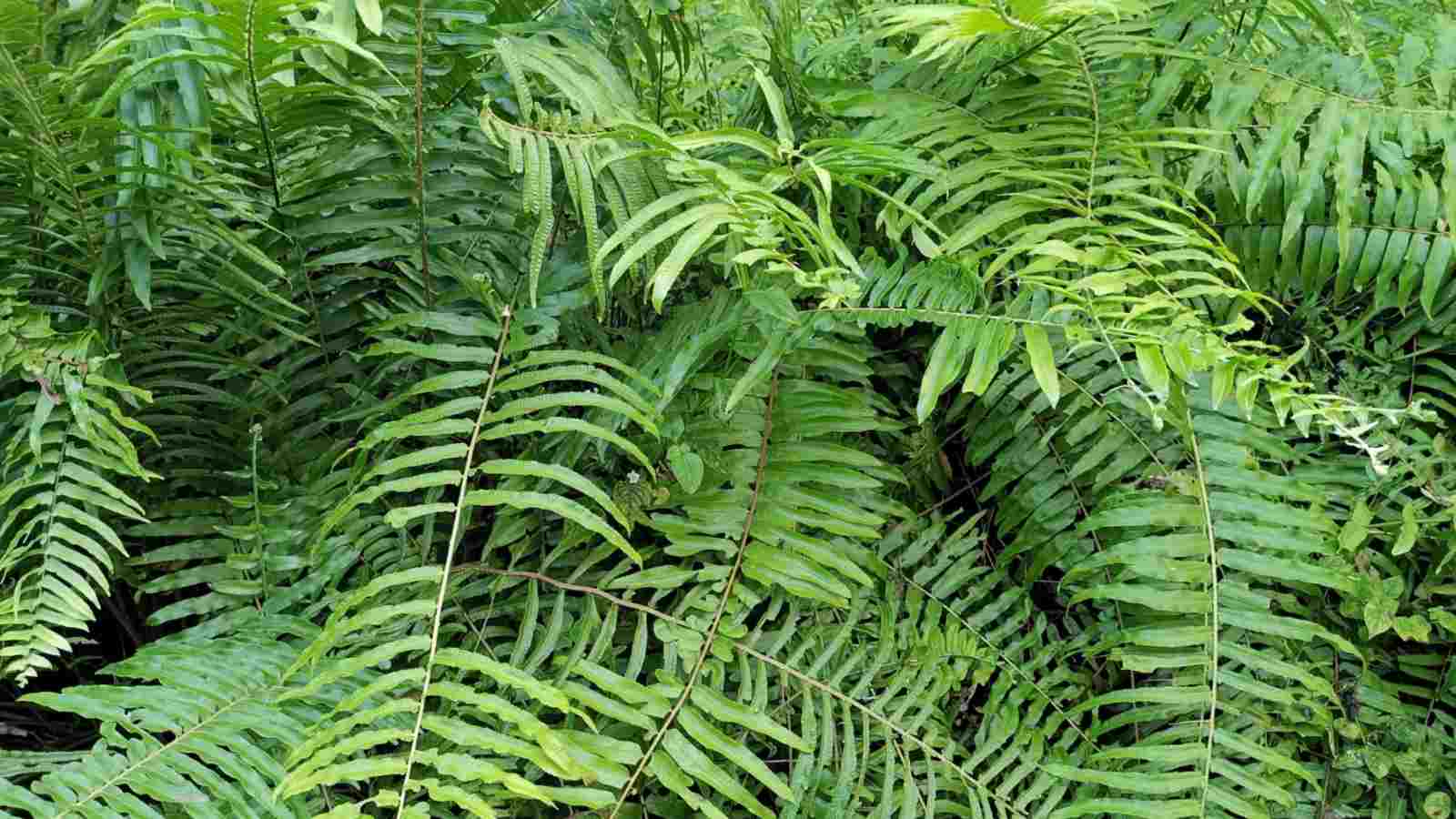
Unlike the other plants in this list, ferns are nonflowering plants with true roots, stems, and leaves. A key distinction for ferns is how they reproduce through spores, along with their floppy leaves.
These tough and coarse leaves and the natural toxins within ferns protect them from deer. Since deer prefer softer plants, various fern species naturally protect themselves from deer damage.
Additionally, the intricate natural designs of their leaves make many plants under this class too large or showy for deer.
Frequently Asked Questions
Thanks to the vast growing conditions of the flowers or shrubs in this list, it is easy to find deer-resistant plants anywhere in the world.
This section discusses common questions about these deer-resistant shrubs and flowers and provides additional options.
What Plants Do Deer Like Eating the Most?
Like many animals, deer have specific plant preferences. These are the features of various plants that deer love to eat:
- Soft Stems and Flowers: Deer prefer softer flowers and plants as they are easier to eat. Deer can easily eat delicate or smaller flowers, so avoid cultivating too many varieties of small flowers in your garden.
- Broad Leaves: Plants with broad leaves show good signs of nutritional value, making them natural food sources for deer.
- Soft Smell: Deer have sensitive noses that affect their food options. Plants that have little to no smell are generally safe for them to eat.
- Sweet Taste: Plants with sweet tastes, like mint or chamomile, are popular food options for deer.
- Tender Shoots: Plants with tender shoots are easier for deer to consume, so they often look for such plants when hungry.
Here are a few examples of plants that deer often target:
- Hostas: Hostas have soft, delicate foliage that makes them easier to eat.
- Hybrid Tea Roses: Hybrid tea roses have a softer scent and tender leaves that quickly attract deer and other animals.
- Daylilies: Daylilies have distinctly sweet-tasting roots that many ungulates cannot resist.
- Azaleas: Azaleas have smooth leaves and a weak yet sweet scent that deer use for browsing, or how deer consume leaves, twigs, and buds for specific plants.
- Rhododendrons: Rhododendrons have tender leaves and a good nutritional value that benefits many animals.
- Hydrangeas: The smooth texture and sweet taste of hydrangeas make them popular targets for browsing or grazing.
- Tulips: Tulips store their nutritional value and sweet taste within their bulbs. Their naturally colorful petals attract many herbivores, so it’s best to plant tulips sparingly if you live in an area with plenty of fauna.
What Plants Do Deer Dislike the Most?
Deer dislike any shrub or flower that has these features:
- Strong scent
- Rough or thorny texture
- No nutritional value
- Toxic chemical compounds
While the plants listed above are great options, here are other options that are naturally deer-resistant:
- Lamb’s Ear: At 15 to 30 inches tall, lamb’s ear plants are drought tolerant and have soft but fuzzy leaves, quickly deterring deer.
- Shasta Daisy: Shasta daisies have a strong scent and coarse, prickly leaves that protect them from predators.
- Dusty Miller: Dusty Miller plants have a silvery-white appearance, fuzzy leaves, and bitter flavor.
- Osmanthus: Osmanthus are often used for hedging and privacy screens, but they are best known for their strong fragrance, which deer hate.
- Globe Thistle: These plants have a small globe shape with spiky foliage, strong scent, and bitter leaves, making them unattractive to some herbivores.
- Russian Sage: Growing Russian sage in well-drained soil strengthens their aromatic qualities, which keep deer and other animals away.
Conclusion
While various plants are natural targets for deer and other herbivores, planting any of these flowers or shrubs can protect and beautify your garden.
Remember to keep your local area’s hardiness zones in mind to avoid choosing the wrong plants. Only choose plants that you can realistically cultivate in your area.
You may also want to consider spraying commercial plant-safe repellant sprays to keep deer away.
Regularly maintain these plants like any other flower or shrub to protect them from deer and other animals.
Other Guides from Planet Natural:


