

During the wet winter of 2023, Mira asked where she was supposed to put her feet. It was a reasonable question about our Tacoma garden, although my plans had given the plants much more attention than the person trying to reach them.
The bed margins had softened with rain. The path was too narrow. The most convenient route began to include ground I was meant to be growing in.
I am a book-cover designer, and I can spend an unreasonable amount of time considering the space around an image. In the garden, I had treated the space around the beds as whatever remained after the interesting part was finished. Winter made that omission visible.
The route was already there
Before planning a wider approach, I watched where we actually walked. A proposed path has a tidy outline. An ordinary person carrying something through a wet garden takes the route that seems usable at the time.
The distinction matters. A narrow strip may look adequate when you stand still in summer shoes. It can feel different when you need to turn, reach the bed, or avoid brushing against wet plants. If the route repeatedly sends your foot over the bed edge, the planting space and walking space are competing.
I began keeping my feet out of the beds and gave access a place in the redesign. The choice meant prioritizing a wider, stable approach rather than another strip for plants. I could be disappointed about the lost planting opportunity and still recognize that I needed somewhere to stand.
My enthusiasm for a new plant label did not solve Mira’s question.
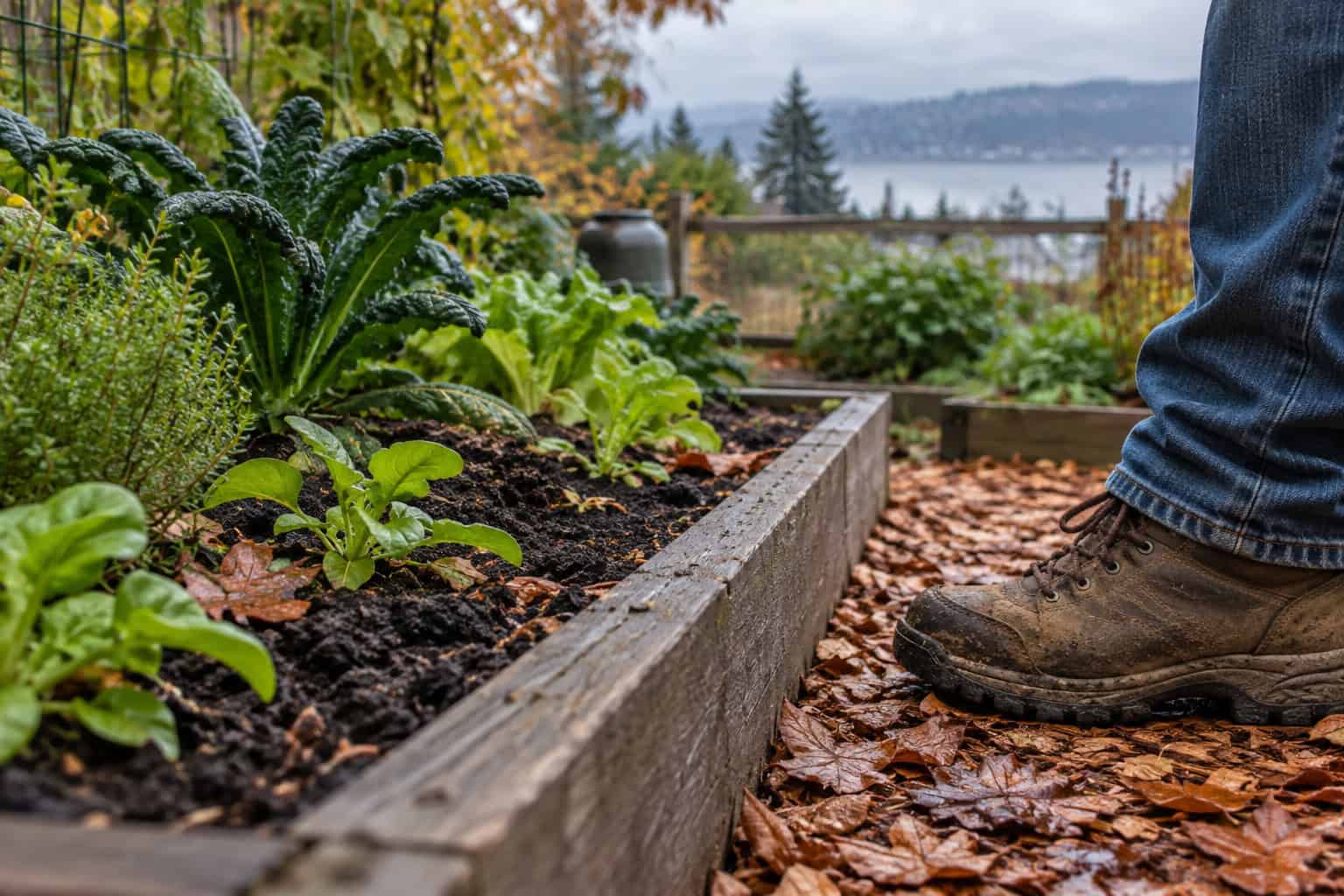
A footprint is useful information, not a soil diagnosis
It would be satisfying to say that the muddy marks explained everything wrong with the garden. They did not.
Repeated foot traffic can compact growing soil, restricting the movement of water and air and making root penetration more difficult. Working wet soil can damage its structure. Oregon State explains those relationships in its guide to improving garden soils.
But a puddle does not tell me, by itself, whether the site has a drainage problem, a compacted layer, runoff arriving from elsewhere, or several things happening together. Nor can I prove recovery by admiring a dry-looking patch on a different day.
What I could identify was a habit I had control over: taking a shortcut across the growing surface. I did not need a perfect explanation of every winter water problem to stop doing that.
Planet Natural’s article on late-season cover crops recognizes how limited foot space can interfere with growing areas. That small practical detail deserves room in the plan before any cover-crop or planting decision.
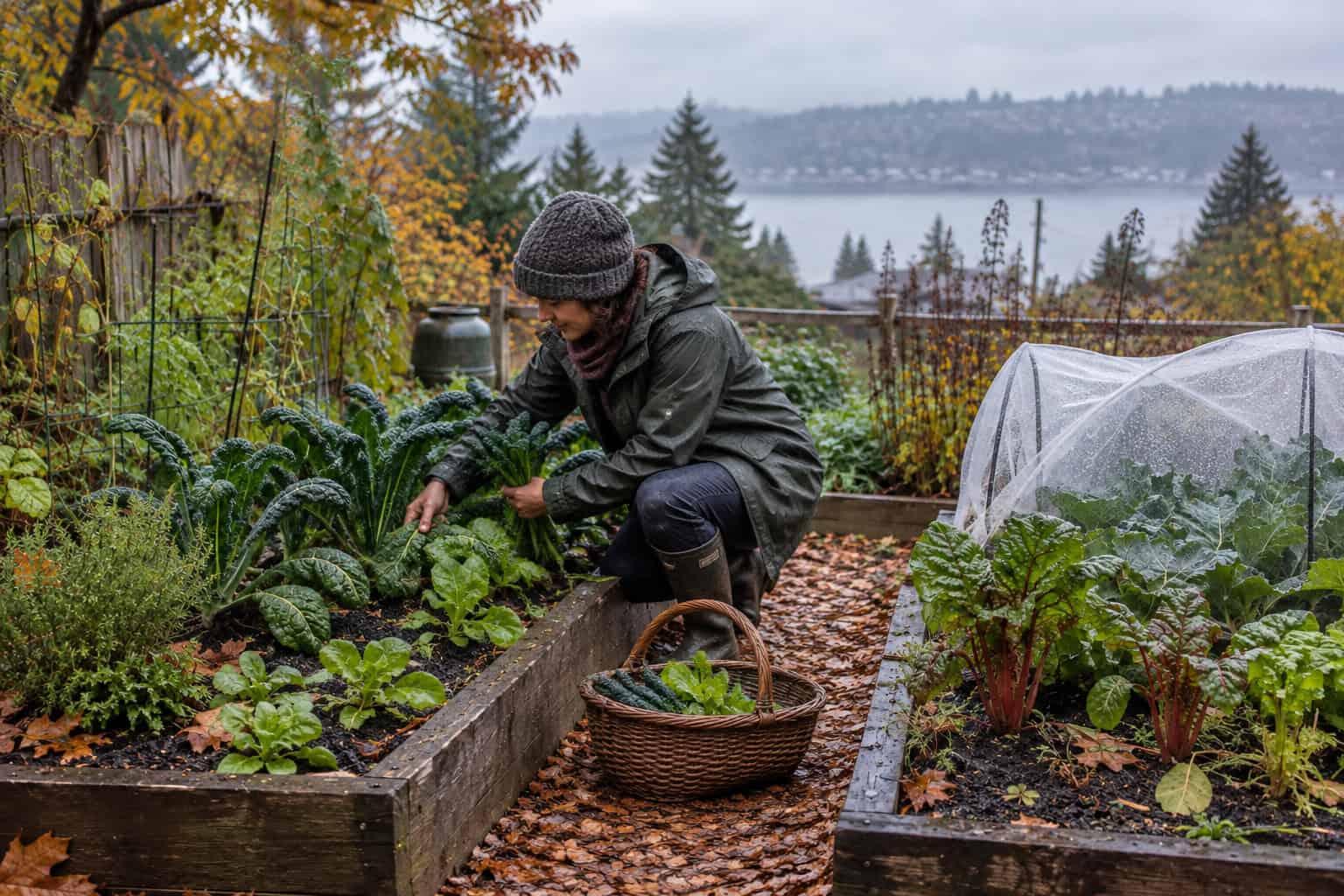
Make room for the work you actually do
When planning access, I now start with the tasks. Where will I stand to harvest? Can I inspect a plant without leaning so far that I lose my balance? How will a tool, watering container, or basket travel through the route?
A bed should be sized around the gardener’s reach from the available sides. Your reach may be different from mine. A diagram’s preferred width is less useful than an arrangement you can work without stepping into the growing soil.
Try the movement before committing to a new boundary. Mark the proposed edge temporarily when conditions permit, then stand on the path and check whether you can reach the intended growing area comfortably. Remember any gate, hose connection, or turn that needs clearance.
There is no prize for using the last possible inch if using it makes the rest of the garden harder to tend. I find that sentence easier to accept in winter, when the bare arrangement is more visible and the plants are making fewer persuasive arguments.
Stable footing comes before a handsome surface
A path material should suit the site, its drainage, and the people using it. An attractive surface that shifts, stays slick, or creates an awkward edge needs more thought.
Consider the transition from the door to the path and from the path to each working position. Where does water arrive? Where will it go? Will the material remain in the walking area, or migrate into the bed? Can the route be maintained without disturbing the plants beside it?
My story is about correcting access, not recommending one universal material. Wood chips, gravel, paving, and other surfaces have different installation and maintenance needs. A photo of a pleasant wet-weather garden cannot choose between them for your property.
If water repeatedly pools against a building or makes the route unsafe, seek advice suited to the site. Adding material over a problem is not necessarily solving it. Neither is digging a drain without understanding where the discharge will go.
Give the beds a wet-weather boundary
A visible edge helps distinguish the place for feet from the place for roots. It also helps other people use the garden without learning every boundary from experience.
The edge does not have to become a decorative construction project. It needs to be understandable and safe. Avoid introducing a low obstacle that is easy to catch with a toe or an arrangement that confines water where you do not want it.
Keep inspecting the route when rain returns. A path that works in a dry afternoon still needs to work during the season that prompted the redesign. Notice encroaching plants and shifting material before the shortcut becomes attractive again.
Our seedling-planting advice also warns against working extremely wet soil. The same patience belongs in a garden redesign. Planning from the path is possible while waiting for the ground to become workable.
I could give up a strip of plants
The useful result of the 2023 change was a better design: access had become something the garden required.
That was a modest outcome, and a useful one. I did not have to fill every margin. I had to make it possible to reach what was already growing there.
When autumn rain begins, I look at the route as closely as the beds. Before you add another planting strip, try Mira’s question in your own garden. Decide where a person will put their feet, then leave them enough room to do it.


