

If you’ve spotted a stink bug around, you might come across stink bug eggs as well.
Stink bugs, known for their unpleasant odor when disturbed, are a common household pest. However, it’s not only the adult bugs that can cause a nuisance; their eggs too can be a source of concern. Understanding the life cycle of stink bugs, especially their eggs, is crucial in implementing effective pest control strategies.
These bugs are very common in almost every part of the United States because they don’t have any predators to keep them in check. Female stink bugs can lay a large number of stink bug eggs, contributing to the ongoing population increase.
Stink bug eggs are tiny, barrel-shaped, and usually laid in clusters on the underside of leaves or in hidden areas around your home. These eggs are often overlooked due to their small size and the mother bug’s clever placement. They are a pale yellow color when first laid, but gradually darken as they near hatching.
The hatching of stink bug eggs can lead to an infestation in no time if not promptly dealt with. It’s essential to spot and eliminate these eggs to prevent a full-blown stink bug invasion.
In this article, I’ll go over everything you need to know about stink bug eggs and exactly how to get rid of them.
What are Stink Bug Eggs?
Stink bug eggs are the initial stage in the life cycle of a stink bug. These tiny eggs are usually laid by the female stink bug in clusters on the underside of leaves or stems of plants. They are elliptical in shape and are often described as being similar to small barrels.

The color of stink bug eggs can vary, but they are often light green or yellow when first laid, turning to a darker, almost black color as they get ready to hatch. Each egg is approximately 1.5 millimeters in diameter, which makes them quite hard to spot without a keen eye.
Stink bug eggs are notorious for being a sign of an impending infestation. This is because each female stink bug can lay hundreds of eggs in her lifetime, and these eggs can hatch in just a few days depending on the temperature and weather conditions.
The brown marmorated stink bug (BMSB) is actually native to Asia and was accidentally introduced to the United States sometime in the late 1990s.
Unfortunately, native natural enemies have not been effective at controlling populations of the brown stink bugs in the US.
However, recently a new natural enemy is being researched in parts of British Columbia, Canada. It’s a tiny parasitic wasp called the samurai wasp that attacks the eggs. Further studies in the future will reveal their level of effectiveness against stink bug eggs.
Lifecycle Of Stink Bug Eggs
The lifecycle begins when a female stink bug lays her eggs, usually in late spring or early summer. She will often choose the underside of leaves or stems, where the eggs are less likely to be disturbed. The eggs are small, round, and often a light green or yellow color, making them difficult to spot.

After about a week, the eggs hatch into nymphs. These nymphs resemble adult stink bugs, but are smaller and lack wings. They go through five stages of growth, known as instars, before reaching adulthood.
During each stage, the nymphs shed their skin, a process known as molting. This stage of the lifecycle is when stink bugs are most vulnerable as they are less mobile and can’t fly away from predators or threats.

The first instar nymphs have a black head and thorax, and an orange-red abdomen. Adults have two white bands and their black hind legs and antennae lack bands.
As the weather cools in the fall, adult stink bugs seek out warm places to overwinter. They often find their way into homes, becoming a nuisance to homeowners. In the spring, the adults emerge from their overwinter sites, and the females begin laying eggs to start the lifecycle anew.
What Do Stink Bug Eggs Look Like?
Stink bug eggs are tiny, about the size of a pinhead. They are elliptical in shape and have a distinctive light color, usually ranging from a pale yellow to a light green.
The eggs are often laid in tight clusters or rows, usually on the underside of leaves or on stems. This is a strategic location, providing the eggs with protection from predators and harsh weather conditions.
The eggs have a somewhat shiny or glossy appearance, which can make them stand out against the green of the leaves. If you look closely, you may also notice a tiny lid on the top of each egg. This is where the nymph (the baby stink bug) will emerge from.
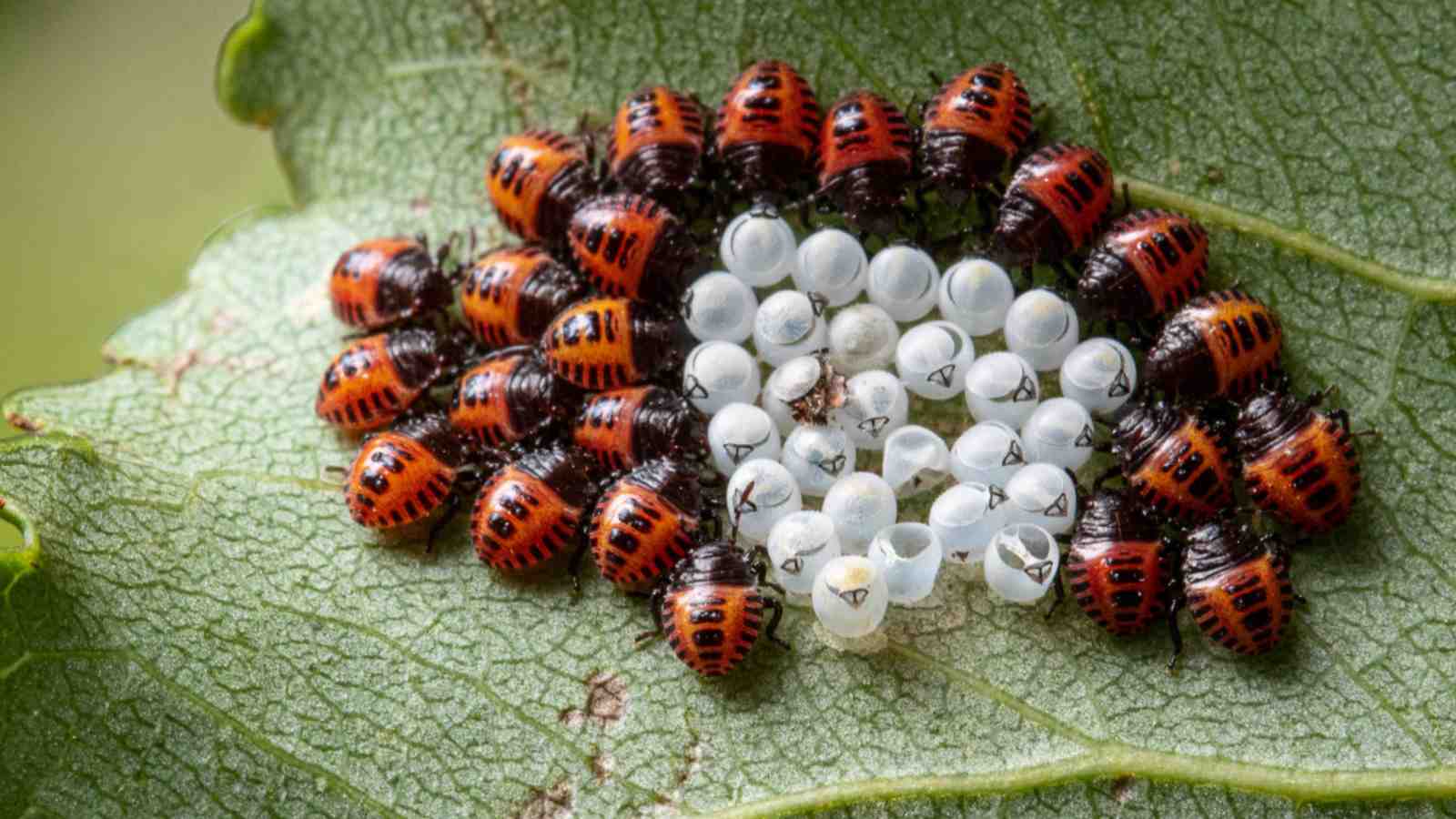
How To Spot Stink Bug Eggs?
Spotting stink bug eggs can be a challenge due to their small size and color which often blend with their surroundings. However, with a keen eye and knowledge about their characteristics and preferred locations, you can identify these potential pests early on.
Stink bug eggs are often laid in clusters, usually of 20 to 30 eggs. They are barrel-shaped and tiny, about 1mm in size. The color of the eggs can range from light green to yellowish, depending on the species of the stink bug and the eggs’ age.
Stink bugs prefer to lay their eggs on the underside of leaves or on stems of plants. They are particularly fond of fruits, vegetables, and other plants, so these are the areas you should inspect first.
Using a magnifying glass may help you spot these tiny eggs. Look for clusters of small, barrel-shaped eggs. If you see a cluster, it’s essential to take action immediately to prevent the eggs from hatching and causing an infestation.
Where are Stink Bug Eggs Found?
Stink bugs, scientifically known as Halyomorpha halys, are notorious for their unique defensive mechanism of releasing an unpleasant odor when threatened or crushed. Equally important to understanding this pest is knowing where to find their eggs.
Stink bugs are not picky when it comes to laying their eggs. They are known to lay their eggs in a variety of locations, primarily on the underside of leaves and stems of plants.
These plants can range from ornamental plants in your garden to agricultural crops such as soybeans, peaches, and tomatoes. This is why stink bugs are considered a significant agricultural pest in many regions.
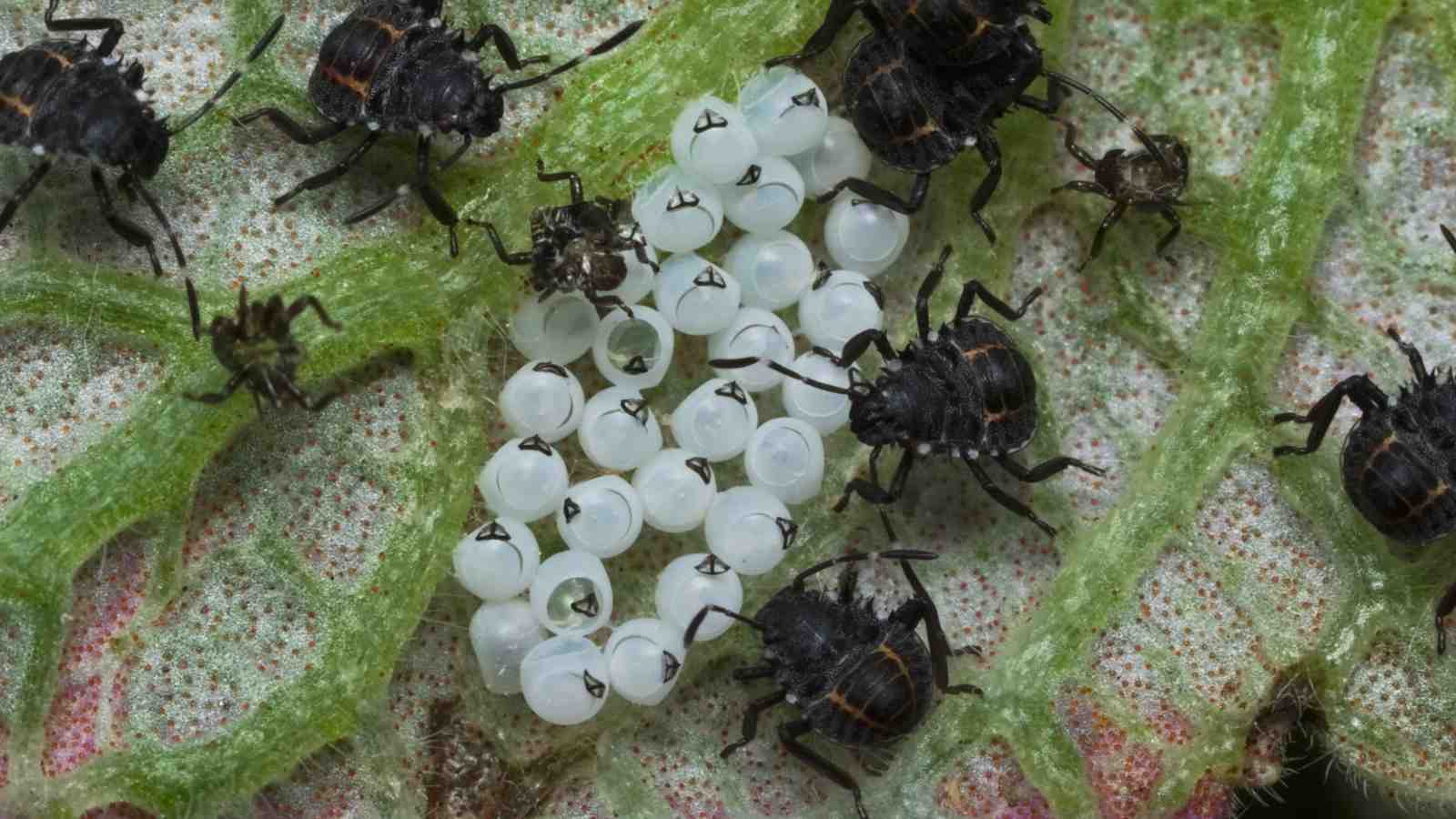
The female stink bug tends to choose plants that provide ample food sources for her offspring once they hatch. She meticulously places her eggs in clusters, usually arranged in a tight, neat rows or a circular pattern.
This strategic placement not only provides a direct food source for the newly hatched nymphs, but also offers some degree of protection from predators and harsh environmental conditions.
In addition to outdoor plants, stink bugs can also lay their eggs indoors. If they find their way into your home, they may lay eggs in crevices, behind furniture, or even on curtains. This is less common, but can occur particularly during colder months when these pests are seeking warmth and shelter.
Stink Bugs Mating Season
Stink bugs, like many other insects, have a specific mating season which plays a crucial role in the proliferation of their eggs.
Usually, stink bugs mate in the warmer months of spring and early summer. During this period, they emerge from their winter hiding spots in search of mates. After mating, female stink bugs lay clusters of eggs, usually on the underside of leaves or other hidden areas, to protect them from predators and harsh weather conditions.
The frequency of mating and egg-laying can depend on the species of stink bug and the environmental conditions, but it is common for a single female stink bug to lay hundreds of eggs in her lifetime. This rapid reproduction rate is one of the reasons why a stink bug infestation can quickly get out of control if not properly managed.
Knowing this, it’s advisable to ramp up your pest control efforts in the spring and early summer to catch these pests early before they have a chance to lay their eggs.
Regular inspections of your property, particularly focusing on plants, trees, and shrubs, can help spot signs of stink bug activity.
Stink Bug Egg Host Plants
Stink bugs are not particularly choosy, and they will lay their eggs on a variety of plants. However, they do have preferences. These bugs often choose plants that are abundant in their environment or that provide a good source of food for the hatching nymphs.
Some of the most common host plants for stink bugs include fruits, vegetables, and ornamental plants. They are particularly fond of apple and peach trees, as well as beans, corn, and tomatoes. In addition, stink bugs may lay their eggs on a variety of ornamental plants, such as roses and maple trees.

Damage Caused By Stink Bug Eggs
Stink bugs, in their adult and nymph stages, are notorious for the damage they cause to various crops and ornamental plants. However, the threat begins much earlier, at the very start of their lifecycle – the egg stage.
Stink bug eggs are laid in clusters on the undersides of leaves, often on plants that the bugs find attractive for feeding. When these eggs hatch, the emerging nymphs begin feeding immediately, causing significant damage to the host plants.
The nymphs use their sharp, needle-like mouths to pierce plant tissues and suck out the sap. This feeding not only stunts the growth of the plant but can also lead to the development of unsightly blemishes on fruits and leaves, as well as discoloration. In severe infestations, this can lead to a significant reduction in crop yield and quality.
Plus, the feeding activity of stink bug nymphs can also make plants more susceptible to disease. The feeding punctures provide an entry point for pathogens, leading to an increased incidence of plant diseases.
In addition to the direct damage caused by their feeding, stink bugs can also cause indirect harm. The strong, unpleasant odor emitted by stink bugs when threatened can deter beneficial insects and predators from visiting the infested plants, further exacerbating the problem.

How To Get Rid Of Stink Bug Eggs
Getting rid of stink bug eggs can be a daunting task, but with the right approach, it is entirely do-achievable.
Firstly, it’s essential to understand that stink bugs, like many pests, are attracted to certain environments. Therefore, maintaining a clean and clutter-free home can deter these pests from laying their eggs in the first place.
If you already have an infestation, here are some steps you can take:
Manual Removal: One of the most effective ways to get rid of stink bug eggs is by manually removing them. This can be done using a vacuum cleaner or by hand (wearing gloves). After removal, ensure you dispose of the eggs properly to prevent them from hatching.
Use of Pesticides: There are several insecticides available in the market that are designed to kill stink bugs and their eggs. However, it’s important to use these products cautiously, as they can be harmful if not used correctly. Always read and follow the manufacturer’s instructions.
Diatomaceous Earth: This is a natural powder made from tiny fossilized aquatic organisms and is lethal to many types of insects, including stink bugs. Sprinkle it around areas where you’ve spotted stink bug eggs.

Professional Pest Control: If the infestation is too large to handle, it may be best to hire professional pest control services. They have the knowledge, experience, and tools necessary to effectively and safely eliminate stink bug eggs.
Other Pest Guides from Planet Natural:
How to Identify and Get Rid of Stink Bugs (BMSB)


