

Russian sage is a perennial plant native to central Asia known for its lavender-blue flowers, extensive root system, and upright growth.
This hardy plant is a wonderful addition to any garden landscape, especially in poor soils, as it has a high drought tolerance.
In the early spring, the Russian sage begins to display new growth, with its foliage providing a unique texture to the garden. By late spring, it’s in full bloom, boasting tubular flowers that attract butterflies.
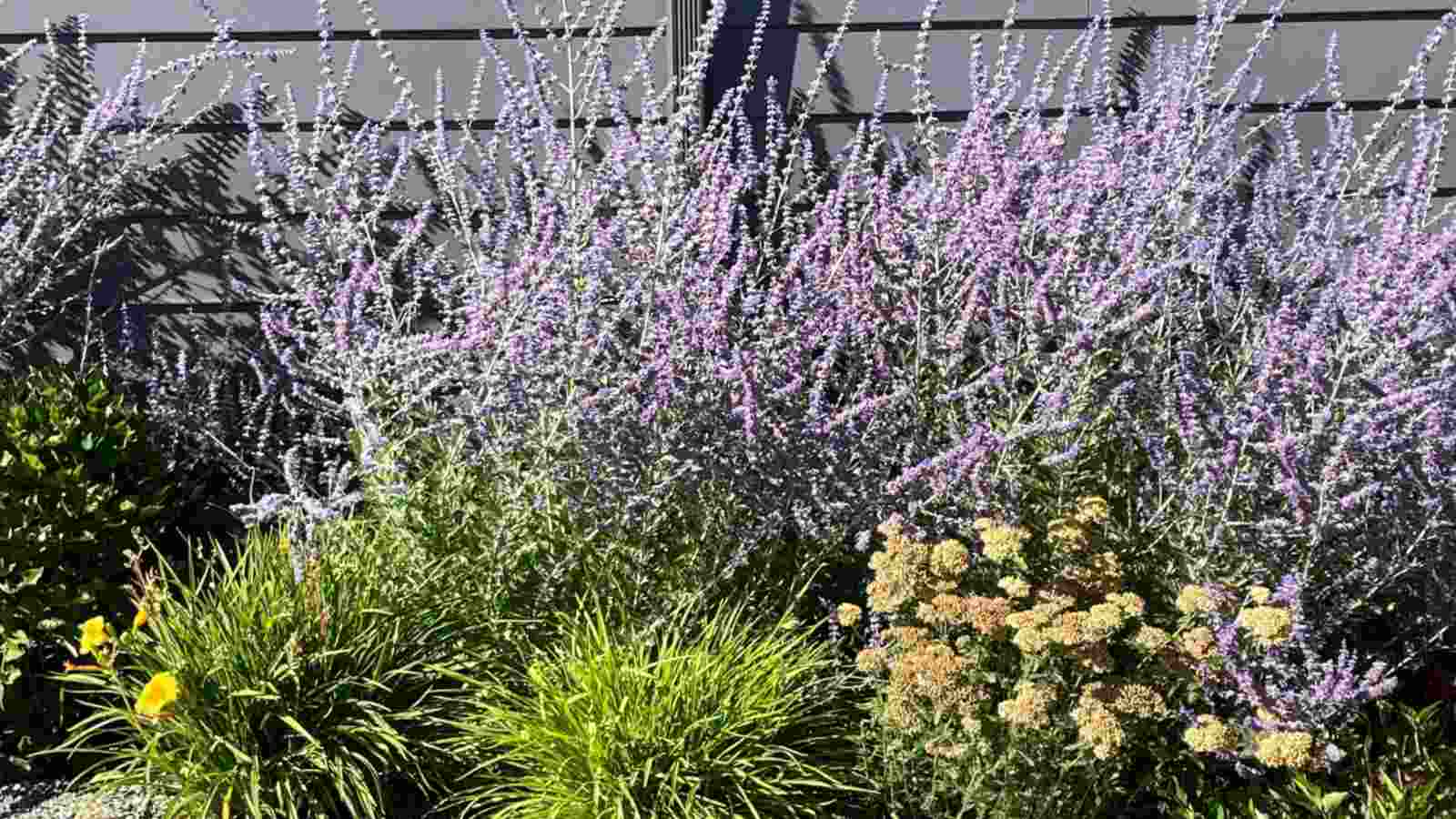
The plant’s stiff stems and upright nature make it a perfect choice for a hedge or as an ornamental addition to garden beds.
The Russian sage thrives in full sun and requires well-draining soil to avoid root rot. It’s also a good idea to add some compost or mulch to the medium during the first growing season to encourage a healthy root system.
Despite its love for sunlight, the plant also has a good shade tolerance, making it a versatile choice for any garden.
Whether you’re aiming to create a cottage garden or simply want to add some purple flowers to your landscape, the Russian sage is a great choice.
Its foliage, stems, and flowers add a pleasing texture and color to any garden. Plus, it’s available at most nurseries, making it easy for you to transplant into your garden.
As a master gardener, in this guide, I’ll share everything you need to know to grow and care for Russian sage in your backyard garden.
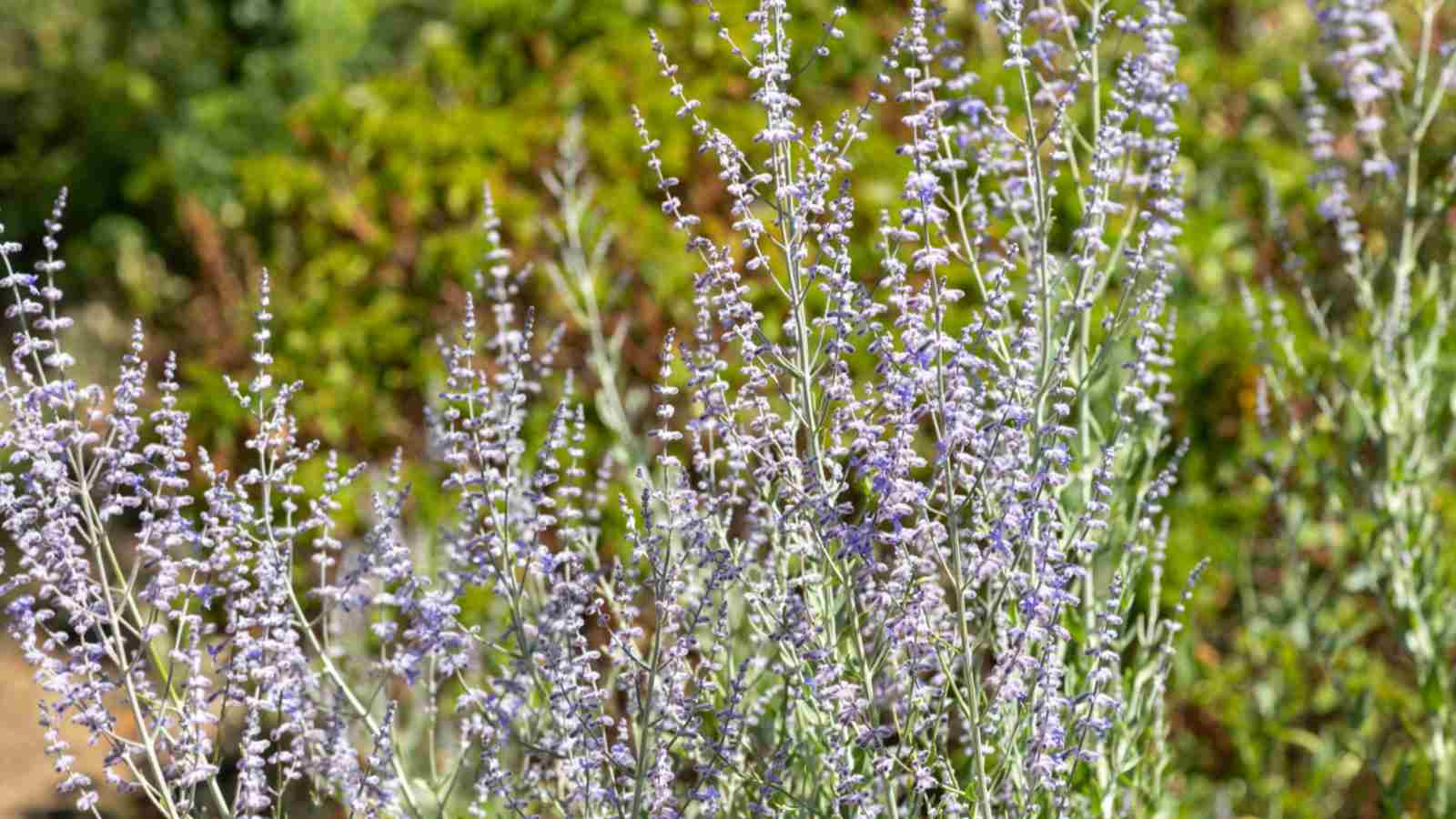
Botanical Name: Salvia yangii (formerly Perovskia atriplicifolia)
Common Name: Russian sage
Family: Lamiaceae
Plant Type: Shrub, perennial
Hardiness Zones: 3a–9b (USDA)
Sun Exposure: Full
Soil Type: Well-drained
Soil pH: Acidic, neutral, alkaline
Bloom Time: Summer, fall
Flower Color: Blue, purple
Native Area: Asia
Russian Sage Plant Care
Russian sage thrives in full sun and well-draining soil, showing impressive drought tolerance even in poor soils.
During the first growing season, ensure regular watering to establish an extensive root system, but be cautious of overwatering as it can lead to root rot. Mulch around the base and add compost to enrich the medium and promote new growth.
Deadheading is not necessary as it tends to self-sow, and its stiff stems remain upright even in harsh weather. It blooms from late spring to early fall, attracting butterflies to your landscape.
This plant is a perfect addition to any cottage garden, providing texture and color, and can also be used as a hedge or in garden beds.
Light
Russian sage requires at least six hours of direct sunlight each day to flourish. The lavender-blue flowers bloom best under these conditions, attracting butterflies with their tubular shape.
In the absence of full sun, the plant may become leggy, with weak, floppy stems. Therefore, it’s essential to position your Russian sage in a landscape location that receives abundant light, especially in the early spring to late spring growing seasons.

Soil
Russian sage grows best in soil that drains well and doesn’t retain too much moisture. This perennial plant has an extensive root system that can suffer from root rot if the soil is too waterlogged.
Adding organic matter like compost can enhance the soil’s texture and nutrient content, promoting healthier growth.
A layer of mulch around the base of the plant can also help to retain moisture and suppress weeds, especially during the first growing season after transplanting from the nursery pot to the garden bed.
Water
Russian sage is known for its high drought tolerance, making it an ideal choice for gardeners in areas with poor soils or lower rainfall. During its first growing season, it is essential to keep the soil medium consistently moist to establish a strong root system.
However, care should be taken to avoid overwatering as this can lead to root rot. After the first season, you can reduce watering significantly, as the plant’s extensive root system will help it survive in drier conditions.
Temperature and Humidity
Russian sage is highly tolerant of temperature extremes, making it an excellent choice for gardeners in varying climates. This plant performs best in medium to low-humidity environments, as too much moisture can lead to root rot.
During the first growing season, it’s crucial to maintain consistent moisture to establish an extensive root system.
However, once established, it exhibits remarkable drought tolerance, further enhancing its appeal for use in a range of landscape settings.
Fertilizer
Russian sage does very well in poor soils and requires minimal fertilizer. In the first growing season, it is beneficial to amend the soil with compost, enhancing the texture and nutrient content of the medium.
This hardy plant has an extensive root system that can self-sow, seeking out nutrients deep within the soil.
However, in extremely poor soils, a balanced slow-release fertilizer can be applied in early spring to encourage new growth and vibrant lavender-blue blooms.
Pruning
Pruning is vital for Russian sage, particularly in the early spring, to encourage new growth and maintain the plant’s upright structure. It’s best to cut back the stems close to the ground, leaving only one to two inches.
This extensive pruning helps invigorate the plant’s root systems and promotes denser foliage. However, avoid pruning in the late spring as it may delay the bloom of the lavender-blue flowers.
During the first growing season, regular deadheading can also encourage a more prolific bloom and prevent the plant from self-sowing excessively.
Types of Russian Sage
- ‘Blue Spires’ Russian Sage: The ‘Blue Spires’ Russian Sage is a perennial plant known for its tall, upright stems and extensive root system. This type of Russian Sage blooms in the late spring, showcasing its stunning lavender-blue flowers that attract butterflies.
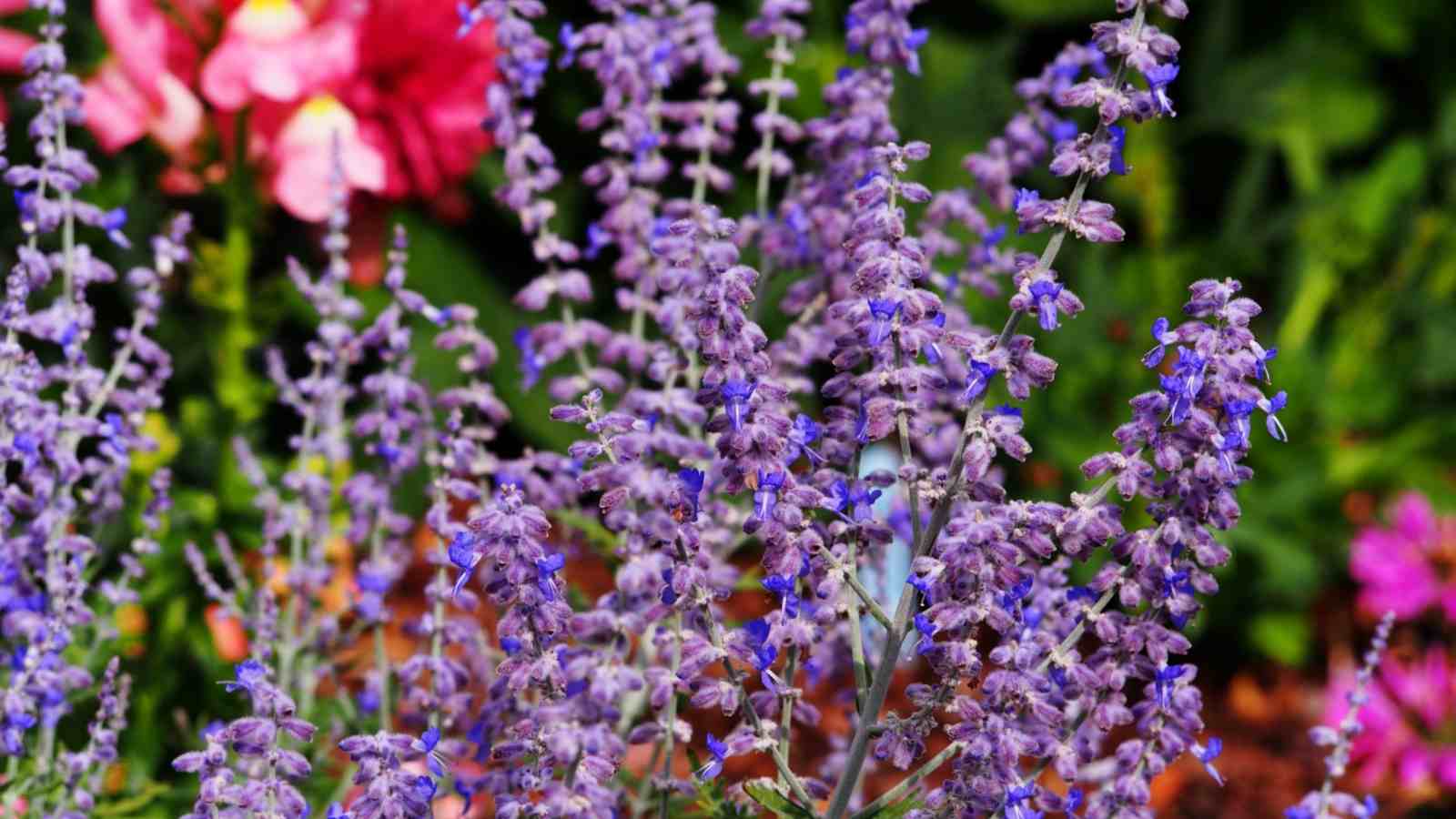
- ‘Rocketman’ Russian Sage: The ‘Rocketman’ Russian Sage is a fantastic choice for a cottage garden. Its new growth emerges in early spring, with purple flowers blooming on stiff stems by late spring.
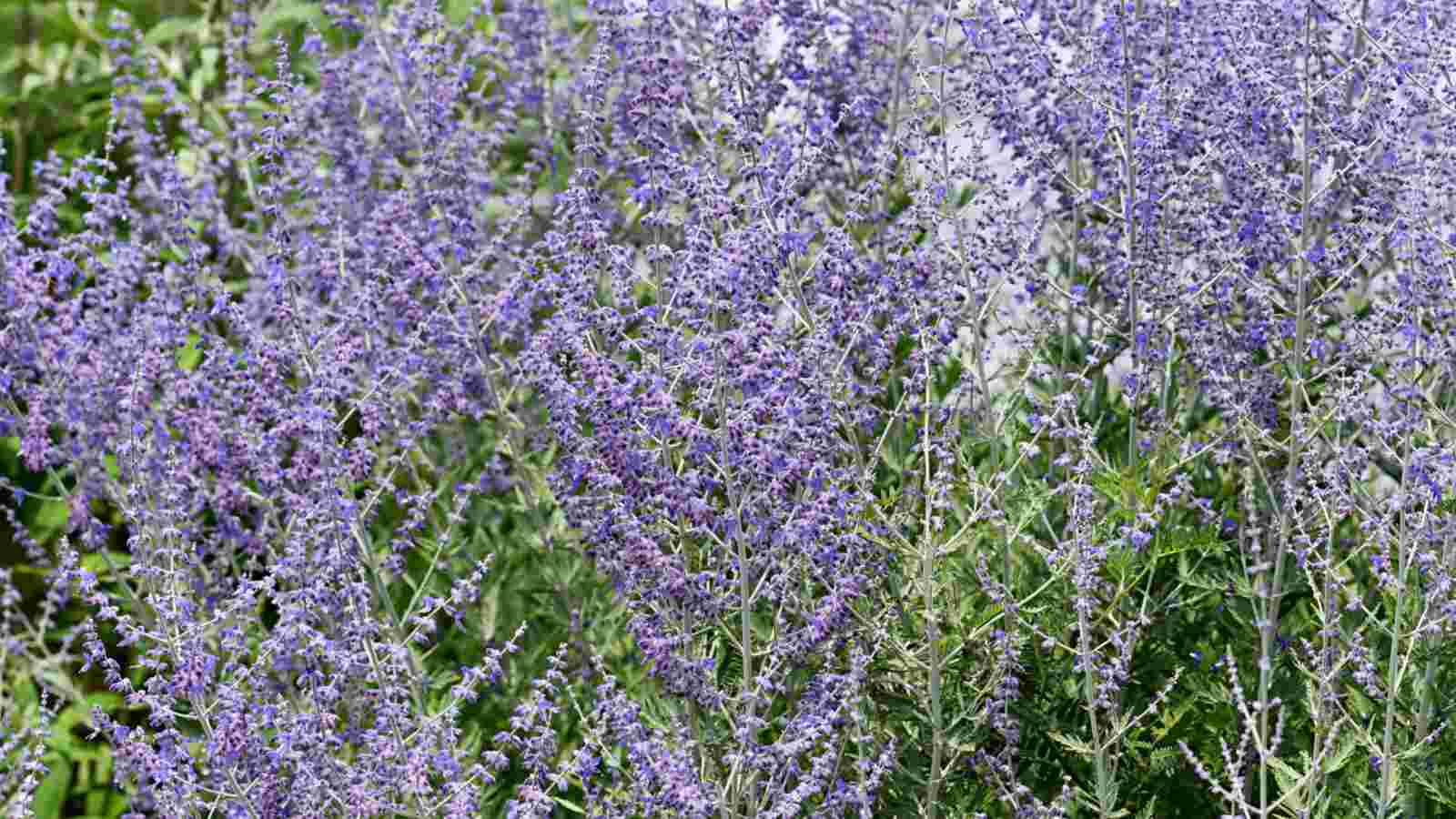
- ‘Sage Advice’ Russian Sage: The ‘Sage Advice’ Russian Sage is a compact variety with a first growing season that sees a profusion of tubular flowers. It’s a great option for gardeners who want to add some color and texture to their landscape without overwhelming smaller plants.
- ‘Denim ‘n Lace’ Russian Sage: The ‘Denim ‘n Lace’ Russian Sage is a nursery favorite, known for its lavender-blue flowers and silver foliage. Its leaves are finely cut, adding a soft texture to your garden.
How to Plant Russian Sage From Seed
Step 1: Preparing the Seeds
Russian Sage seeds can be purchased from a reputable nursery. Before planting, soak them in warm water for a few hours to soften the outer shell and encourage germination.
Step 2: Planting the Seeds
Plant the seeds in early spring, ensuring that they are covered with a thin layer of soil. Water them thoroughly but avoid oversaturating the soil.
Step 3: First Growing Season Care
During the first growing season, it’s crucial to keep an eye on your Russian sage. Ensure the soil remains moist but not soggy. Mulch can be added around the base of the plant to retain moisture and suppress weeds.
Deadheading, or removing spent blooms, encourages new growth and a second bloom in late spring. However, be careful not to over-prune, as this can stress the plant and inhibit growth.
How to Propagate Russian Sage
Step 1: Select the Right Time and Plant
The best time to propagate this plant is in the early spring. Look for a healthy, mature plant with strong, upright stems and vibrant foliage.
Ideally, the plant should have bloomed at least once, indicating it has gone through its first growing season.

Step 2: Prepare the Medium and Pot
Next, prepare a pot with well-draining soil to prevent root rot. You can buy this at a nursery or make your own by mixing equal parts compost, coarse sand, and garden soil.
The medium’s texture should be loose and crumbly, allowing for the proper growth and development of the root system. Place a layer of mulch at the bottom of the pot to further enhance drainage and provide nutrients.
Step 3: Cut and Transplant
Using a sharp, sterilized knife, cut a stem from the Russian sage plant, ensuring it includes several leaves and new growth. Immediately transplant this cutting into the prepared pot.
Firmly press the soil around the stem to ensure it stands upright. It’s also beneficial to use stakes to support the stem and keep it upright until it establishes its root system.
Step 4: Care for the Transplant
Place the pot in a location with full sun or partial shade. This plant has a high drought tolerance, making it suitable for areas with poor soils and harsh climates.
Water it moderately during the first season, ensuring the soil remains moist but not waterlogged.
How to Pot or Repot Russian Sage
Step 1: Choosing the Right Time and Plant
The best time to pot or transplant Russian sage is in the early spring. Choose a healthy plant from a nursery with an extensive root system. Look for new growth and avoid those with signs of root rot.
Step 2: Preparing the Pot and Soil
Begin by selecting a medium-sized pot with well-draining soil to avoid waterlogging and root rot. This plant prefers poor soils and has good drought tolerance.
Mix the soil with compost to provide nutrients for the first growing season. A layer of mulch on top will help retain moisture and suppress weeds.
Step 3: Transplanting the Plant
Carefully remove the Russian sage from its nursery pot, taking care not to damage the root systems.
Place it upright in the new pot, ensuring the root ball is level with the soil surface. Backfill with soil, firming gently around the roots.
Step 4: Aftercare and Maintenance
After transplanting, place the pot in a location that receives full sun. Water thoroughly, and continue to do so regularly throughout the first season.
Russian sage produces tubular flowers on stiff stems, which may need support from stakes in windy locations.
Common Pests and Plant Diseases for Russian Sage
Spider Mites

Spider mites are tiny pests that can be a nuisance for Russian sage, especially during the first growing season. These pests feed on the foliage, leaving the leaves with a stippled appearance.
To prevent spider mite infestations, ensure your Russian sage is planted in full sun and has access to well-draining soil, as these conditions are less favorable to mites.
Root Rot
Root rot is a disease that can affect Russian sage, particularly if the plant is in poorly draining soil. This fungal disease damages the plant’s root system, leading to wilting and yellowing leaves.
To prevent root rot, plant it in well-draining soil and be careful not to overwater, especially in the early spring and late spring when new growth is emerging.
Powdery Mildew
Powdery mildew is a common disease that can affect Russian sage, especially when planted in shade or overly moist conditions. This fungal disease appears as a white powdery substance on the leaves and stems of the plant and can hinder the plant’s ability to bloom.
To prevent powdery mildew, plant in full sun and ensure there is good air circulation around the plant.
Common Plant Problems and Solutions for Russian Sage
Lack of Blooms
Russian Sage may sometimes fail to bloom, especially in its first growing season. This can be due to inadequate sunlight, as this perennial loves full sun.
If your Russian Sage isn’t blooming, check its location. If it’s in the shade, consider moving it to a sunnier spot in your landscape. Deadheading, or removing spent blooms, can also encourage new growth and more flowers.
Leggy Growth
Sometimes, Russian Sage can become leggy, with long, weak stems that fail to stay upright. This can be due to too much shade or poor soil.
To combat this, ensure your Russian sage is planted in full sun and well-draining, nutrient-rich soil.
You might also consider using stakes in the early spring to support the stems and encourage more compact growth. Pruning in the late spring can also help to maintain a dense texture and prevent leggy growth.
Invasive Growth
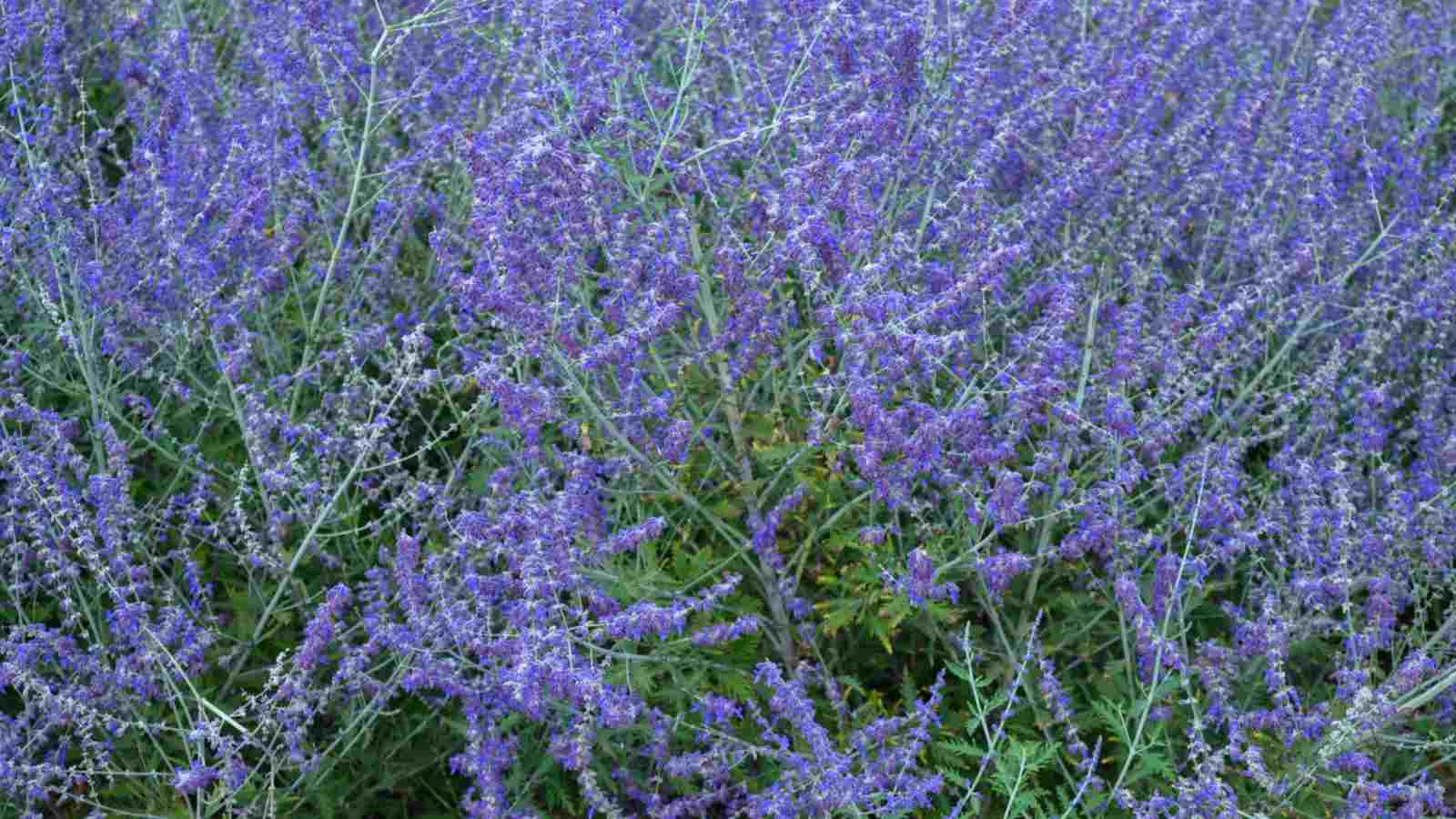
Russian Sage is known to self-sow, which can lead it to become invasive in some garden beds. To control its spread, consider planting it in a pot or using it as a hedge in a cottage garden.
Regularly check for and remove any new growth outside of the desired area to keep it in check.
Drought Stress
While Russian Sage has good drought tolerance, extended periods of dry conditions can lead to brown tips on the leaves and a general decline in the plant’s health.
If this happens, increase watering slightly, but be careful not to overwater, as this can lead to root rot. Mulch can also help retain moisture in the soil.
Other Guides from Planet Natural:
How to Plant, Grow, and Care for Shasta Daisy Flowers


