Whether you are a casual gardener or an experienced florist, delving into the world of flowers is an enlightening experience.
With so many different flowers in the world, understanding their various species and origins can help diversify your garden.
But did you know that there are unique flowers that are considered the rarest flowers in the world? These rare plants continuously interest people with how they were cultivated, saved from endangerment, or are on the brink of extinction.
This brief guide delves into rare flowers found accross different countries and regions. Learn why they are so rare, what their distinct features are, and whether you can grow them in your home.
-
Juliet Rose

- Scientific Name: Rosa ‘Juliet’
- Geographic Origin: England, United Kingdom
The Juliet Rose is considered the rarest rose in the world because of its origins and the cost of its creation.
Created by rose breeder David Austin in 1978, this pale pink and apricot-colored rose was born from an unnamed combination of male and female English rose seedlings.
While this is nothing out of the ordinary, what makes it unique is how the Juliet Rose took 15 years to develop.
Not only did it take over a decade for this stunning flower to bloom, but it also required an astounding $4.3 million to ensure its growth. As people discovered this grand price tag, the Juliet Rose quickly became the rarest flower in the world.
This beautiful flower was named after William Shakespeare’s play “Romeo and Juliet.” Like the play’s tragic heroine, this rare plant steals the attention of many flower enthusiasts for its distinct shape and expensive origin cost.
Besides being the most popular of the world’s rarest flowers, it’s also sought after for its pleasant color, soothing fragrance, and natural design of tiny flowers in its center.
-
Corpse Flower

- Scientific Name: Amorphophallus titanum
- Geographic Origin: Sumatra, Indonesia
While most beautiful rare flowers are renowned for their pleasant fragrance, did you know there is a rare flower that smells like rotting flesh?
This rare flower is called the corpse flower due to its distinctly awful scent. Originating from Sumatra rainforests in Indonesia, the corpse flower reaches 6-8 feet in length.
As the corpse flower blooms in its natural habitat, its light green center and deep red petals with 20-foot-long dark green leaves attract most animals from a distance.
However, both animals and humans can agree that this unusual flower has an eye-watering scent that appropriately matches its name.
While this unusual plant keeps most humans away, the rotting scent attracts carrion birds and flies. However, unlike Venus fly traps, it is not considered a carnivorous plant.
- titanumis one of the most interesting and rarest flowers, with its distinct scent and exclusive location on the Sumatra Islands.
-
Franklin Tree Flower

- Scientific Name: Franklinia alatamaha
- Geographic Origin: North America, along the Altamaha River in Georgia.
The Franklin tree flower, sometimes called the “Franklin tea flower,” stands out among many rare flowers because Franklin trees are already extinct in the wild.
The last sighting of a Franklin tree was back in 1803, and since this unique flower grows on the tree, it is extremely rare to find.
These beautiful flowers come from the tea family and are incredibly tall, reaching 10-20 feet tall. During their flowering season, they resemble tiny white cups.
Its sweet scent makes them attractive to many pollinators and humans alike. They also have vibrant golden-yellow stamens.
Franklin tree flowers would have been considered entirely extinct if not for conservation efforts by American botanist John Bartram.
Thanks to his hard work saving the Franklin tree and its beautiful flowers, you may still see the Franklin tree flower as a specimen in specific gardens. However, the extinction of trees has made this cup-shaped plant one of the rarest flowers in the world.
-
Night-Blooming Cereus

- Scientific Name: Selenicereus grandiflorus
- Geographic Origin: Central and South America
Most flowering plants bloom through an entire season or longer, but the night-blooming cereus is exceptionally different.
This rare flower only blooms once a year, usually for a single night. They can only be found in Central and South America, and they are considered endangered plants due to habitat loss and overharvesting.
Since you can only spot these beautiful flowers blooming once a year, this flower is famous with its strong yet fragrant scent. A single flower from this rare blooming cactus has a distinctly sweet smell that can spread through an entire garden.
This unique flower has a funnel shape with white colors and bright yellow stamens. Despite being endangered, the night-blooming cereus may still be viewed in botanical gardens and private collections.
If conservation efforts continue to improve, this elusive yet beautiful endangered plant may survive in the wild.
-
Ghost Orchid

- Scientific Name: Dendrophylax lindenii
- Geographic Origin: Florida, the Bahamas, and Cuba
Just from its name alone, this rare flower stands out for its high survival requirements, making it difficult to grow without external assistance.
The ghost orchid is part of the orchid flower family, but unlike most orchids, it requires high temperatures and intense humidity to survive.
While their geographic origin naturally has higher temperatures, global warming and external factors make it difficult for the ghost orchid to maintain good heat.
Additionally, the ghost orchid does not have leaves and does not use photosynthesis, depriving it of a food source. To survive, ghost orchids must attach to other flowers to get energy.
Its distinct shape, lack of standard flower features, and white color add to the “ghost orchid” name. Another aspect that makes this flower rare is that a small percentage of ghost orchids bloom only one flower during the blooming season.
Not only does this ethereal, beautiful flower require specific climates, but it’s also endangered due to deforestation. If people do not make efforts to care for these interesting flowers, they may quickly become extinct in the wild.
-
Black Bat Flower

- Scientific Name: Tacca chantrieri
- Geographic Origin: Tropical areas in Southeast Asia (China, Thailand, and Burma)
Out of the many unique flowers in this list, the black bat flower is even more unique as it possesses the rarest flower color in the world: black.
While botanists can take years to create a black flower hybrid, the black bat flower has this unique color naturally. These stunning flowers are spread out to look like a bat’s wings, and their seed pods resemble a bat’s face.
This rare flower requires high humidity and large amounts of water. They grow best in tropical southeast Asian areas or specific botanical gardens.
However, naturally growing this plant is generally tricky, even with very moist soil and humid temperatures.
Thanks to its black petals and specific growing conditions, this unique plant is considered one of the rarest flowers in the world.
NOTE: Gardeners can complement their black bat flowers with a white bat flower, or “Tacca integrifolia.”
-
Chocolate Cosmos

- Scientific Name: Cosmos atrosanguineus
- Geographic Origin: Mexico
The chocolate cosmos has dark brownish-red petals and a sweet scent reminiscent of chocolate. Its extinction in the wild makes it especially rare.
Due to deforestation, its natural habitat in Mexico has been wiped away. To add to the difficulty of growing them in the wild, they do not produce seeds and only grow through tissue culture and root division.
As we can only view clones of the original chocolate cosmos seeds today, they rank high among the rarest flowers in the world.
-
Rothschild’s Slipper Orchid

- Scientific Name: Paphiopedilum rothschildianum
- Geographic Origin: Mount Kinabalu on Borneo Island, Sabah, Malaysia
The Rothschild’s slipper orchid is considered one of the rarest flowers in the world because of its unique environment: it can only grow on the slope of Mount Kinabalu at altitudes between 500 and 1,200 meters.
Called “The King of Orchids,” explorer Heinrich Gustav Reichenbach discovered this extremely rare flower. Their exclusive location and unique black stripes on almost horizontal petals make the Rothschild’s slipper orchid sought after by many.
They were once considered completely extinct in the wild until two populations were discovered on Mount Kinabalu’s slope in 1959.
As illegal deforestation continues around the mountain, conservation efforts have been made to protect these flowers.
Today, just one of the few remaining Rothschild’s slipper orchids can run for up to $5,000 due to their extreme rarity.
-
Jade Vine

- Scientific Name: Strongylodon macrobotrys
- Geographic Origin: Mount Makiling, Luzon, Philippines
The Jade vine has various features that make them immediately eye-catching. Its boat-like shape and vibrant colors attract many pollinators and conservationists.
When the jade vine is not in its blooming season, it blends into the natural dark green colors of the Philippine forests.
However, when these rare flowers bloom, their cluster of claw-shaped flowers creates a breathtaking view as they hang from their stems.
The Jade vine survives by wrapping around nearby trees. Unfortunately, due to deforestation, the jade vine is quickly losing its natural home.
While conservation efforts are underway to keep its unique claw-shaped flower and color available in the wild, the jade vine’s distinctive shape makes it an extremely rare flower.
-
Fire Lily

- Scientific Name: Cyrtanthus ventricosus
- Geographic Origin: Cape Fold Mountains, South Africa
The fire lily gets its name from its vibrant red petals and its growth requirements. Fire lilies grow from the ashes of wildfires on the Cape Fold mountains, making them highly unique and rare.
Two weeks after a wildfire in these mountains, the fire lily blooms like a phoenix, giving a stark and gorgeous contrast of red on the charred earth.
Not only are these flowers born from fire, but they are also exclusively pollinated by a local butterfly species called the Table Mountain Pride butterfly. This exclusivity adds to the fire lily’s unique rarity.
Additionally, the flower’s hollow stem grows rapidly after being exposed to fire. However, their unique growth requirements make growing them difficult.
NOTE: Take care not to confuse the fire lily with the flame lily “Gloriosa superba.” G. superba is very poisonous and toxic.
-
White Hawaiian Hibiscus

- Scientific Name: Hibiscus arnottianus
- Geographic Origin: Moloka’i and O’ahu (Hawaii) rainforests and mountains
As its name suggests, the white Hawaiian hibiscus can only be found in Hawaii. It is part of the Hawaiian hibiscus immaculatus species, currently endangered by deforestation.
This unique flower has pure white petals, unlike other hibiscus plants in this family. Their beautiful color makes them popular choices for ornamental flowers.
However, this beauty costs these hibiscus their safety in the wild. As they can only be found in Hawaii, floral enthusiasts and collectors from farther regions seek these flowers, often paying high amounts for them.
-
Parrot’s Beak
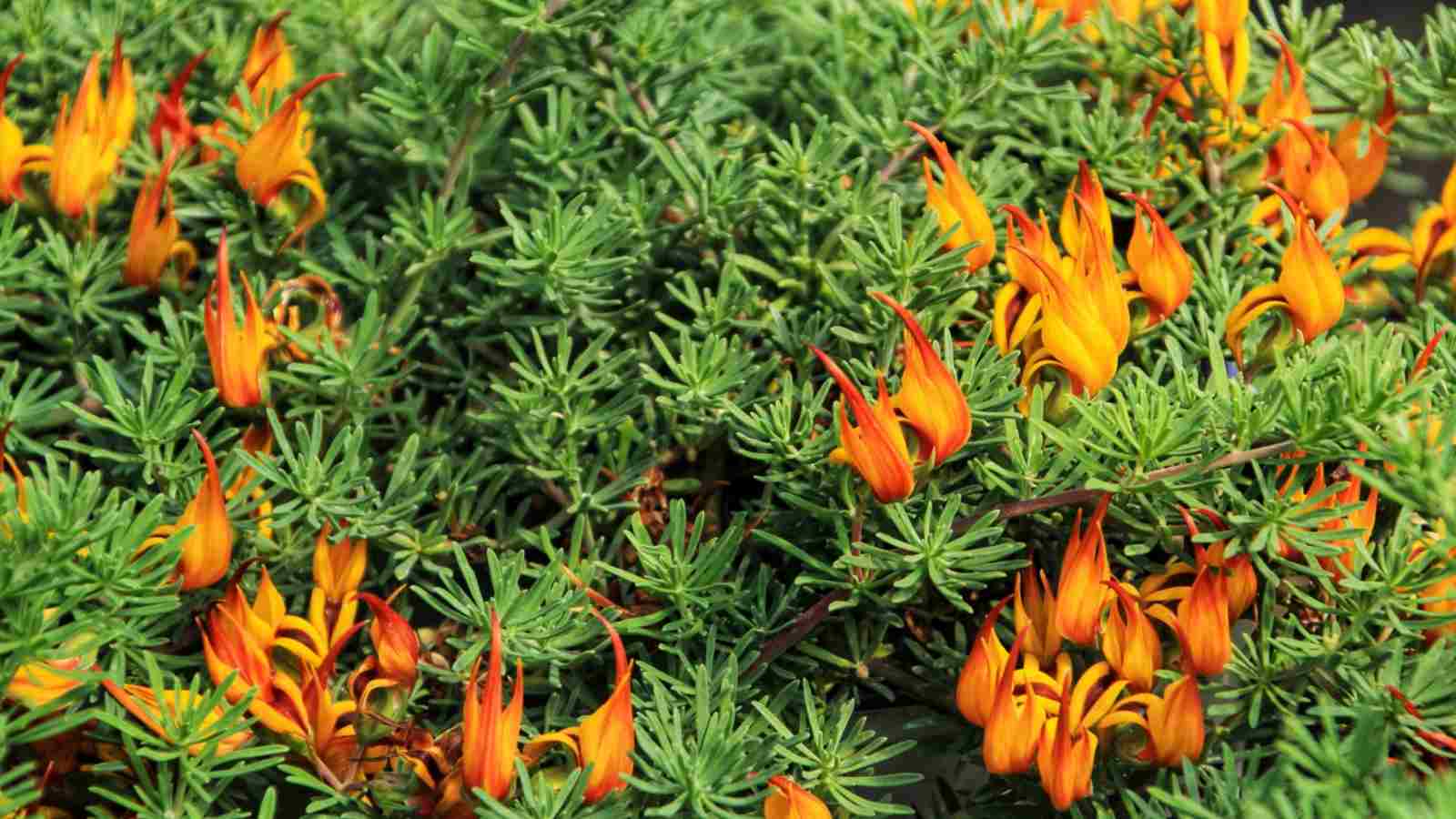
- Scientific Name: Lotus berthelotii
- Geographic Origin: Canary Islands, Spain
The parrot’s beak flower, known as “coral gem,” is unique for growing exclusively in an island environment.
Its bright crimson flowers follow the shape of a parrot’s beak, with soft silver-gray leaves that add a striking contrast.
Since it grows in an island environment, the temperature and humidity needed to help this flower thrive make it extremely difficult to keep alive. Because of global warming and fluctuating temperatures, they are believed to be extinct in the wild.
Like the jade vine, they have claw-shaped petals and grow best under the warm sunshine. Despite no longer being found as often on the Canary Islands, they may still be found in select botanical gardens.
-
Gibraltar Campion

- Scientific Name: Silene tomentosa
- Geographic Origin: Gibraltar
The Gibraltar Campion flower can only be found in the British overseas territory of Gibraltar in the Iberian peninsula.
It grows only on the outcrops of the Rock of Gibraltar, a monolithic limestone peak.
This flower’s exclusive location is not the only reason it ranks high among many other unique flowers worldwide.
They were once considered extinct until they were found on the British Overseas Territory’s Upper Rock Nature Preserve in 1994.
The Gibraltar Campion has pink and purple bilobed flowers. To avoid them possibly becoming permanently extinct, they are artificially grown in both the Royal Botanic Gardens of London and the Alameda Gibraltar Botanic Gardens.
-
Kadupul Flower

- Scientific Name: Epiphyllum oxypetalum
- Geographic Origin: Sri Lanka
The Kadupul flower grows exclusively in Sri Lankan tropical rainforests. It is a type of night-blooming cactus species, giving it the moniker “Queen of the Night.”
It has white petals that grow at midnight and wither when the sun hits them, making their behavior extremely unique and interesting. This night flower has a short lifespan, so viewing the flower’s birth and death is a sought-after experience.
The Kadupul flower also has ties with Hinduism and Buddhism. In these beliefs, this flower symbolizes purity and enlightenment. The white petals are symbols of a journey from ignorance to wisdom.
Though indigenous in tropical regions, they are considered an invasive species in other countries like Australia. Despite this, they remain popular tools for meditation and spiritual practices.
Witnessing Kadupul flowers growing and withering is an enlightening experience; however, if you do not live near tropical areas, spotting them in the wild is impossible. As they only grow in the evening, acquiring one is more difficult.
-
Youtan Poluo

- Geographic Origin: China and Taiwan
The Youtan Poluo is a unique parasitic flower that measures no more than 1 millimeter in diameter. Commonly known as Udumbara, these flowers go back to ancient times.
The Udumbara is considered a sacred flower found in Buddha’s realm, and its name means “auspicious flower from heaven.”
Their tiny size is not its only unique factor: they are entirely white, making them a religious symbol of purity, immortality, and reincarnation.
The Youtan Poluo is believed to bloom once every 3,000 years, so the minute likelihood of seeing them within this time makes them even more rare.
Frequently Asked Questions
Whether the rarest rose or the night-blooming cactus flower caught your eye, these notable flowers are special natural wonders in their ways.
But how do people classify a flower as rare, and can you grow one in your home? Let us discuss these questions and break down common myths.
What Makes a Flower Rare?
A flower is classified as rare if it meets the following general criteria:
- Exclusive Location: Rare flowers grow in only one specific country or area worldwide. They are often isolated from other flowers, making it harder to acquire them.
- Endemic Qualities: If a flower can only be found in one location, its qualities and features fit that location. For example, the fire lily only blooms on post-fire ground, making it impossible to grow in colder areas.
- Unique Pollination Methods: Flowers that rely on a specific pollinator, such as a type of insect or bird, struggle to grow anywhere that does not host the same pollinator.
- Endangered or At Risk: Flowers that grow in areas at risk of deforestation or have not been seen in a long time are considered at risk of endangerment or are already endangered. The smaller population adds to their rarity.
- Unusual Life Cycles: Flowers with short blooming periods, or those that only bloom at specific times in a day, are rarer than others since they have shorter lifespans.
- Rare Adaptations or Mutations: When a flower has unique features, mutations, or adapts its leaves or petals to match its environment, its rarity increases.
- Cultural or Symbolic Connections: Flowers that are used in religious ceremonies or have symbolic meanings are more protected and revered than others, so acquiring them outside religious use becomes nearly impossible.
Rarity boosts a flower’s appeal. Planting a rare flower in your garden adds a special value to it but also increases your garden’s beauty and diversity.
Are All Rare Flowers Endangered?
Not all rare flowers are endangered. However, if deforestation and overharvesting continue near them, they may quickly become endangered or extinct.
Like animals, the flowers on this list face many threats from humankind. Since they are sought after for their rarity, beauty, or symbolic meaning, they are more at risk of people destroying surrounding areas to get closer to the flower.
For example, the Gibraltar Campion can only be found along the Rock of Gibraltar’s high, nearly vertical peaks. People trying to pluck one of these flowers risk destroying the rock, lessening spaces where the flower may grow.
Fortunately, not all hope is lost. Various conservation groups and botanists worldwide are constantly trying to preserve these plants and ensure they grow well, even in environments outside of their origin.
However, not every rare flower may be saved by conservation.
Can You Grow Rare Flowers at Home?

Growing rare flowers at home is possible if you keep their required temperatures and needs in mind.
Here are some tips for planting rare flowers at home:
- Choose a specific rare flower that is attainable and fits within your local environment.
- Check that your chosen flower may be cultivated at home or in a greenhouse.
- Buy the seeds from reputable sources.
- Understand the flower’s sunlight requirements, such as full or partial shade, to ensure it gets enough sunlight.
- Ensure you use well-draining soil while caring for the flower to keep it healthy.
- If the flower requires specific humidity and temperature levels, check that these set levels remain constant.
- Monitor any pests or diseases that may try to attack the flower.
- Be patient, as some flower species take more time than others to bloom.
Regardless of which rare plant you choose, cultivating them properly is a rewarding experience.
Conclusion
While some of the flowers in this list are protected by various country laws, not every flower is safe from overharvesting or malicious harvesters.
It is crucial that we take action before these flowers become completely extinct.
By sharing the knowledge of these rare flowers or growing one yourself, you can propagate them while giving back to nature.
Other Guides from Planet Natural: