

Mexican petunia, also known as Ruellia simplex, is a popular perennial that hails from warm regions of Mexico and South America. This low-maintenance plant is a favorite amongst gardeners in Hawaii, the state of Florida, Puerto Rico, and parts of South Carolina.
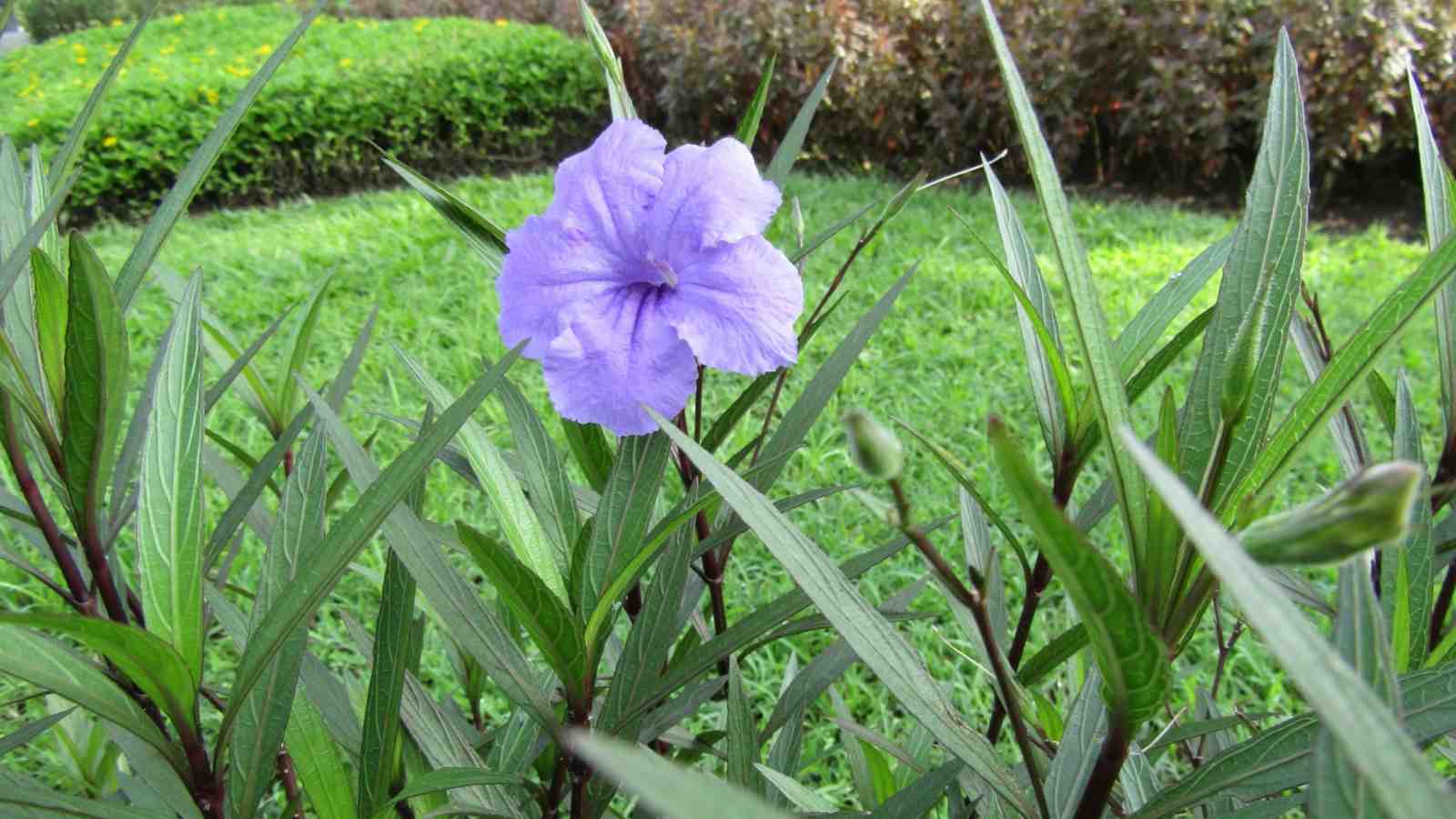
It is a hardy plant that thrives in warm climates, with its lance-shaped, dark green leaves and purple stems adding a touch of natural beauty to any garden.
The Mexican petunia is a perfect choice for those looking to add a pop of color to their garden, with its petunia-like flowers in shades of purple and lavender that bloom throughout the summer.
This plant is also a favorite amongst pollinators, attracting bees, butterflies, and hummingbirds with its vibrant blooms.
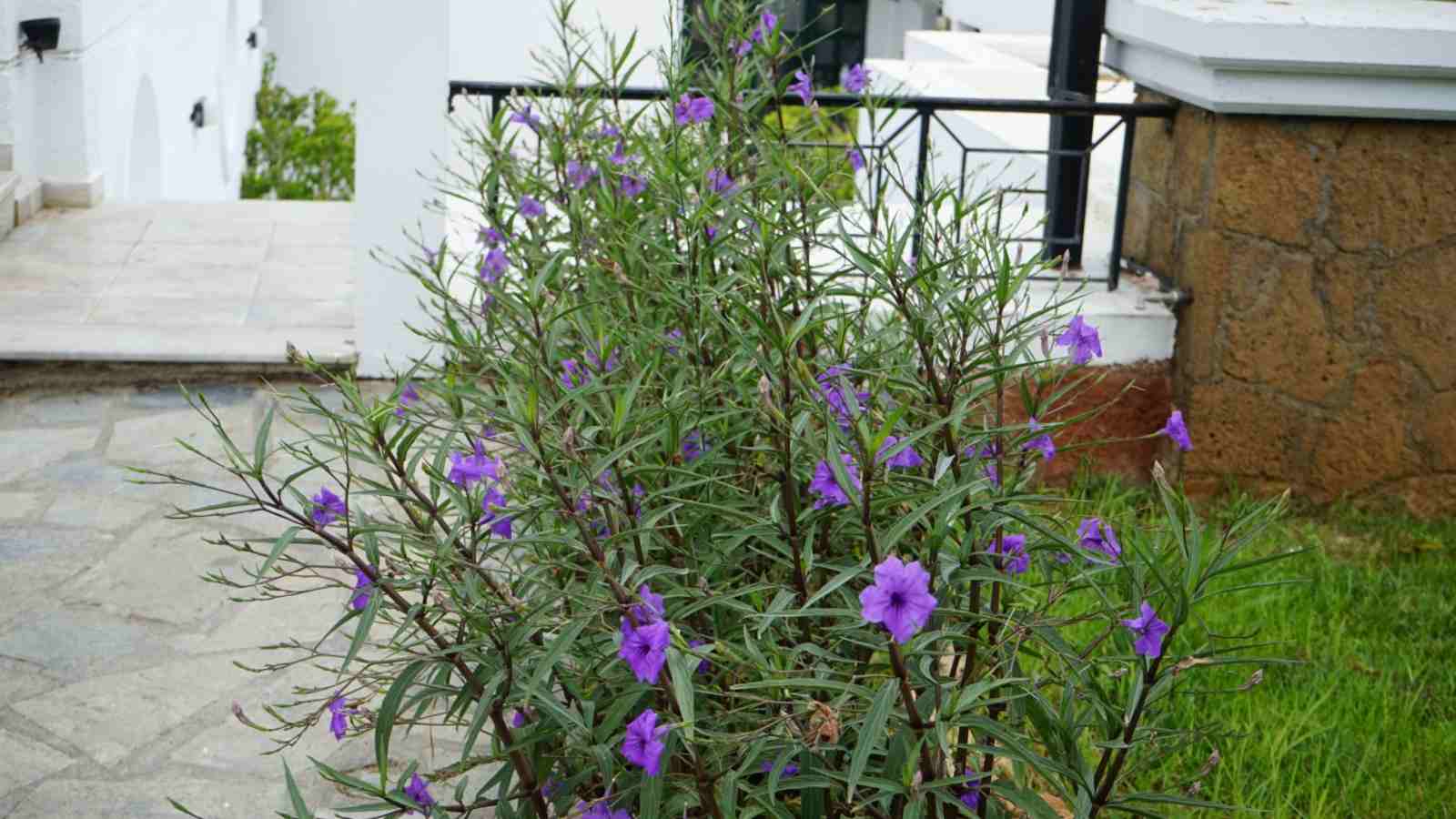
Mexican petunias are known for their rapid growth rate, making them an excellent choice for filling out larger areas of the garden. They can even be grown in pots, provided they are given the right care and attention.
One of the most interesting features of the Mexican petunia is its self-seeding nature. It produces bean-like pods after the blooms have faded, which eventually drop to the ground and germinate, giving rise to new plants.
However, it’s important to note that some varieties of Mexican petunia are considered invasive in certain natural areas, such as in the western United States and parts of Florida.
As a responsible gardener, it’s essential to check with local authorities before planting this species in your garden.
In this complete guide, I’ll share with you everything you need to know about growing and caring for Mexican Petunia from my experience as a master gardener.

Botanical Name: Ruellia brittoniana or Ruellia simplex
Common Name: Mexican petunia, Mexican bluebell, Britton’s petunia
Family: Acanthaceae
Plant Type: Perennial, rhizome
Hardiness Zones: 8 – 11 (USDA)
Sun Exposure: Full, partial
Soil Type: Loamy, sandy, moist but well-drained
Soil pH: Acidic, neutral
Bloom Time: Summer, fall
Flower Color: Purple
Native Area: North America, South America, Caribbean
Mexican Petunia Plant Care
The Mexican Petunia, scientifically known as Ruellia simplex, is a hardy plant native to Mexico, Western South America, and warm areas of the United States such as Texas, Florida, and South Carolina.
It thrives in full sun to partial shade and well-drained soil, making it a perfect addition to your garden or pots.

This low-maintenance plant is drought-tolerant but appreciates some moisture, especially during high heat. It’s known for its rapid growth rate and self-seeding nature, so be mindful of its potential to spread in natural areas.
The Mexican Petunia produces beautiful petunia-like flowers in shades of lavender and purple on tall, slender stems, which are a magnet for bees, butterflies, and hummingbirds.
If you live in a region that experiences frost, consider bringing potted plants indoors or providing protection during cold spells.
Light
Mexican petunias are lovers of sunlight. They thrive best when planted in a location that receives full sun. This means they should ideally be exposed to at least 6 hours of direct sunlight daily.
However, Mexican petunias are quite adaptable and can also grow in partial shade. In areas with high heat, such as the state of Florida or South Carolina, providing them with some afternoon shade can be beneficial.
Soil
Mexican petunias thrive in a variety of soil types, from rich potting soil to poor, well-drained soil. This low-maintenance plant is highly adaptable and can even grow in slightly acidic to slightly alkalinity.
Whether you’re planting them in your garden or in pots, ensuring the soil drains well is essential as they are susceptible to root rot in waterlogged conditions.
In their natural areas like Mexico, Puerto Rico, and Western South America, they can be found in both dry, drought-prone soil and more moisture-rich environments.
Their rhizomatous nature allows them to store water during droughts, making them remarkably drought-tolerant.
Water
Mexican Petunia is a hardy plant that thrives in warm climates and is surprisingly drought-tolerant.
While it can withstand periods of drought, it’s important to provide the Mexican Petunia with some level of moisture, especially during the initial stages of growth. Once established, occasional watering during extended dry spells will suffice.
However, it’s crucial to ensure that the plant is in well-drained soil, as standing water around the roots can lead to rot.
In natural areas, this low-maintenance plant can often be found self-seeding, a testament to its ability to adapt to varying levels of moisture.
Temperature and Humidity
Mexican petunia is also a hardy plant when it comes to temperature, being able to withstand frost in most areas, including the state of Florida. They are also known for their rapid growth rate, a trait that is enhanced in warm areas with plenty of sunlight.

While they are drought-tolerant once mature, these perennials appreciate some moisture, especially in pots or during prolonged dry spells. However, they prefer well-drained soil to prevent issues like root rot.
Fertilizer
Mexican Petunia is a low-maintenance plant when it comes to fertilizer requirements.
In fact, it’s known for its rapid growth rate in warm climates and can thrive well even in poor soil conditions.
However, for best results, it’s recommended to plant them in a rich potting soil that provides good drainage.
Applying a balanced, slow-release fertilizer in the spring can further encourage the growth of its dark green leaves and vibrant purple stems, resulting in an abundance of its petunia-like flowers throughout the season.
Pruning
Mexican petunias benefit from occasional pruning. To keep these perennials in check, prune them back in the early spring before they start their rapid growth rate. This will help maintain a tidy shape and encourage a more prolific bloom.
Be sure to remove any frost-damaged or dead stems to promote healthy growth. Additionally, if you want to prevent self-seeding, deadhead the flowers before they form bean-like pods.

Pruning also stimulates the plant to produce more flowers, attracting bees, butterflies, and hummingbirds to your garden.
Overwintering
Mexican petunias are quite hardy and can handle a touch of frost, particularly in warmer areas like Hawaii or the southern parts of Florida. However, in regions with more severe winters, they may die back to the ground.
The best way to overwinter Mexican petunias is to cut back the foliage after the first hard freeze and cover the area with a thick layer of mulch to help insulate the rhizomes from the cold.
In pots, they can be overwintered indoors in a cool, dry place. When spring returns or the danger of frost has passed, new growth will rapidly emerge from the roots or rhizomes, and the plant will soon be back to its former glory, ready to bloom again.
Types of Mexican Petunia
- ‘Katie’: ‘Katie’ is a popular variety of Ruellia simplex, known for its vibrant purple stems and petunia-like flowers that bloom in a rich lavender hue. This hardy plant is a low-maintenance perennial, well-suited for warm climates such as Florida and South Carolina.

- ‘Purple Showers’: ‘Purple Showers’ is a sterile cultivar of Ruellia simplex, bred to prevent the plant from self-seeding and becoming invasive in natural areas. It features dark green lance-shaped leaves and striking purple blooms, thriving in full sun to partial shade.

- Mayan™ Purple: Mayan™ Purple is a variety of Mexican Petunia that boasts deep purple flowers and a rapid growth rate. It is a drought-tolerant plant, ideal for warm areas like Texas and Mexico.
- Pink: The Pink Mexican Petunia is a charming variety of Ruellia simplex, featuring delicate pink blooms and dark green foliage. It is a favorite among bees, butterflies, and hummingbirds, adding a splash of color to any garden.

- White: The White Mexican Petunia, also known as ‘Alba’, is a stunning variety with pure white flowers and glossy green leaves. It is a hardy plant, resistant to high heat and drought, thriving in warm areas such as Hawaii and Puerto Rico.

How to Plant Mexican Petunia From Seed
Step 1: Preparing the Seeds
Mexican petunia plants produce bean-like pods after they bloom. These pods contain the seeds. To start, collect the seeds from a healthy plant.
The seeds are small and black, located within the pods. Each seed has a node, which is a small swelling on the stem where the leaves, branches, or flowers originate.

Step 2: Choosing the Right Location
Mexican petunias prefer full sun but can also thrive in partial shade. They are native to warm areas like Mexico, Puerto Rico, and Hawaii, making them well-suited to high heat and warm climates.
Choose a location that receives plenty of sunlight, especially in cooler regions. The plants can also adapt to different soil types, but they prefer rich, well-drained soil.
Step 3: Planting the Seeds
Mexican petunia seeds can be sown directly into the ground or started in pots. If sowing directly, plant the seeds about ¼ inch deep.
If using pots, fill them with rich potting soil and plant the seeds at the same depth. Water the seeds gently to provide the necessary moisture for germination.
Step 4: Caring for the Seedlings
Mexican petunia seeds have a rapid growth rate, and the seedlings will emerge within a few weeks.
Once the seedlings have several sets of true leaves, they can be transplanted to their permanent location. Mexican petunias are known for their self-seeding and can spread quickly, so ensure there is enough space between plants.
The plants are low-maintenance and can withstand drought once established. However, they benefit from regular watering, especially during dry spells.
How to Propagate Mexican Petunia

Step 1: Prepare the Soil
Mexican petunia plants thrive in well-drained soil. Prepare a rich potting soil mix with a combination of organic matter and perlite or sand to ensure good drainage.
Step 2: Choose the Right Stem
Select a healthy stem from the mother plant that has a node, which is the point where leaves or buds grow. This is where the new roots will develop.
Step 3: Cut the Stem
Using sharp, sterilized pruners, make a clean cut just below a node on the selected stem. The cutting should be about 4-6 inches long.
Step 4: Remove Lower Leaves
Remove the lower leaves from the cutting, leaving only a few leaves at the top to reduce moisture loss during the rooting process.
Step 5: Optional Rooting Hormone
While not necessary, dipping the cut end of the stem in a rooting hormone powder can encourage faster root development.
Step 6: Plant the Cutting
Insert the cut end of the stem into the prepared potting soil, making sure the node is buried. Gently firm the soil around the cutting to hold it upright.
Step 7: Water the Cutting
Water the cutting thoroughly after planting to settle the soil around the stem and provide initial moisture. Avoid overwatering, as excessive moisture can lead to rot.
Step 8: Provide the Right Environment
Place the potted cutting in a warm area with indirect sunlight. Avoid placing it in full sun, as this can cause the cutting to wilt.
Step 9: Monitor and Maintain
Keep the soil consistently moist but not waterlogged. After a few weeks, the cutting should start developing roots. Once the roots are well-established, the new plant can be transplanted into a larger pot or directly into the garden.
How to Pot or Repot Mexican Petunia
Step 1: Select the Right Pot and Soil
When potting or repotting Mexican petunias, it’s crucial to choose a pot with good drainage to prevent waterlogging, as these plants are susceptible to root rot.
A rich potting soil is ideal, with a good balance of nutrients and the ability to retain some moisture without becoming waterlogged.
Mexican petunias prefer well-drained soil, so adding some sand or perlite to your potting mix can help improve drainage.
Step 2: Prepare the Plant
Mexican petunias can be propagated from stem cuttings or rhizomes. If you’re potting a cutting, select a healthy stem with a node, which is where the leaves and stems meet.
If you’re repotting an existing plant, carefully remove it from its current pot, being mindful not to damage the roots or rhizomes.
Step 3: Plant
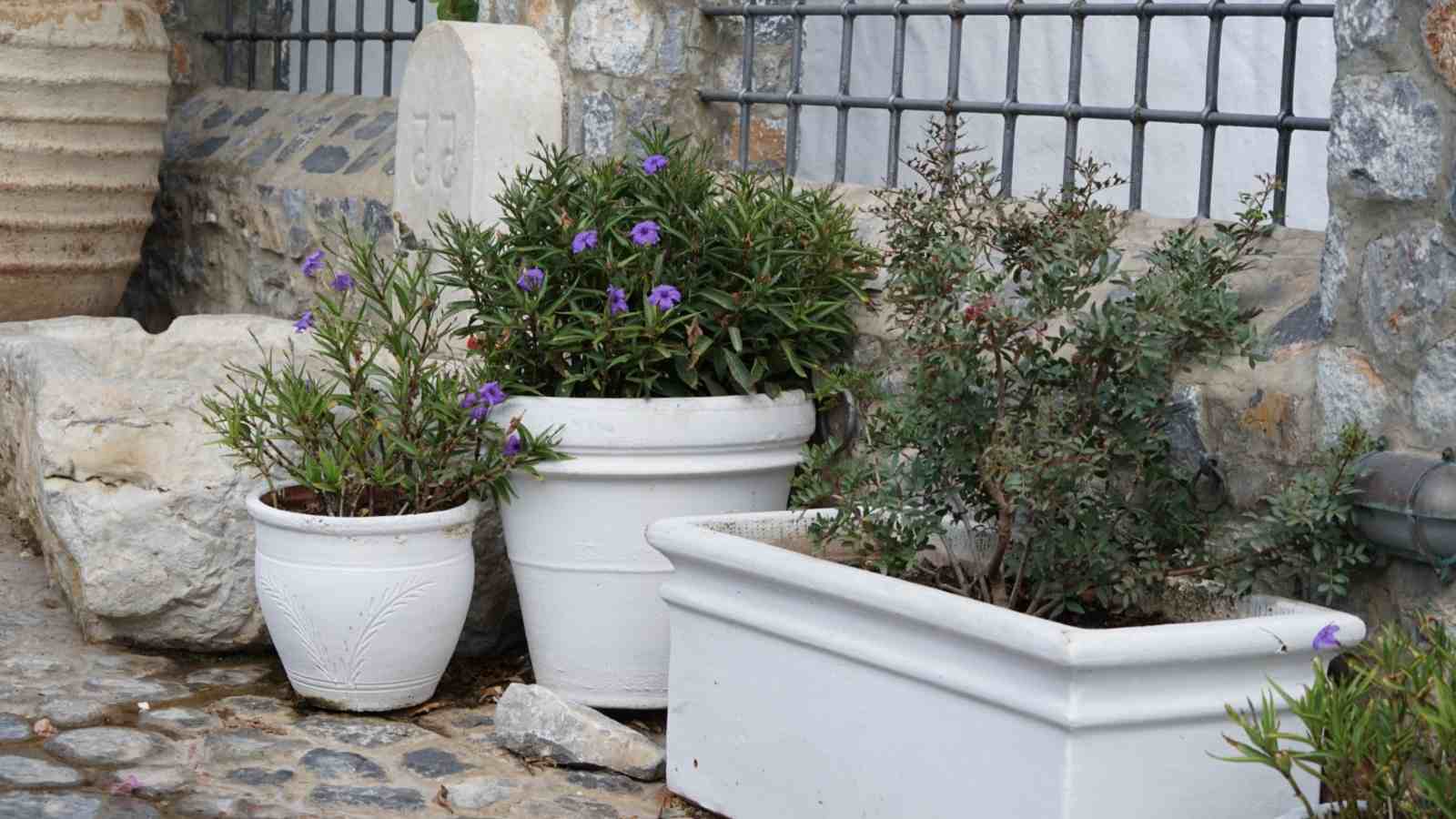
For stem cuttings, plant the cutting in the potting soil, ensuring the node is below the soil surface. If you’re repotting an existing plant, place it in the center of the new pot at the same depth it was in the old pot.
Backfill around the plant with potting soil, pressing gently to remove air pockets. Water thoroughly, and place the pot in a sunny location.
Common Pests and Plant Diseases for Mexican Petunia
Aphids

Aphids are a serious insect pest for Mexican Petunias. These small, soft-bodied insects feed on the sap of the plant, usually congregating on the undersides of the leaves or on new, tender growth.
A heavy infestation can cause the leaves to curl and yellow, and can also lead to a sooty mold developing on the plant. Aphids can be controlled with a strong blast of water or by introducing natural predators like ladybugs.
Whiteflies

Whiteflies are another common pest of Mexican Petunias. These tiny, white insects feed on the underside of the leaves, sucking out the plant’s sap. This can cause the leaves to yellow and drop prematurely.
Whiteflies can also transmit plant diseases. They are particularly problematic in warm climates, so gardeners in areas like Florida, Texas, and Hawaii should be especially vigilant.
Leaf Spot
Mexican Petunias can also be susceptible to leaf spot, a fungal disease that causes dark, water-soaked spots to appear on the leaves. As the disease progresses, the spots may enlarge and the leaves can become yellow and drop off.
Leaf spot is favored by high heat and moisture, so it’s important to water your Mexican Petunias at the base of the plant and to avoid wetting the leaves. Fungicides can also be used to control the disease.
Common Plant Problems and Solutions for Mexican Petunia
Brown Tips
Brown tips on your Mexican petunia, Ruellia simplex, can indicate a lack of moisture. To rectify this, ensure your plant is receiving adequate water, particularly during periods of drought.
Yellowing Leaves
Yellowing leaves are often a sign of overwatering, which can lead to root rot. Ensure your plant is in well-drained soil and adjust your watering schedule accordingly.
Limited Blooms
If your Mexican petunia is not producing its characteristic petunia-like flowers, it may not be receiving enough sunlight. These plants thrive in full sun to partial shade.
Overcrowding

While the self-seeding nature of Mexican petunias can be a boon, it can also lead to overcrowding. Simply deadhead the spent blooms to prevent this.
Frost Damage
Mexican petunias are hardy plants, but they are not frost-tolerant. If you’re in an area that experiences frost, consider planting them in pots that can be brought indoors.
Invasive Tendencies
In some natural areas, Mexican petunias can be invasive. If this is a concern, look for sterile cultivars developed by a breeder.
Other Guides from Planet Natural:


