

Several edible pots. One sheltered corner. Nobody home to notice a dry container—or a saucer filling with rain. Before Thanksgiving travel, the useful question isn’t “Can I water everything and leave?” It’s “What does each pot need while I’m gone?”
When I laid out my small Philadelphia rental patio in 2018, I marked the walking route before grouping the pots. The plan left room to carry groceries. A holiday care plan needs that same unglamorous starting point: the door still has to open.
The goal is to maintain the herbs and vegetables you already have, not coax a new harvest out of a long weekend. Give each container a location, a moisture check and, where needed, a person responsible for it.
1. Take attendance before moving anything
A few days before departure, walk around with your forecast and a strip of labeling tape. Check the full period you’ll be away, then check again before leaving. On a Philadelphia-area patio or balcony, plan for the conditions actually forecast—not a nationwide move-indoors date.
Make one short entry for each pot:
- Identity: Plant name and cultivar, if known. Resolve the mystery herb before assigning it a cold-weather home.
- Container: Size, whether you can safely move it, and the potting mix already in it.
- Moisture: Feel the mix rather than judging only by its surface appearance. Note whether it is wet, moist or approaching that plant’s usual watering point.
- Drainage: Find the drainage openings and check whether a saucer or outer pot is holding water.
- Exposure: Note sun, wind and rain at its current location.
- Decision: Stay, move outdoors, move indoors or receive a helper’s check.
Containers have a limited moisture reserve, and their roots lack the surrounding soil that insulates in-ground plants, as UF/IFAS explains in its vacation plant-care guidance. But pot size alone won’t tell you how long you can leave. Combine it with the plant, mix, recent drying pattern and forecast.
A small exposed pot that has needed frequent attention deserves a different plan from a large container whose mix is still moist. Don’t give them matching drinks just because they share a patio.
2. Sort by plant—not by how neatly the pots fit
“Herbs” is a shopping category, not a cold-tolerance rating. Neither is “vegetables.” Use these groups to organize decisions, then check the individual plant’s requirements against the forecast.
| Group | What matters before departure | Location decision |
|---|---|---|
| Tender herbs | Whether the identified plant tolerates the expected cold | If outdoor conditions are unsuitable, find an appropriate indoor location; an outdoor wall is not a substitute |
| Woody perennial herbs | The particular species and cultivar, plus the vulnerability of roots in a container | Don’t assume woody stems make the whole pot winter-safe |
| Cool-season vegetables | The crop’s own cold tolerance and its container exposure | Keep outdoors only where the expected conditions suit that crop; “cool-season” is not an unlimited freeze allowance |
Rosemary illustrates why the distinctions matter. Illinois Extension describes it as not reliably hardy in zone 6 or colder and discusses bringing it indoors. That is useful background—not a precise temperature trigger for every rosemary pot on a Philadelphia balcony.
For a longer outdoor stay, Planet Natural’s guide to finding a winter home for hardy potted perennials addresses the broader shelter question. For this trip, finish with a specific destination for each pot. “Probably fine somewhere near the door” is not a destination.
3. Draw a small layout with a clear route
Grouping compatible containers can simplify care and help conserve moisture. The Royal Horticultural Society’s holiday-care advice also recommends grouping and relocating pots, although its shade advice is aimed largely at warm-weather holidays. Don’t translate that into hiding November edibles in a dark corner.
Use this layout as a template, not a planting prescription:
OUTDOOR EDGE — most exposed to wind and rain
[A] Pots staying in place
Only plants suited to the expected conditions.
Keep labels and drainage accessible.
SHELTERED SIDE — less exposed, still suitably bright
[B] Portable pots with compatible care needs
Group without covering drainage openings.
Outdoor shelter does not mean frost-free.
CLEAR WALKING ROUTE ==================> DOOR
No pots, reservoirs, hoses or makeshift covers here.
INDOORS — only if this plant belongs here
[C] Identified plant in suitable light
Drainage provided; away from heat vents.
Initially apart from established indoor plants.
Before committing to position B, look at the light it actually receives. Before committing to C, check that you have more than an empty patch of floor.
Adjust the plan to your climate:
- Freezing forecast: Resolve cold suitability separately from watering. A damp pot beside a wall is not a freeze-protection plan.
- Mild, drying weather: Grouping and reduced exposure may help conserve moisture, provided the plants retain suitable light.
- Persistently wet weather: Concentrate on drainage and unwanted water collection. Don’t automatically add more water before leaving.
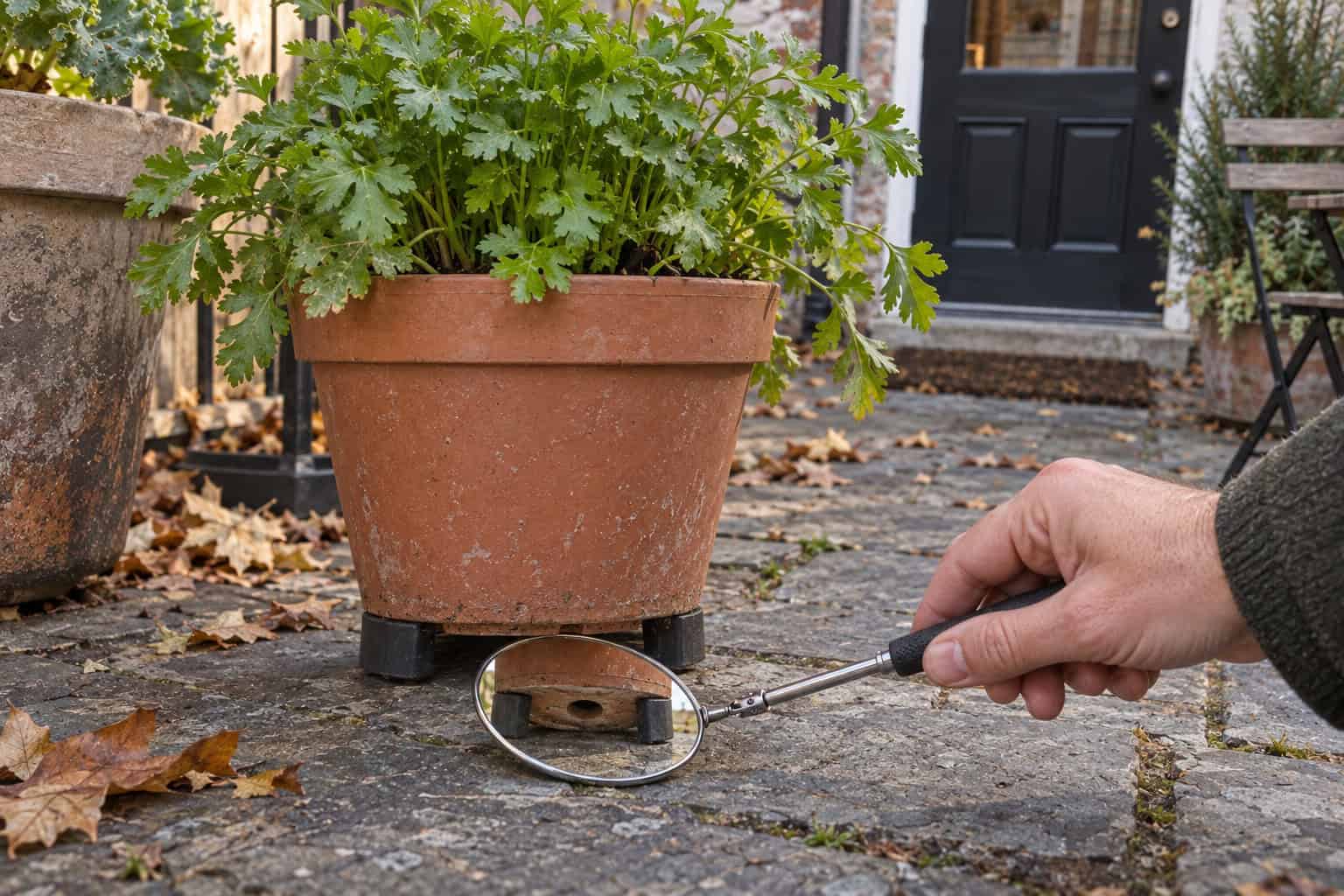
4. Check moisture and drainage—not just the calendar
On departure day, check each pot again. Water only those that need it according to their usual care needs. Water the mix, allow excess to drain, and empty water collected in saucers or decorative outer pots.
For the drainage check, look underneath or use a mirror or phone camera if that avoids lifting a heavy container. Confirm that openings aren’t covered by the surface beneath the pot. If a plant needs watering, watch that excess water can escape. There’s no need to water an already-wet pot merely to stage a drainage test.
Don’t leave a pot standing in a last-minute “extra supply” of water. A reservoir is a care system to evaluate, not a substitute for deciding whether the plant needs watering.
Likewise, don’t debut a bottle spike, wick or irrigation timer as you lock the door. UF/IFAS recommends setting up irrigation in advance so it can be adjusted. Apply that principle to any device: observe the actual pot while you’re home, checking both moisture and drainage. Changed weather can still change the result.
If a pot is likely to need attention and you haven’t established a suitable watering setup, arrange a helper. A person with a clear label beats a gadget with an untested promise.
5. Give incoming plants more than a warm corner
If an identified herb needs to come indoors, prepare its place first. Illinois Extension recommends sufficient light, a container with drainage holes, suitable potting mix and a location away from heat vents for indoor herbs. A dim hallway doesn’t become suitable because it’s warmer than the patio.
Before moving the pot, inspect leaves—including undersides—stems, the rim and the outside of the container. Look for insects, webbing and unexplained damage. Initially keep it apart from established indoor plants so you can continue observing it. A quick inspection is useful; it isn’t proof that nothing came along.
If you find something suspicious, photograph it and settle the next step before departure. Don’t leave a helper to improvise a pesticide treatment on an edible plant.
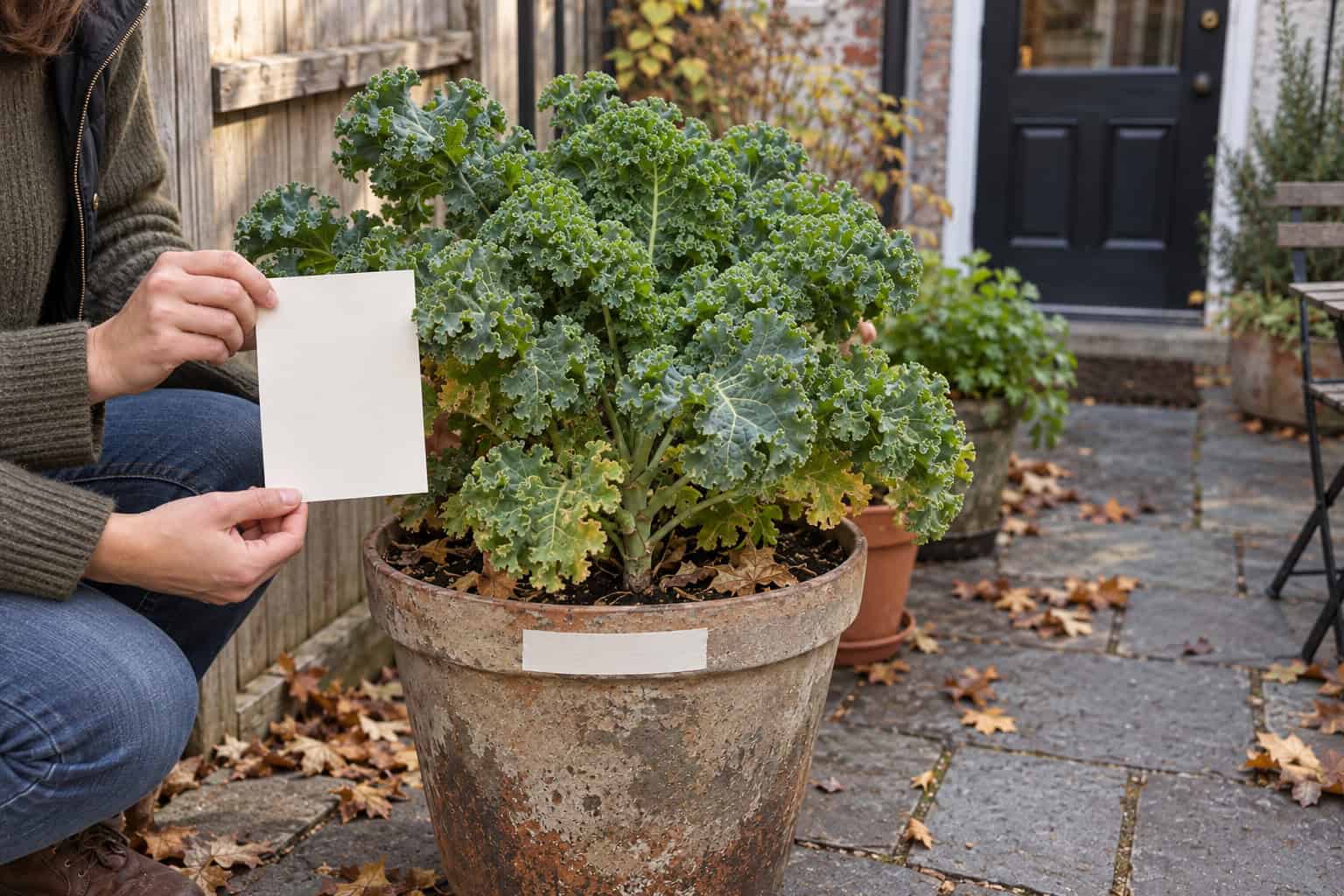
6. Leave a note that says when not to water
Walk your helper through the moisture check on the actual pots. Show what you mean by “needs water,” agree on check dates, and point out approved alternate locations. Don’t make them guess from a drooping leaf or move everything indoors because the forecast looks chilly.
Copy this note once for each pot, filling in the blanks before you leave:
Pot label and plant: __________
Approved location: __________
Check on these dates: __________
Condition to check: Feel the mix as demonstrated. This plant’s watering cue is: __________
If it needs water: Water the mix, allow excess to drain, and empty collected water.
If it is still moist: Skip watering and record the check.
If there is standing water, visible pests or unexpected damage: Send me a photo before doing anything beyond the instructions above. Do not add fertilizer or pest treatments.
Forecast change requiring contact: __________
Approved alternate location, if needed: __________
Keep this walking route clear: __________
Contact: __________


