

The plant tag can describe a hardy perennial beautifully and still leave you wondering where to put its pot in January.
I ran into that problem on our Philadelphia patio in autumn 2023. Amir and I grouped suitable perennial containers in a sheltered spot, keeping drainage visible and the doorway clear. That last part mattered. A winter garden arrangement still has to let you leave the house.
We checked each plant’s suitability before deciding where it belonged. We did not have a greenhouse, an empty storage room, or garden soil to dig into. We had a small hard-surface patio and pots whose roots would be exposed to winter from more directions than roots in the ground.
The aim was a manageable arrangement we could inspect. It was never a promise that every plant would survive.
First, identify the plant you are trying to store
A tropical houseplant and a hardy perennial can both arrive in attractive pots. They need different winter decisions.
This guide concerns outdoor perennials suited to your climate that normally pass through a dormant season. It does not tell you to put a tropical plant in a cold garage. Nor does it promise that any plant labeled perennial is hardy where you live.
Record the plant’s name and check reliable local advice about its winter needs. Keep the original tag if you have it. If the identity is uncertain, settle that question before selecting a storage location.
Then remember the container. A hardiness rating usually describes a plant growing in the ground. An aboveground root ball loses that surrounding insulation. Its ability to survive winter cannot be read from the zone label alone.
Planet Natural’s guide to wintering potted plants explains the broad options. The smaller question here is which cold winter home you can actually provide for a particular hardy plant.
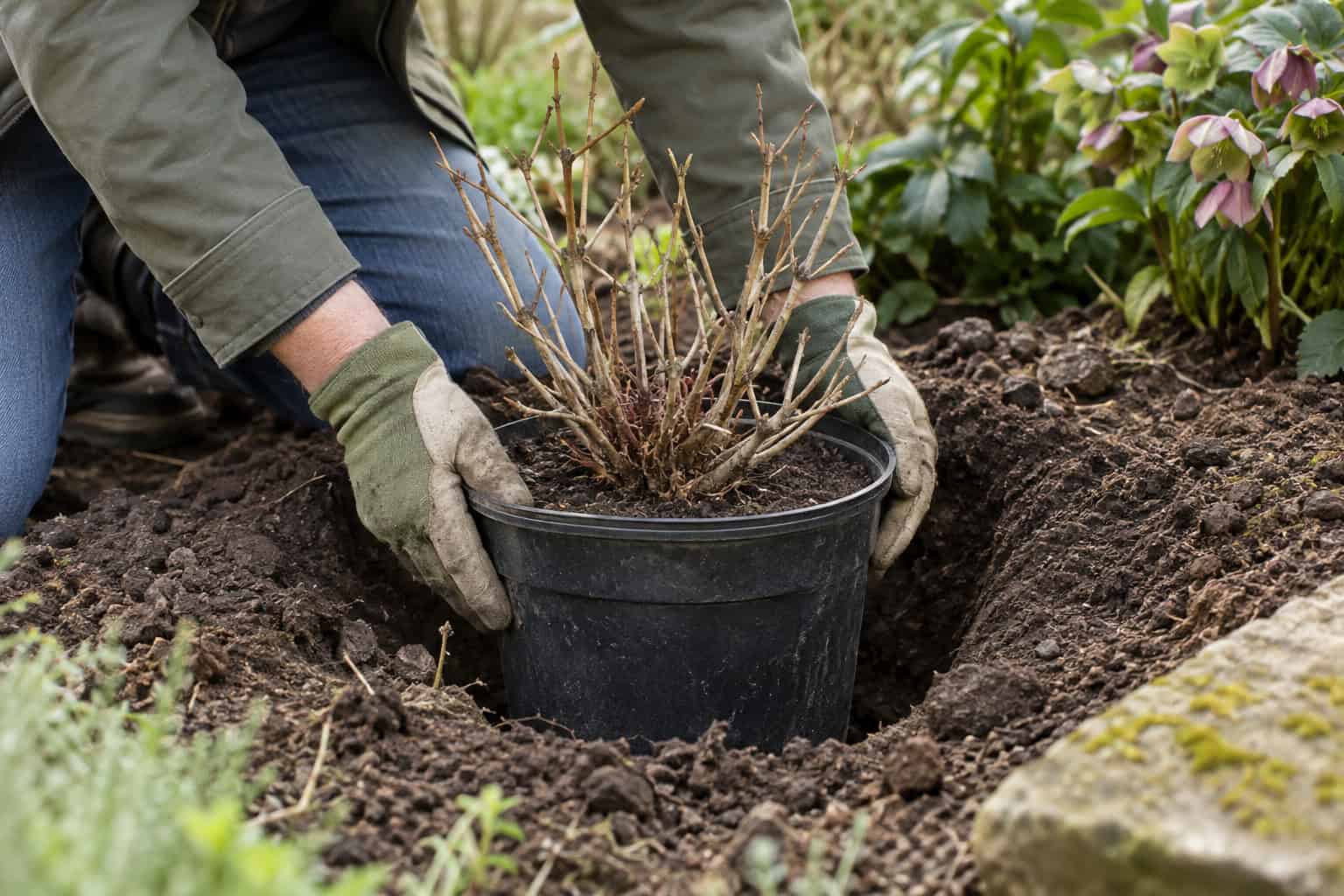
A ground option, if you have one
For gardeners with suitable space, sinking a nursery container into the ground can give dormant roots surrounding soil insulation. Iowa State describes this method in its guide to overwintering unplanted perennials.
It takes planning. Choose a place with appropriate drainage, keep the plant’s crown at the correct level, and arrange the work before the ground freezes. Do not bury the crown deeply in an effort to add protection.
A fragile decorative pot introduces another question: can the container tolerate freezing and thawing? Plant survival and pot survival are separate matters. Check the material and manufacturer advice before putting a valuable planter through a winter it was not made to withstand.
My patio has no in-ground beds. This is an option I can explain, not one I can pretend to use. A rental garden becomes easier to manage when you stop giving it facilities it does not possess.

A cold structure has to earn your trust
An unheated garage or similar structure can be useful for appropriate dormant plants. The word “garage” does not describe its actual temperature.
One might stay reasonably cold. Another might freeze hard, warm sharply in sun, or share heat with the house. A heated living room is a different environment again. Bringing a dormant outdoor perennial beside the sofa is not a universal winter rescue.
Iowa State describes unheated storage that can stay consistently around 20–45°F for the plants covered by its guidance. Treat that as a defined option for suitable plants, not a temperature prescription for everything in a pot. Dahlias, tropical houseplants, and other stored plants have their own requirements.
Use a thermometer and observe the location before trusting it. Ask whether the coldest periods, sunny afternoons, and changes in building use alter the conditions. Leave enough access to check the plants. If storage makes a pot unreachable, the arrangement is unfinished.
A sheltered grouping is a conditional option
On a small patio, grouping appropriate containers in a sheltered position may be the available choice. Shelter and insulation can reduce exposure, but they do not erase the winter or compensate for an unsuitable plant.
Look at the whole position. Is it protected from the strongest wind? Can excess water leave each container? Can you inspect the mix during a thaw? Are you permitted to make the arrangement there? Does it obstruct a door, step, or route you will need in bad weather?
In our 2023 arrangement, those access questions were part of choosing the spot. I draw maps for a living. I still have to remember that a route on paper needs room for actual feet.
Keep the drainage openings and the plant crowns clear when adding protection. Avoid a setup that catches water around the containers. Advice for a mild courtyard should not be transferred automatically to an exposed upper-floor balcony.
For a plant whose roots cannot be protected adequately in your available space, a sheltered grouping may still be insufficient. That is the point to seek local advice, arrange another suitable location, or decide the container planting was seasonal.
Check the mix when it thaws
Dormancy does not mean a pot can be forgotten for months. Inspect moisture when the mix is thawed and water as needed for that plant and storage situation. Do not irrigate frozen mix or leave a container waterlogged.
A fixed weekly watering reminder can be less useful than a regular inspection reminder. Conditions in a cold structure differ from those on a patio exposed to rain and snow. What happened last week does not tell you what the root ball needs today.
The University of Illinois notes both root-zone protection and container damage in its container overwintering guidance. That second issue deserves attention: cracked pottery does not become a gardening success because the plant itself is alive.
Choose the winter home before the next pot
There are three honest answers to the storage question: a workable ground option, a suitable monitored cold structure, or a protected outdoor arrangement that fits the plant and the local winter. Sometimes none is available.
I now think about winter space while considering a container, alongside the carrying weight and the summer light. Our container-growing guide is a useful starting point for those broader choices.
A small patio can support a satisfying garden. It can also support a clear doorway. Before cold weather arrives, put the plant name, the root protection, and the winter inspection route in the same plan.


