

Leave the hose coiled for a minute. If your deciduous tree is still green in late fall and the leaves look intact, you don’t need to water it just because it hasn’t changed color. Brown edges aren’t a watering order, either. Look at the whole tree, then check the soil where the roots are.

Look past the first brown leaf
Step back far enough to see the whole canopy. Are just the edges brown, or have entire leaves browned? Is the damage scattered, confined to one branch or showing up across much of the tree? If leaves are dropping earlier than you’d expect, note where the loss started and whether it’s spreading.
A long dry spell can leave brown edges and cause early leaf drop. Neither symptom proves drought. Browning has several possible causes, and a close-up won’t tell you whether the soil around the roots is dry or soggy. If you take photos, get one of the whole tree as well as one of the damaged leaves.
Check below the surface
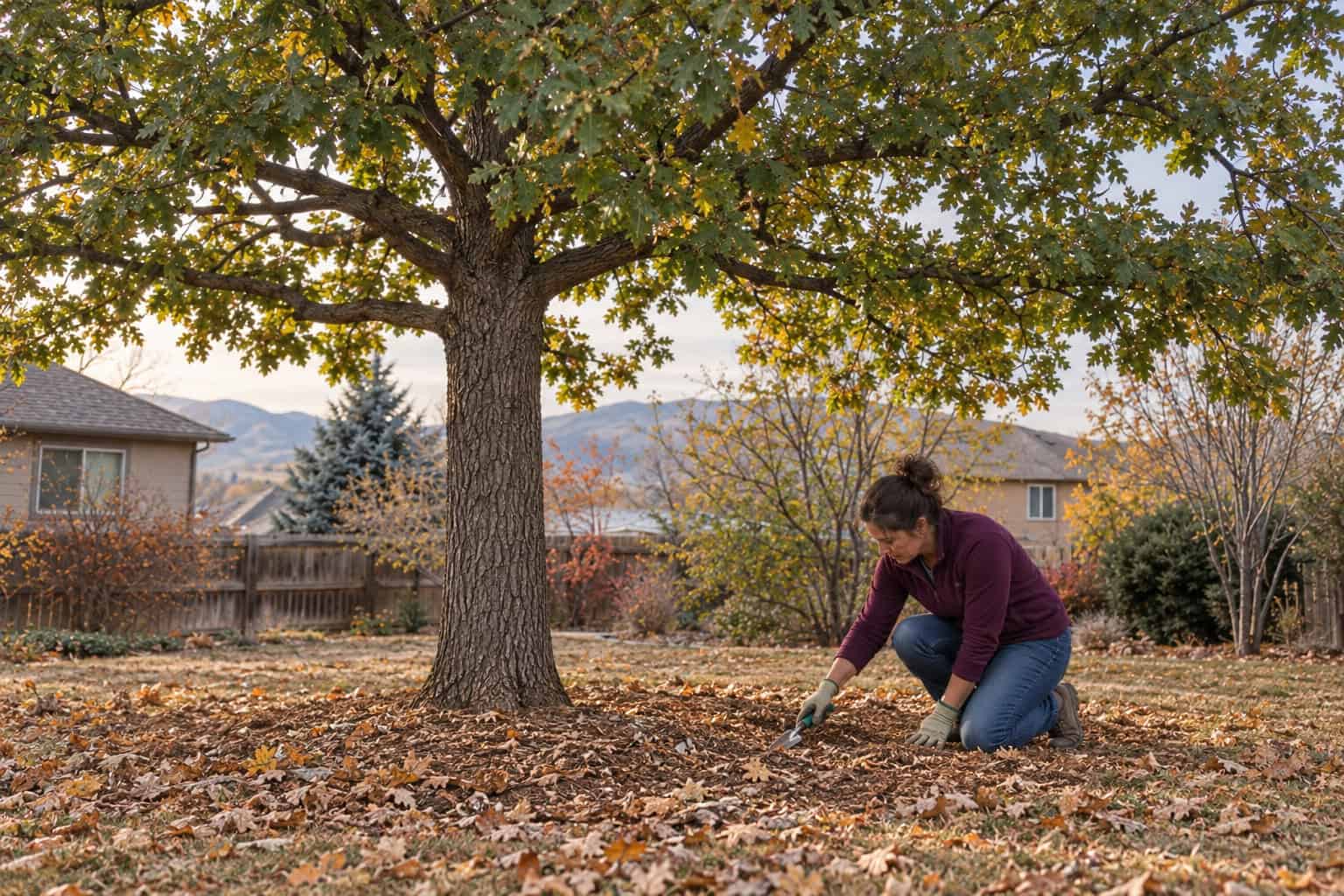
If the ground is unfrozen and workable, brush aside the mulch and use a hand trowel to lift a little soil from below the surface. Feel the soil itself, not the mulch. Soil texture changes how moisture feels: a sandy sample can fall apart even when it’s damp. Notice whether the soil feels dry, damp or soggy.
Where you look depends on how long the tree has been in the ground. Use these as starting points, not as a fixed sampling pattern:
- Newly planted tree: Check the original root ball—the mass of roots and soil or growing mix that came with the tree. Feel it separately from the soil beside it. Damp soil next to the ball doesn’t tell you whether the ball itself is damp.
- Established tree: Check more than one spot in the soil under the canopy, away from the trunk. The outer branches give you a place to start; they don’t mark the end of the roots.
Think back over the last stretch of weather. Heat and wind can dry soil out. Rain, melting snow or a recent watering may have supplied enough moisture, but check below the surface instead of guessing. A warm afternoon can thaw the top while the soil underneath stays frozen. If the soil you need to check is still frozen, leave the hose off and check again during a thaw.
Wait, water or ask for help?
- Wait and watch if the root-zone soil is damp and the leaves are intact or the damage is mild and isn’t spreading. Leave the hose off if the ground is frozen, the soil is soggy or water is already standing.
- Water only if the soil needs it. Water only if the root-zone soil you intend to water is dry and unfrozen, the site drains, and local weather guidance and watering rules allow it. Apply water slowly so it can soak in. Stop if it pools or runs off. For a new planting, don’t soak a damp root ball just because the soil next to it feels dry.
- Ask for a diagnosis if unexplained browning or unusual leaf loss is spreading quickly, affects much of the canopy or involves entire shoots or branches. Show your notes and photos to local Extension or a qualified arborist instead of watering again to see what happens. If water keeps pooling, ask about drainage before adding more.
Leave yourself a short record
Write down the date, what the leaves looked like and where you saw damage, where you checked the soil and how it felt, any recent weather or watering, and what you did. “Waited” counts. Next time you look, you’ll know whether that brown patch is new or just the one you noticed last week.


