In the world’s most inhospitable landscapes, a botanical marvel unfolds—desert plants. These resilient plants, sculpted by the relentless sun and scarce water, are a testament to nature’s ingenuity.
From the iconic saguaros of the American Southwest to the hardy succulents of Africa’s desolate dunes, these desert plants have evolved remarkable strategies for survival. These plants persist and thrive in the arid wilderness, painting a mesmerizing portrait of adaptation and endurance.
Let’s peel back the layers and discover the secrets that empower these rugged plants to defy the odds.
Characteristics of Desert Plants
Desert plants have unique characteristics that enable their survival in harsh conditions. Succulence is crucial as it allows these plants to store water for extended periods. Drought tolerance ensures they can withstand prolonged dry spells without wilting or dying.
Moreover, drought avoidance allows them to halt growth during droughts and resume when conditions improve. From the cacti’s spiky exterior to the thick-skinned succulents, every feature serves a purpose, designed by nature for extreme endurance.
Succulence

Succulence is a fascinating survival trick for certain desert plants. They’ve developed the ability to store water in their fleshy leaves and stems, helping them brave the harshest desert conditions.
Anacacho Orchid Tree, Arizona Poppy, and Old Man Cactus are examples of these hardy survivors showing off their succulent characteristics. This unique adaptation allows these plants to survive and thrive in arid landscapes that would spell doom for many other species.
It proves how ingenious nature can be even under severe pressure from dry environments.
Drought Tolerance
Desert plants exhibit exceptional adaptations to survive the aridity of hot, searing environments. Cacti and succulents, for instance, have waxy coatings and a reduced leaf surface area, reducing water loss through transpiration.
Their fleshy leaves store as much moisture as possible, further enhancing their drought tolerance.

Their adaptive strategies continue beyond the above-ground level; they take root below ground. Desert plants have extensive root systems that delve deep into the soil for any available moisture.
These roots can stretch far beyond their apparent height or size above ground – a perfect example of hidden depths required in dire situations! By tapping into water sources buried deep within the Earth’s crust, these resilient warriors ensure longevity amidst dry conditions, embodying high-temperature and low-precipitation survival skills.
Drought Avoidance
Desert plants employ innovative strategies for drought avoidance. Plant adaptation for water-efficient survival is expected in the harsh desert climate. Many species, such as succulents and cacti, regulate their growth patterns according to moisture availability to circumvent periods of little to no rainfall.

They go dormant during drier seasons, ceasing their growth and conserving reserved moisture within fleshy leaves or stems. Notice the Mexican Lime Cactus with its extensive root system designed to absorb every possible drop of dew deep from the soil before evaporation kicks in by day’s heat! Jumping Cholla presents another fascinating example; it has rosette-shaped leaves that reduce water loss significantly through brilliant design mechanisms.
So next time you spot an Organ Pipe Cactus not just wowing spectators with striking appearances but also staunchly surviving where few others can know they have mastered a life-saving skill – drought avoidance!
4 Types of Desert Plants
In the vast expanses of desert terrain, one can find captivatingly unique plant life comprised of four types: succulents, cacti, shrubs and grasses, and wildflowers. Succulents are marvels, with chunky, water-filled leaves or stems functioning as built-in reservoirs.
Cacti boasts a variety of shapes and sizes, but all share a singular feature – spines instead of traditional leaves. Desert shrubs and grasses provide essential ground coverage while adding splashes of muted green to the sandy landscapes; they’re true survivalists in harsh conditions.
Throughout their lives, they also developed a character to have long roots, searching for water to absorb underground.
Lastly, wildflowers dot the desert with unexpected bursts of vibrant color during their short-lived blooms; these beauties embody nature’s resilient spirit under extreme aridity!
1. Succulents

Succulents are the champions of desert plant survival. Their capacity to store water sets them apart and ensures their resilience under full sun. This unique adaptation is evident in varieties such as Kalanchoe spp., also known as Flapjacks, where thick, fleshy leaves serve as reservoirs for vital hydration.
Unlike other vegetation types, these plants don’t wilt under the hot sun but instead flourish, using stored water during drought or extreme temperatures. These aesthetically comforting and life-sustaining features make succulents essential to any discussion about desert plants.
2. Cacti

Cacti stand out as the ultimate survivalists in the plant kingdom. These resilient plants thrive in the harshest desert climates, enduring extreme temperatures and minimal water availability by storing precious moisture within their fleshy stems.
This unique adaptation notably sets them apart from other desert flora.
There’s more to cacti than just their prickly exteriors. They come in many shapes and sizes, from tall and column-like to exhibiting rounded or branching forms. Unexpectedly, these hardy xerophytes produce vibrant flowers that paint the seemingly barren desert landscape with splashes of red, yellow, and pink hues, making them attractive tourist attractions.
Moreover, indigenous cultures have often relied on cacti for various purposes beyond mere spectacle; they serve as food sources, medicinal remedies, and raw materials for building structures.
3. Shrubs and Grasses

Shrubs and grasses stand out in desert environments due to their deep-reaching root systems. They reach far down, accessing water deeply buried within the arid soil. Varieties like the creosote bush, mesquite, and black brush can easily handle high heat and scarce water resources.
Grass species such as needlegrass and dropseed also thrive in these conditions while providing essential ground cover that prevents topsoil erosion by winds. These shrubs and grasses help maintain balance in desert ecosystems, stabilizing soils and preserving biodiversity, making them invaluable components of our deserts.
4. Wildflowers

Desert landscapes burst into color with the arrival of wildflowers like the prickly pear cactus and Joshua tree. These desert wildflowers survive and flourish under high temperatures, low humidity, and low precipitation typical of a super dry climate.
The flashy flowers of prickly pear cacti present a stunning visual contrast to their spiny surroundings while storing moisture in their succulent leaves. Meanwhile, the Joshua tree sports strong green spikes against stumpy branches as it stands unyieldingly against drought conditions.
Top 10 Most Common Desert Plants
1. Joshua Tree (Yucca brevifolia)

Defying the inhospitable desert conditions like in the Mojave Desert, Joshua Trees stand tall. Named after a biblical figure, these trees can reach heights of 15 to 40 feet in just a few decades.
Their strength lies in their deep root system, adept at sourcing water stored far underground. They also thrive in full sun and have adapted to arid desert conditions.
A fascinating fact about this architectural plant is how it reproduces. Large clusters of white, bell-shaped flowers are exclusively pollinated by the yucca moth, an example of nature’s intricate dependence. You can see this tree bloom between March and May.
Following wildfires, the seeds dispersed by wind find fertile ground to germinate and continue the lifecycle anew.
2. Organ Pipe Cactus (Stenocereus thurberi)
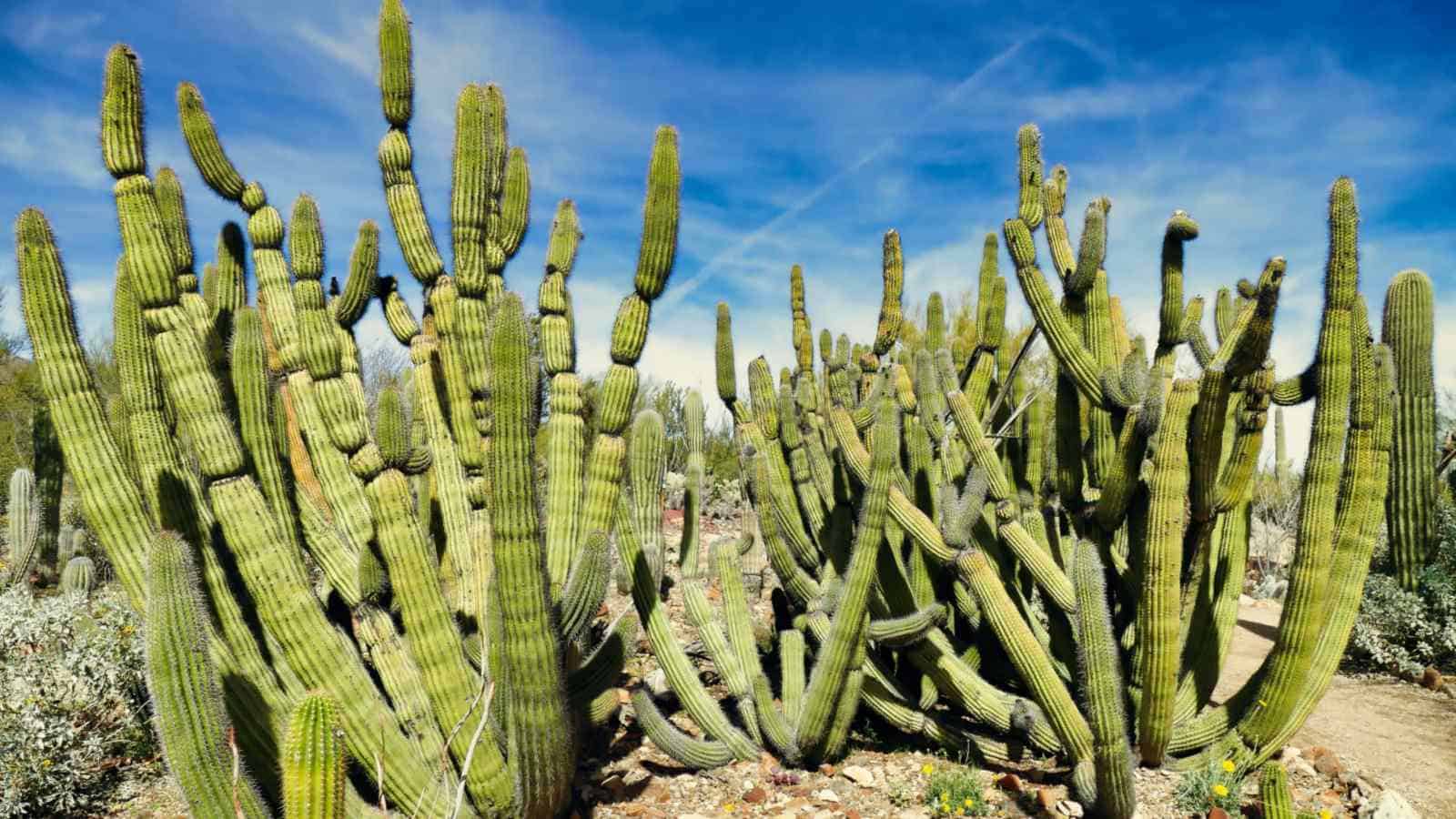
Organ Pipe Cactus is a marvel among desert flora, soaring high up to 23 feet with its multiple branches. It enchants the Sonoran Desert landscape, where it resides natively. The cactus grows slowly yet steadily and can reach ages spanning hundreds of years. It survives best under direct sunlight with minimal shade and water.
In contrast to usual day bloomers, this remarkable plant flaunts beautiful light pink or purple flowers at night, adding to its charm. This cactus blooms from May to June. Completing its visual spectacle, Organ Pipe produces vibrant red fruits that attract viewers and are edible!
3. Creosote Bush (Larrea tridentata)

Creosote Bush thrives in the arid regions of eastern California, Texas, and northern Mexico. Known for its distinct scent, similar to rain falling on hot pavement, this plant survives extreme desert conditions and prefers full sunlight.
As spring arrives, it bursts into life with vibrant yellow flowers and sports small green leaves that appear covered in varnish. A deep root system allows it access to water sources far beneath the arid surface, which most other plants fail to reach.
As one can imagine, such resilience makes the Creosote Bush a dominant presence in desert ecosystems, where it helps stabilize the soil while providing crucial habitat for wildlife.
Despite its harsh environment, this bush blooms with unyielding vitality, truly embodying nature’s tenacity!
4. Prickly Pear Cactus (Opuntia spp.)

Prickly Pear Cactus thrives in dry, arid environments. Its ability to store water within its thick flesh helps it survive the brutal desert heat. The cactus is covered with fleshy pads that hold onto moisture as insurance against droughts and scorching sun rays. These cacti are adapted to dry, arid environments and require plenty of sunlight.
Its eye-catching flowers bloom in various colors — yellow, purple, and red — adding a burst of beauty amid barren landscapes. This cactus shares a habitat with iconic desert plants like the Joshua tree and saguaro cactus, showcasing the diversity hidden beneath the desert’s rough exterior.
It isn’t alone! Ghost plants, brittlebush, creosote bush, and many others join Prickly Pears in making these harsh conditions their home.
5. Desert Marigold (Baileya multiradiata)
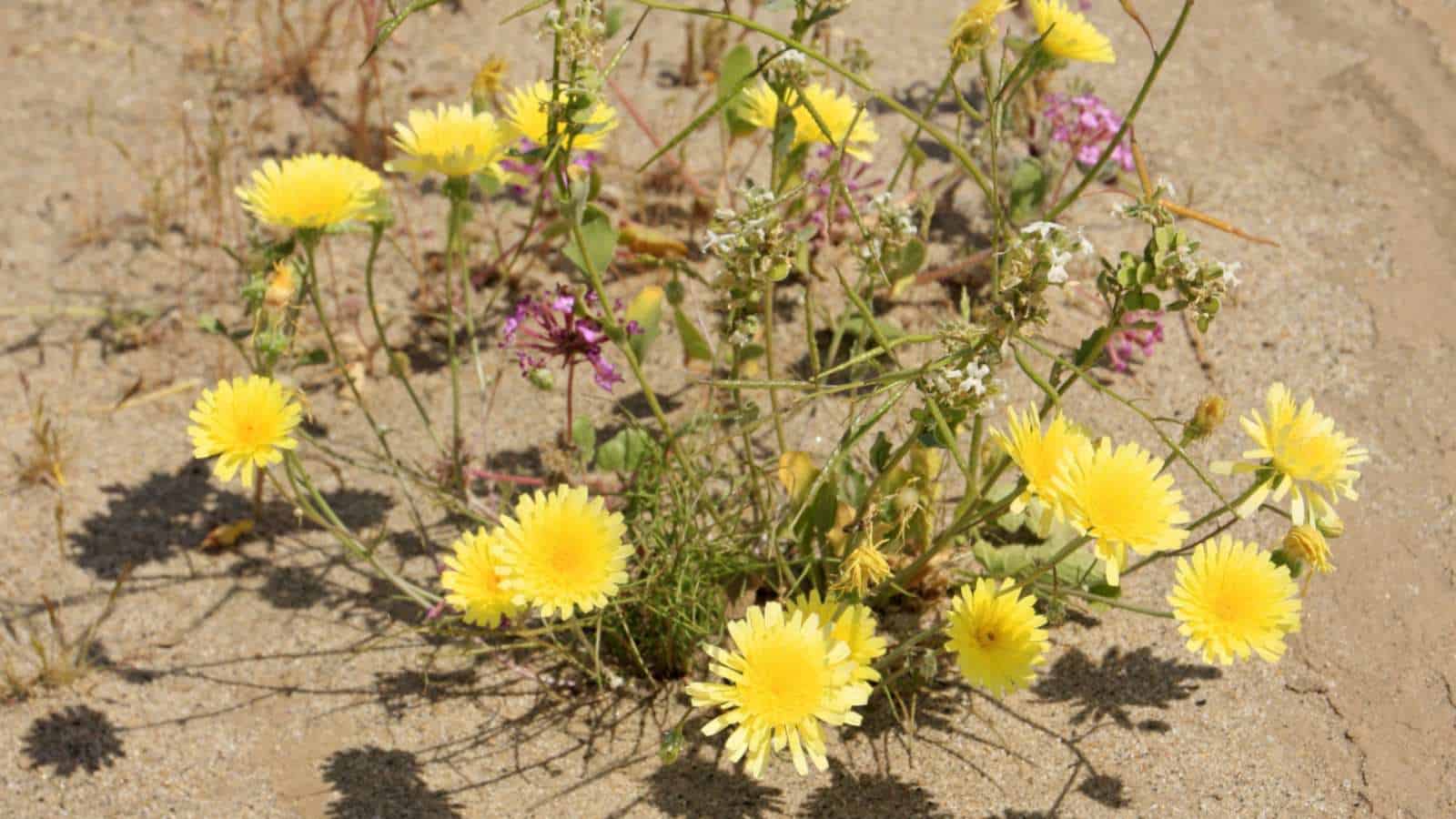
Desert Marigold isn’t just another ordinary desert plant. Found in the harsh terrains of southwestern US and Mexico, it flaunts an extraordinary ability to thrive amidst extreme climates and prefers full sunlight.
The vibrant yellow flowers of this breathtaking flora make it stand out amongst other notable desert plants like cacti and succulents. Its stunning appearance captivates onlookers, and its resilience showcases the remarkable adaptations essential for survival in dry environments such as deserts.
6. Ocotillo (Fouquieria splendens)

Ocotillo, a semi-succulent native to the southwestern US and northern Mexico, displays an array of spiny sticks throughout the year – a testament to its hardiness in extreme desert conditions.
This resilient plant survives and thrives in high temperatures with minimal rainfall. Reaching heights up to 20 feet, its towering presence adds drama and intrigue to the otherwise barren desert landscape.
An added notch on Ocotillo’s belt lies in its vibrant red flowers, which expertly attract hummingbirds and other pollinators — diversifying life within the harshest climates.
7. Yellow Palo Verde (Parkinsonia microphylla)

As a native tree of Arizona and California, Yellow Palo Verde is an eminent representative of desert plants. Its branches are mostly leafless, supporting a yellow-green bark that certainly catches the eye in its natural habitat. It prefers full sunlight to thrive.
Bright yellow flowers dominate this tree during spring, creating a delightful contrast with the arid surroundings. One distinct aspect of Yellow Palo Verde is that it belongs to the pea family and can fix nitrogen in the soil, which aids its survival in sandy or rocky terrains, often without water for extended periods.
Truly representing resilience, this drought-tolerant plant thrives where many other species may find it challenging to exist.
8. Mojave Aster (Xylorhiza tortifolia)

The Mojave Aster is a true spectacle in the desert landscape. Not only does this plant survive the harsh conditions of meager precipitation and high temperatures, but it also thrives, flaunting large lavender-blue flowers that are irresistible to pollinators.
This resilient desert wildflower has its own set of survival skills – reduced leaf surface area to limit water loss and deep roots that tap into scarce groundwater resources. The vibrant petals serve a purpose, too, standing out against arid backgrounds to draw in insects essential for their reproduction.
Amongst other plants like cacti and succulents who share its habitat, the Mojave Aster’s ability to bloom amidst adversity sets it apart.
9. Aloe Vera (Aloe barbadensis Miller)

Aloe Vera, with its fleshy water-storing leaves, is a stalwart in arid conditions. Its adaptability makes it widespread in skincare products known for soothing sunburn and reducing inflammation.
Traditional medicine praises Aloe Vera as a potential digestive aid and immune system booster. The plant’s gel-filled leaves bring versatility; you can apply them directly to the skin or process them into various items.
Between uses, its bright tubular flowers make the plant an attractive hangout for bees, butterflies, and hummingbirds seeking nectar. It’s fascinating how much utility hides within this lovely desert dweller.
While it can tolerate some shade, it generally prefers full sun.
10. Texas Sage (Leucophyllum frutescens)

Often called Purple Sage or Texas Ranger, the Texas Sage is an evergreen shrub and a striking component of desert flora. Born in spring and summer, its vibrant purple flowers present a pleasant contrast against its silver-gray foliage.
This drought-resistant marvel thrives under the searing sun and scanty showers typical to arid regions. Not surprisingly, it’s become everyone’s favorite for landscaping in areas with little rainfall throughout the year.
Standing alongside other resilient desert dwellers, such as the prickly pear cactus and Joshua tree, the Texas Sage never fails to draw admiring glances from passers-by!
40 Other Notable Desert Plants (Honorable Mentions)
11. Saguaro Cactus (Carnegiea gigantea)

The Saguaro Cactus, Arizona’s state wildflower, is the largest cactus in any desert biome. This towering plant can sprout arms that reach up to 50 feet high! Known for their impressively long lifespan, they could thrive for 150 to 175 years amidst harsh climate and low precipitation conditions.
12. Barrel Cactus (Ferocactus spp.)

Known for their distinctive shape, barrel cacti store water in their thick, ribbed stems, helping them survive in arid conditions. These spiky giants can live for centuries, providing a home for desert wildlife.
13. Desert Willow (Chilopsis linearis)

Graceful and slender, the desert willow’s pink to lavender flowers add a splash of color to the desert scenery. Its long, narrow leaves and wispy branches give it an almost ethereal quality.
14. Yucca (Yucca spp.)

With sword-like leaves and tall flowering stalks, yucca plants are desert sentinels. Some species even produce edible fruits, and Native Americans have historically used their fibers for various purposes.
15. Brittlebush (Encelia farinosa)

Covered in silver-gray foliage and adorned with bright yellow daisy-like flowers, brittle bushes create a vibrant desert tapestry. Indigenous peoples once used their resin for medicinal purposes.
16. Mescal Agave (Agave parryi)

Agave plants such as this one are rosette-shaped succulents essential in producing the traditional alcoholic beverage known as mescal. Its spiky leaves are striking, and its resilience in the harsh desert is awe-inspiring.
17. Desert Mariposa Lily (Calochortus kennedyi)

Delicate and lovely, these desert wildflowers display white or pale lavender petals with striking patterns. They appear briefly after spring rains, gracing the desert floor with their ephemeral beauty.
18. Fairy Duster (Calliandra eriophylla)

The vibrant red puffball flowers of the fairy duster attract pollinators and bring a touch of whimsy to the desert. These shrubs thrive in sandy soils and can withstand extreme temperatures.
19. Owl’s Clover (Castilleja exserta)

Named for its intricate, owl-like appearance, this wildflower blooms with vibrant purple and pink hues. It’s a small but captivating presence on the desert floor.
20. Desert Paintbrush (Castilleja chromosa)

Like a painter’s brush dipped in fiery reds and oranges, the desert paintbrush adds vivid splashes of color to the arid landscape. It’s a favorite among pollinators.
21. Fringed Amaranth (Amaranthus fimbriatus)
With its striking magenta-colored flowering spikes and green leaves, fringed amaranth is a desert gem. It’s a hardy plant that provides sustenance to desert wildlife.
22. Globe Mallow (Sphaeralcea ambigua)

Resilient and charming, globe mallow boasts vibrant orange or pink flowers that bloom in abundance during the spring. Its drought tolerance makes it a desert staple.
23. Buckhorn Cholla (Cylindropuntia acanthocarpa)

This cactus species features cylindrical stems adorned with clusters of spines resembling buckhorn antlers. Its unique appearance adds character to the desert landscape.
24. Mexican Gold Poppy (Eschscholzia mexicana)

When the desert floor explodes in a sea of golden-yellow blooms, you know it’s springtime and the Mexican gold poppy is in full glory. These delicate flowers brighten the entire landscape.
25. Desert Zinnia (Zinnia acerosa)

Resembling tiny sunflowers, desert zinnias flaunt bright yellow petals and a dark center. They are tenacious, often blooming in the harshest of desert conditions.
26. Desert Maroon (Monardella odoratissima)

With its aromatic leaves and clusters of tubular, maroon flowers, this desert native is a fragrant delight. It attracts butterflies and bees, adding to the desert’s biodiversity.
27. Blackbrush (Coleogyne ramosissima)

A hardy shrub with dark, twisting branches, blackbrush symbolizes endurance in the desert. It produces tiny, yellow flowers that release a sweet fragrance into the dry air.
28. Palo Brea (Parkinsonia praecox)

With its green trunk and bright yellow blossoms, the palo brea is a desert standout. Its ability to thrive in arid environments showcases nature’s adaptability.
29. Desert Star (Monoptilon bellioides)

Tiny and unassuming, the desert star bears delicate white flowers with a yellow center. It’s a testament to the desert’s capacity to nurture life even in harsh conditions.
30. Dune Evening Primrose (Oenothera deltoides)

As the sun sets over the dunes, these primroses unfurl their large, fragrant white flowers, illuminating the desert sands with their fleeting beauty.
31. Desert Bluebells (Phacelia campanularia)

Aptly named, these small, bell-shaped flowers blanket the desert floor in shades of blue, creating a stunning carpet that catches the eye of anyone lucky enough to witness it.
32. Smoke Tree (Psorothamnus spinosus)

With its feathery blue-green foliage and lavender blooms, the smoke tree adds an element of elegance to the desert. Its branches appear smoky from a distance, hence the name.
33. Mojave Yucca (Yucca schidigera)

Known for its towering flower stalks adorned with creamy-white, bell-shaped blooms, the Mojave yucca is an iconic desert plant. Native tribes have traditionally used it for its medicinal properties.
34. Indian Ricegrass (Achnatherum hymenoides)

This grass species is a food source for wildlife and a stabilizing force against desert erosion. Its delicate seed heads sway in the desert breeze.
35. Globemallow (Sphaeralcea spp.)

These perennial herbs come in various colors, including pink, orange, and lavender. They’re like nature’s confetti, adding color to the desert landscape.
36. Desert Senna (Senna covesii)

This shrub bursts with bright yellow, pea-like flowers. It’s a valuable nectar source for bees and butterflies, contributing to the desert’s intricate web of life.
37. Four-wing Saltbush (Atriplex canescens)

Resilient and salt-tolerant, this shrub sports small, greenish flowers and distinctive four-winged seeds. It’s a key player in desert ecosystems, providing food and shelter.
38. Sundancer Daisy (Hymenoxys acaulis)

When these cheerful yellow daisies bloom, they defy the harsh desert conditions. Their bright faces nod in the sun, bringing joy to the desert landscape.
39. Desert Trumpet (Eriogonum inflatum)

The desert trumpet is a curious and unique desert plant with inflated stems and tiny yellow flowers. Its resilience in the face of extreme heat is remarkable.
40. Whipple’s Yucca (Yucca whipplei)

Named after a 19th-century American explorer, this yucca species displays tall, spiky flower stalks adorned with creamy, bell-shaped blooms. It’s a desert icon.
41. Desert Lupine (Lupinus sparsiflorus)

Carpeting the desert with clusters of blue and purple pea-like flowers, desert lupines are a sight to behold after a desert rainstorm. Their presence is a testament to nature’s adaptability.
42. Brown-eyed Evening Primrose (Camissonia claviformis)

The delicate yellow blossoms of this evening primrose open in the late afternoon, adding a touch of elegance to the twilight desert landscape.
43. Turpentine Broom (Thamnosma montana)

Emitting a fragrance reminiscent of turpentine, this desert shrub is a fascinating addition to the arid landscape. Its bright yellow flowers provide a stark contrast to its aromatic leaves.
44. Apache Plume (Fallugia paradoxa)
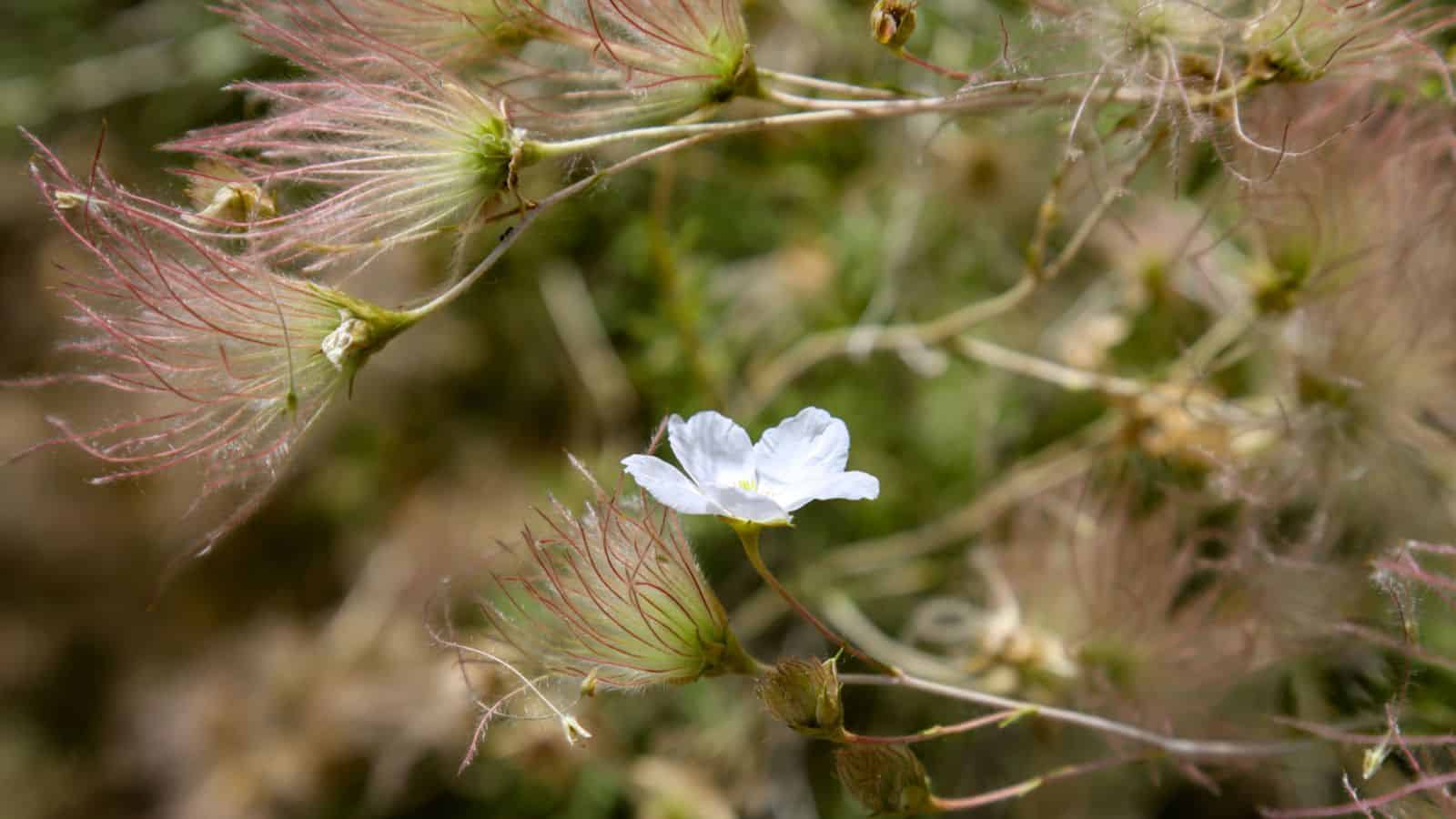
With its feathery, white, seed-topped fruits, this shrub is named after the Native American Apache tribe. It’s a symbol of the enduring spirit of the desert.
45. Chaparral (Larrea tridentata)

Known as the “creosote bush,” this resinous desert shrub boasts tiny, bright yellow flowers. It’s one of the oldest living organisms on Earth, a testament to desert longevity.
46. Fringed Sage (Artemisia frigida)

This aromatic sage adds a silvery-green hue to the desert landscape and releases a pleasant fragrance. Its presence attracts pollinators and herbivores alike.
47. Globe Chamomile (Oncosiphon piluliferum)

Resembling a miniature daisy, the globe chamomile displays small, white, or yellow flowers that brighten the desert floor. It’s a symbol of simplicity and resilience.
48. Baja Fairy Duster (Calliandra californica)

Like its cousin, the fairy duster, this plant sports striking red flowers resembling powder puffs. It’s a favorite among hummingbirds and other desert pollinators.
49. Desert Trumpet (Eriogonum inflatum)
The desert trumpet is a curious and unique desert plant with its inflated stems and tiny yellow flowers. Its resilience in the face of extreme heat is remarkable.
50. Ratany (Krameria spp.)

This low-lying desert shrub produces intricate, papery pink flowers. It’s a hardy survivor, thriving in the harsh desert environment, and serves as a reminder of the beauty hidden within adversity.
How Desert Plants Survive Harsh Conditions
Desert plants showcase stunning adaptability in the face of harsh desert conditions. These resilient species employ clever survival strategies to defy high temperatures and low precipitation levels.
Some, like cacti and other succulents, store water in their fleshy leaves and stems, an adaptation known as succulence. Visible on a plant such as the Organ Pipe Cactus or Saguaro Cactus are thickened regions reserved for storing hydration harvested during rare periods of rain.

Certain desert dwellers also reduce leaf surface area to minimize water loss through transpiration – an effective way they use to combat searing heat daily. If you come across Devil’s Claw or Ghost Plant, you’ll see small-scale leaves designed to conserve moisture but not wholly devoid of functionality; their predominantly chlorophyll-filled tissues allow adequate photosynthesis despite their diminished size.
Exceptionally coated with wax molecules, this flora articulates nature’s phenomenal artistry in battling drought while simultaneously thriving in incredibly tough climates, managing even to bloom brightly colored flowers!
Cultivating Desert Plants at Home
Growing desert plants at home can be a rewarding experience. It starts with understanding the unique conditions of a desert environment. These environments are known for high temperatures, low humidity, and precipitation.
You may need special equipment like grow lights or humidifiers to recreate this. You must also choose the right type of desert plants for your climate and personal preference.

Succulents like Aloe Vera or Jade Plants are popular due to their hardiness and aesthetic appeal, while others may prefer vibrant wildflowers such as Texas Sage or Desert Marigold.
After selecting the appropriate plants, next comes care, which usually involves well-drained soil mixtures and an infrequent watering schedule based on the plant’s requirements – remember these are drought-tolerant species -ample sunlight exposure and occasional nutrients if needed.
This way, your cacti will survive and thrive – make sure not to overwater them! Remember, each species has different needs, so thoroughly research before bringing any new plant buddy home!
Understanding the Desert Environment
Comprehension of the desert environment starts with acknowledging its harshness. Temperatures can soar to extreme highs during the day, plummeting drastically when night falls. Rainfall? Rare at best, rendering this terrain incredibly arid.
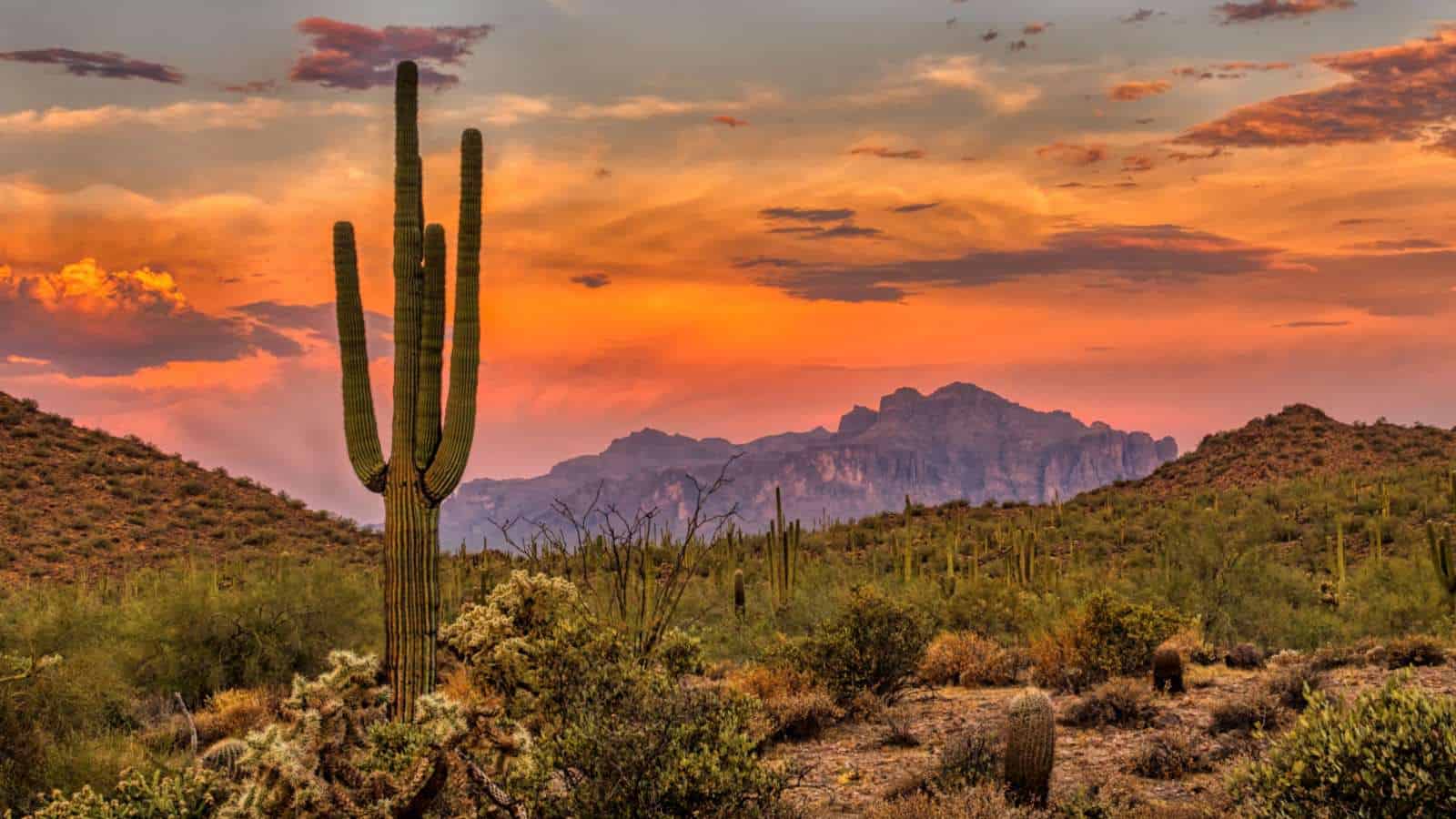
Yet therein lies a remarkable feature – an abundance of life calling this super dry climate home thanks to sophisticated adaptations designed for survival. Despite appearances, deserts are ecosystems teeming with biodiversity, including resilient plant species like Joshua Tree and prickly pear cactus with tailored features enabling their subsistence in such conditions.
Choosing the Right Desert Plants
Selecting the appropriate desert plants incorporates understanding their capabilities and needs. Each type, from cacti to succulents or ornamental grasses, brings unique survival requirements in harsh climates.
The Anacacho Orchid Tree, Arizona Poppy, Central Mexico Organ Pipe, Evening Primrose, and Old Man Cactus offer visually stunning foliage for home cultivation. These resilient flora endure arid conditions and sparkle even under extreme pressures with reduced leaf surface area, waxy coatings, and deep root structures.

If you are contemplating a water-conserving landscape option like Xeriscape landscaping, choosing native desert species would be a smart move.
Caring for Desert Plants
Overwatering desert plants is a common mistake. They have adapted to survive in arid conditions and crave the heat, so they thrive under intense sunlight. Be sure to use well-draining soil to prevent water from clogging up your plant’s roots; succulents and other desert plants do not like wet feet! It’s best if these green friends stay primarily dry in winter.
Cutting back on their indoor artificial heat assists them during dormant periods by emulating their natural environment. You’ll soon understand that proper care keeps your saguaro cacti or organ pipe blooming beautifully yearly!
FAQs
What are some other plants that can survive in the desert?
In harsh desert conditions, xerophytic plants thrive best. Among the standout xerophytes are the iconic golden barrel cactus, with its spherical form and water-storing stem, the elegant fox tail agave with its succulent leaves, and the hardy pencil plant. The Desert lily can add a touch of delicate beauty to the arid expanses, while palo verde trees anchor the ecosystem with their nitrogen-fixing abilities. Meanwhile, the vibrant California poppy defies the desert’s stereotype, showcasing its resilience with bursts of color amidst the arid terrain.
How do desert plants store water?
Many desert dwellers, like succulents and cacti, utilize their thick leaves or stems to hold onto water during extended periods without rainfall.
Why are most desert plants spiky or thorny?
This is a defensive adaptation against animals that might consider them a fresh drinking source amidst the arid climate.
Can we grow dessert plants at home?
Absolutely! Correctly understanding their unique needs and care routines allows you to create your mini-desert scene indoors or in your backyard.
Are all types of cacti suitable for home growing?
Not every variety will thrive outside its native habitat, but popular varieties such as the Old Man Cactus make great houseplants due to their adaptability.
Does every Desert plant flower?
While many bloom with stunning flowers – like Arizona Poppy or Evening Primrose – not every species produces visible colors as part of their lifecycle.
What role do indigenous Desert Plants play within these demanding ecosystems?
They serve critical roles, from providing shelter to wildlife, helping maintain soil structure, and even contributing to local weather patterns.
Conclusion
Desert plants indeed signify the incredible power of adaptation. Thriving in arid climates, their beauty and resilience offer aesthetic appeal while teaching us about survival against the odds.
Their grace amid harshness adds captivating charm to our home gardens today, transforming landscapes into lush havens even in dry territories. Let’s continue exploring these fantastic species as they unlock more secrets within their prickly exteriors or colorful blossoms!
Other Desert Plant Guides from Planet Natural:
How to Grow and Care for San Pedro Cactus (Complete Guide)
How to Plant, Grow and Care for Desert Rose (Adenium Obesum)