

Seed beans do not belong in the supper basket. That sounds obvious until the same row offers both.
In autumn 2024, I kept a small marked seed row separate in our Madison garden. Elena, my younger sister and the organized part of our seed-sharing arrangement, was involved in the work. Rain threatened the drying pods. We kept suitable ones for careful drying, checked their labels and condition, and discarded the doubtful ones.
The saved batch was modest. Useful, though. I did not need every pod to become next year’s seed.
Decide which harvest you want
A bean plant does not know whether you planned dinner or a seed packet. You make that decision by what you leave to mature.
Snap beans are picked while the pods are tender and the seeds immature. Shelling beans have full-sized seeds that are still soft. Dry beans are left until the pods and seeds have dried. The University of Minnesota explains the differences in its home-garden bean guide.
Seed saving asks you to leave suitable pods beyond the snap-bean stage. That changes a familiar picking routine. If the row is being harvested by several people, make the distinction visible before someone does a helpful round of picking.
My marked row gave the seed crop an identity. A label is a small thing to arrange while the plants are still easy to recognize. It is a much larger inconvenience to reconstruct the decision after the pods are mixed.
Our bean-growing guide covers the growing and harvesting background. This part of my season was narrower: leave a manageable batch for planting seed and keep track of it.
Know the seed you started with
Begin with healthy plants and an identified variety suited to saving. Minnesota’s vegetable seed-saving guidance recommends open-pollinated choices and describes beans as an approachable crop for this work.
Beans generally self-pollinate. That is useful information, not a guarantee that every saved seed will be genetically identical or that varieties can never cross. If maintaining a variety precisely matters to you, get appropriate isolation and seed-production guidance.
Keep the original variety information. If it has disappeared, admit that in the record. An honest unknown is easier to understand than a guess passed along as a name.
I grew up watching my father grow beans outside Rockford. That history made beans familiar. The variety information still belongs with the seed. It is the part I want the next grower to be able to read.
Watch the pods, and watch the weather
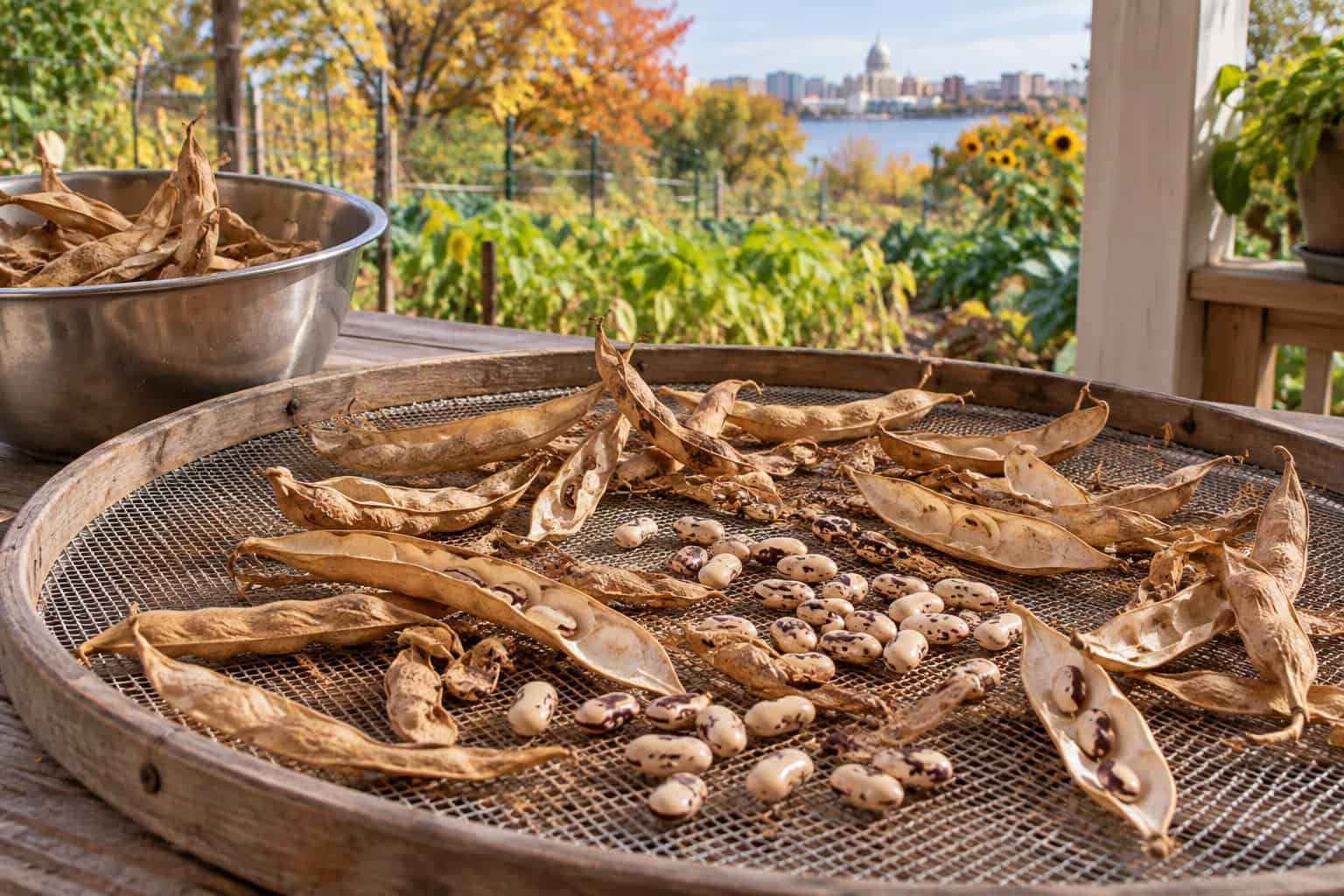
Suitable mature pods turn brown and dry; the dry seeds can rattle inside them. That is a different stage from a pod ready for a quick meal.
Madison’s autumn rain was part of the 2024 decision. Waiting is sometimes necessary for maturity. Waiting without looking is a different matter.
Inspect the seed row and use appropriate guidance when wet, cold conditions arrive before a dry-bean crop is ready. Minnesota discusses bringing suitable plants indoors to continue drying when autumn conditions interfere. The maturity and condition still matter. An immature or moldy pod does not become sound seed merely because you carry it inside.
I kept suitable material for careful drying and threw away the questionable pods. Saving seed is not an obligation to rescue everything the row produces.
Drying needs space you can check
My indoor drying shelf is a temporary setup for labeled material, not a place to hide a humid closed bin. I want to be able to see what is happening.
Follow a sound bean-seed drying method. Minnesota recommends additional indoor drying before shelling its saved-seed batch. Keep the identity with the pods through that stage. If you have more than one variety, physically separate them as well as labeling them.
Inspect the material instead of sealing damp pods away. Discard doubtful material rather than putting it beside sound seed and hoping the problem stays politely in one corner.
A manageable quantity helps. A little labeled batch can fit the attention you have. A pile that fills every spare surface asks for another kind of arrangement, and possibly more time than you meant to give it.
I work on school buses and like things I can repair. That preference is less helpful with a bad seed pod. Sometimes the sensible decision is to stop working on it.
Shell without losing the name
Once the material has dried appropriately, shell the beans and remove the remaining plant debris. Keep the batch associated with its label during the change from pods to loose seed.
This is a point where a neat-looking bowl can cause trouble. If the label stayed with the empty pods, the finished beans have lost the very information you were preserving.
Check condition again. I would rather keep a smaller sound batch than enlarge it with seed I already distrust. That was the useful outcome of the 2024 project: a modest saved batch, with the doubtful material gone.
Planet Natural’s general seed-saving guide discusses the broader subject. Beans gave me one crop to follow all the way through, instead of several different procedures competing on the same shelf.
Check a small sample before planting
A sound-looking seed is not a promise of a strong plant. Before assigning the saved batch a whole row, check a small sample for germination. Illinois Extension describes a paper-towel germination check: moisten the towel, enclose the sample in a labeled bag or container, keep it in a suitable warm spot, and inspect it using the seed’s expected germination time.
Record what the sample does. If the result is poor, reconsider relying on that batch and arrange replacement seed if needed. Sprouting alone does not guarantee a vigorous garden stand, and the check does not certify variety purity or seed health. I would rather make that decision while another packet is still an option.

Store the record with the dry seed
Store fully dried seed in a cool, dry place using an appropriate container. Minnesota describes labeled packets inside a moisture-resistant container. Include the variety and collection date, and retain any useful notes about the source and condition.
Do not seal seed that still needs drying into its final storage container. Finish one stage before starting the next. A label cannot make up for that shortcut.
If you share the seed, pass along the record and any uncertainty. Elena’s care with labels is useful because the next person should not have to guess what you meant.
I like this project because the decision is visible. Some beans leave the garden while still tender. A few suitable pods stay for another purpose. You keep those separate, dry them carefully, and carry their name into the next season.
Before you leave pods for seed, mark the place and decide how much you can manage. The supper basket can keep doing its job. The seed crop needs its own route.


