

Before tipping every empty container into one storage tote, keep the pots apart long enough to ask two questions: what happened to the plants, and what is left of the mix?
A pot that supported healthy annual flowers all season offers a different starting point from one whose plants declined for an unexplained reason. Once both batches are combined, that useful history is gone. The savings from reuse become harder to judge.
This end-of-season sorting routine is for outdoor ornamental containers. Seed-starting, a valuable indoor collection, or a recurring pest problem calls for a more cautious approach, often including fresh growing media. The decision here is whether some known, healthy used mix is worth keeping for another ordinary outdoor pot.
Check the plant history first
Leave a note with each batch as you empty its container. Record the plant, any obvious pest or disease trouble, unexplained poor growth, and concerns about contamination. You do not need an elaborate journal. You need enough information to avoid treating every pot as the same material.
For example, imagine two finished annual plantings. One grew normally; the other repeatedly declined despite appropriate care. The first batch may be worth evaluating for reuse. The second needs a reasoned answer about its problems before it joins the first.
If you do not know what happened, keep the material separate. Uncertainty is a useful sorting result. It prevents a questionable batch from becoming an ingredient in all of next year’s containers.
Planet Natural’s article on potting-soil problems discusses why the origin of growing media matters. At the end of a season, you have another kind of provenance: the record of what grew in the pot.
Healthy plants are the beginning of a possible yes
University of Illinois Extension says soilless media can sometimes be reused when the plants were healthy and there were no major disease problems. It recommends removing plant material and replacing lost volume with suitable fresh mix.
“Sometimes” does useful work in that advice. It means the contents of a healthy pot deserve inspection, rather than automatic disposal or automatic approval.
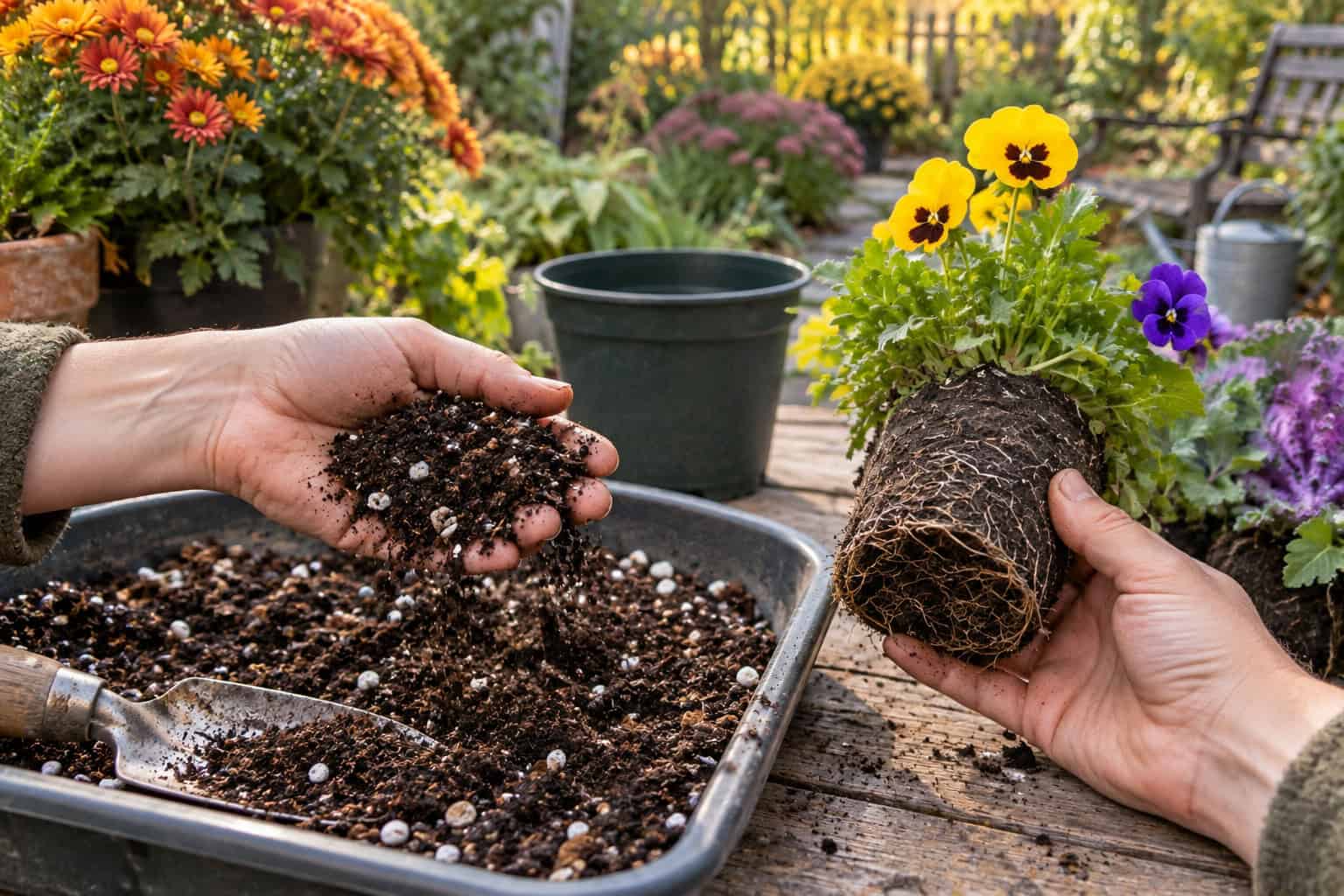
Remove the old planting and loose plant remnants. Examine the remaining media. A reusable batch should still have the physical qualities needed in a container, including useful aeration and drainage. A potting mix is doing a structural job around the roots, not simply occupying the space beneath the plant.
If you plan to keep a batch, label it with its history and intended use. An anonymous sack marked “soil” makes you repeat the decision in spring without the evidence you have now.
Physical breakdown can change the answer
Potting media change as their organic ingredients decompose. Illinois Extension notes that repeated use can reduce drainage and aeration enough to make replacement necessary.
Look for that change without pretending the inspection is a laboratory test. Does the material still feel open and loose, or has much of it collapsed into a dense mass? Did the container’s watering behavior change markedly? Is the remaining volume mostly a tight network of old roots?
A handful cannot certify that a mix is safe or well drained. It can help you recognize a batch that no longer resembles useful container media. Do not keep poor structure simply because the plants looked reasonably healthy before the season ended.
Likewise, do not try to solve every problem by adding a scoop of compost. A universal amendment recipe ignores the old mix, the next plant, and the container. Where reuse is appropriate, restore missing volume with a suitable fresh product and assess the complete mixture again when planting.
Our container-gardening guide explains the wider relationship between growing media, drainage, and watering. Reuse should support those requirements.
Keep suspect material on its own route
Disease, persistent pests, or possible chemical contamination deserves a separate decision. Appearance alone does not settle it. A batch can look pleasantly crumbly and still have a history that makes reuse unwise.
Seek guidance appropriate to the actual problem from your local extension office, waste service, or product supplier. Explain what grew there and what went wrong. The answer may differ for a diagnosed plant disease, a pest infestation, or a contamination concern.
Do not scatter suspect mix through other pots while deciding. Avoid sending it to a different part of the garden as though changing locations solves the uncertainty.
A home compost pile is not a guaranteed sanitation system. Oregon State explains that weed seeds and disease organisms may survive ordinary composting. Material that needs a disposal plan should not quietly become “finished compost” in your records.
This sorting routine does not require oven baking or a bleach drench. Those treatments introduce their own practical problems and do not replace identification of the original issue.
| History and condition | End-of-season decision |
|---|---|
| Known healthy plants; useful structure remains | Consider keeping separately for suitable outdoor ornamental containers |
| Known healthy plants; media have broken down | Replace the media used in pots; consider other uses only with appropriate guidance |
| Disease, persistent pests, contamination, or uncertain decline | Isolate the batch and seek a problem-specific reuse or disposal answer |

Store the useful batch so its record survives
Clean empty containers and put them away separately from plant debris. A pot with drainage holes blocked by roots needs that attention before its next planting, regardless of what you decide about the old mix.
Keep saved material in a sound, labeled container where you can inspect it and where runoff will not wash it into an unwanted place. Do not pack a wet slurry into a sealed bin and assume storage improves it. Follow the guidance for any fresh media you add, too.
Attach the note to the container, rather than relying on a memory of which tote came from which pot. “Healthy annual flowers; saved for outdoor use; autumn 2026” tells you more next spring than a careful-looking pile with no history.
Make the final decision before you plant
Saving a batch in autumn is permission to assess it again, not a commitment to use it. Spring may bring a different crop, a different container, or signs that the stored material is no longer useful.
Check the record, inspect the mix, and select media suited to the new planting. Use fresh material where the risk or the plant warrants it.
The useful saving is the batch you can identify and use confidently. Sort before you combine, keep the evidence with the material, and let a questionable pot remain a questionable pot until you have a better answer.


