
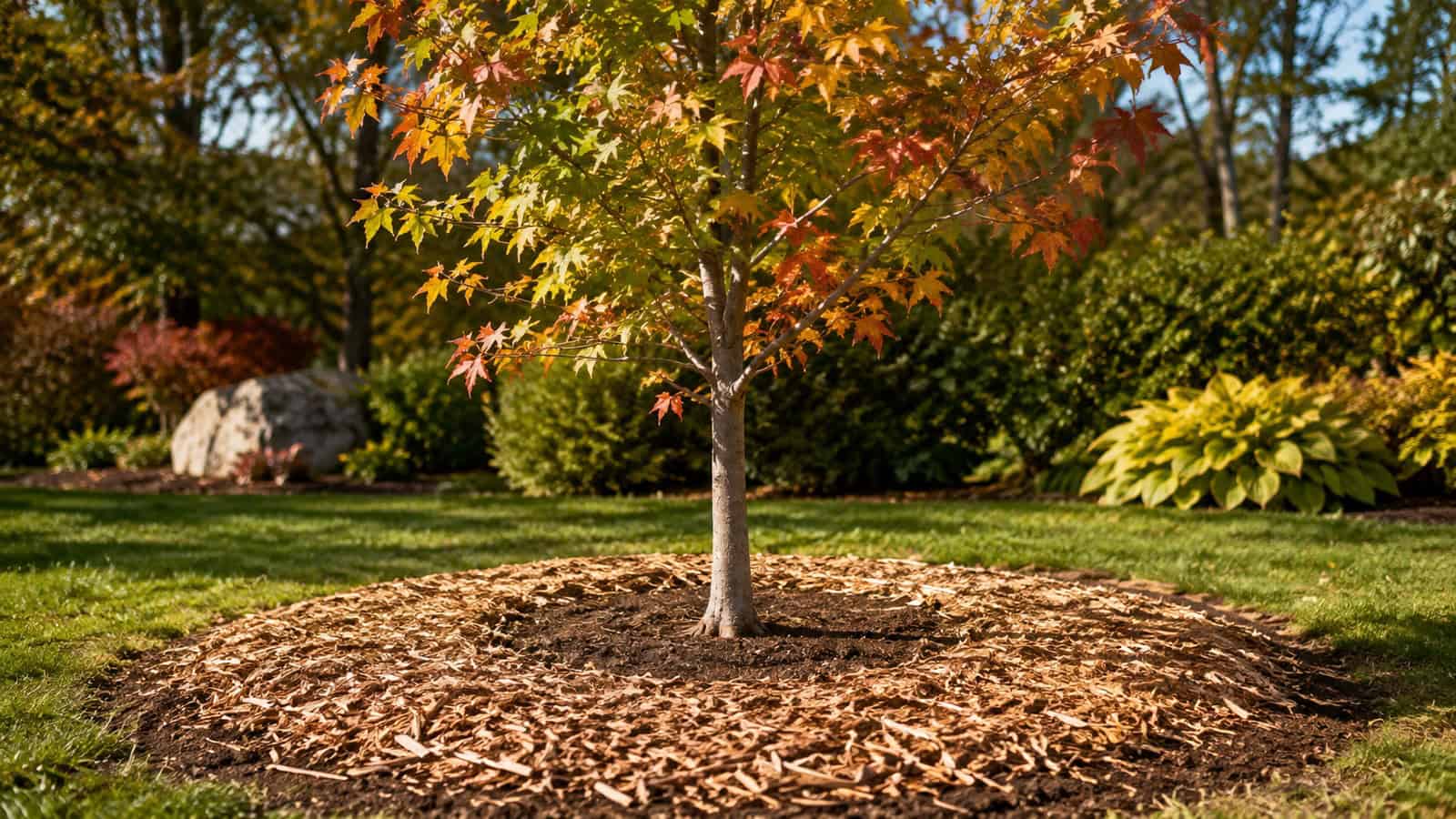
Fall is often an excellent tree planting season because air is cooler and soil can still support root growth. But “plant in fall” is not a command to put every nursery tree in the ground on the last workable weekend. A good decision depends on the planting site, the tree’s condition, the remaining root-establishment time, and the care that can be provided before the soil freezes.
A healthy container grown tree in workable soil can be planted successfully in early fall. A stressed, marginally hardy, root bound tree headed for a wet site is a different purchase and a different risk. These three red flags are reasons to slow down.
Red flag 1: the site does not drain
Do not plant a tree into a hole that holds water long after rain or irrigation. Roots need oxygen as well as moisture, and a soggy planting hole can become a bathtub around the root ball. Test the site, observe it after a storm, and correct the drainage issue or choose a more suitable species and location. Adding a little gravel to the bottom of a hole does not fix an entire poorly drained soil profile.
Fall moisture is useful only when it can move through the root zone. Plant at the proper depth, with the root flare at or slightly above the surrounding grade, backfill with the native soil, and mulch broadly but lightly. Keep mulch away from the trunk.

Red flag 2: the tree has too little runway
Root establishment takes time. A large tree planted late in a short season or high elevation site may not have enough mild soil conditions to begin settling in before a freeze. The same concern applies to a species that is marginally hardy for the location or one placed in a wind exposed, south or west facing stress site. Do not assume a late calendar date is safe simply because the soil is not frozen today.
Check the tree’s expected hardiness, local first freeze pattern, elevation, and the likely microclimate. If planting is still chosen, water consistently while conditions permit and make a plan to protect the root zone with a proper mulch ring. A newly planted tree may need aftercare well beyond its first fall; establishment commonly takes years, especially for larger stock.
Red flag 3: the nursery stock is already stressed
Inspect before buying. Choose a tree with intact bark, healthy foliage appropriate to the season, a visible root flare, and no signs of pest, disease, or drought stress. Slide a container grown tree partly from its pot if the nursery allows. Healthy fine roots are generally firm and light colored; a dense mass of circling roots, black slimy roots, or roots escaping every drainage hole means the plant needs correction or replacement.
Container roots that have turned in circles tend to continue that pattern in the ground. Before planting, remove the pot and correct circling roots by teasing, making vertical cuts, or shaving the outer root mass as appropriate for the tree and root system. Never plant a tree still inside a plastic nursery pot.

When fall planting is the right call
Move ahead when the tree is healthy, the soil is workable and drains, the species fits the site, and there is enough time and water for the root ball to settle before a freeze. Dig a hole no deeper than the root ball and wider enough to allow roots to expand into loosened surrounding soil. Set the root flare where it will remain visible after planting, water deeply to settle the soil, and apply a 2 to 4 inch mulch ring that does not touch bark.
After planting, check the root ball separately from the surrounding soil. Container mixes can dry differently than native soil. Keep the tree watered through dry fall weather until the ground freezes, but avoid keeping it constantly saturated. Protect from mechanical injury and browsing where those risks are real.
How to hold a purchased tree until spring
If red flags make spring safer, a container grown tree can often be held temporarily in a protected outdoor location. Keep it out of drying wind and strong afternoon sun, check the root ball frequently, and water when it begins to dry; container media can dry much faster than garden soil. Do not keep it standing in a saucer or cover it so tightly that water cannot drain.
For a longer delay, ask the supplying nursery for species specific overwintering advice. Containers expose roots to colder temperatures than roots in the ground, and a tree’s hardiness rating does not automatically make its containerized root ball winterproof. In some climates, heeling a container or root ball into protected mulch or soil is appropriate; in others, a nursery can overwinter it more reliably. A temporary holding plan should preserve a healthy root system, not turn a fall purchase into a neglected porch decoration.

The useful fall decision
Plant now when the tree, site, soil, and calendar all cooperate. Wait when drainage is poor, cold is too close for the site, or the tree is already compromised. The planting date matters, but the root environment and aftercare decide whether the tree gets the spring start it was bought for.


