

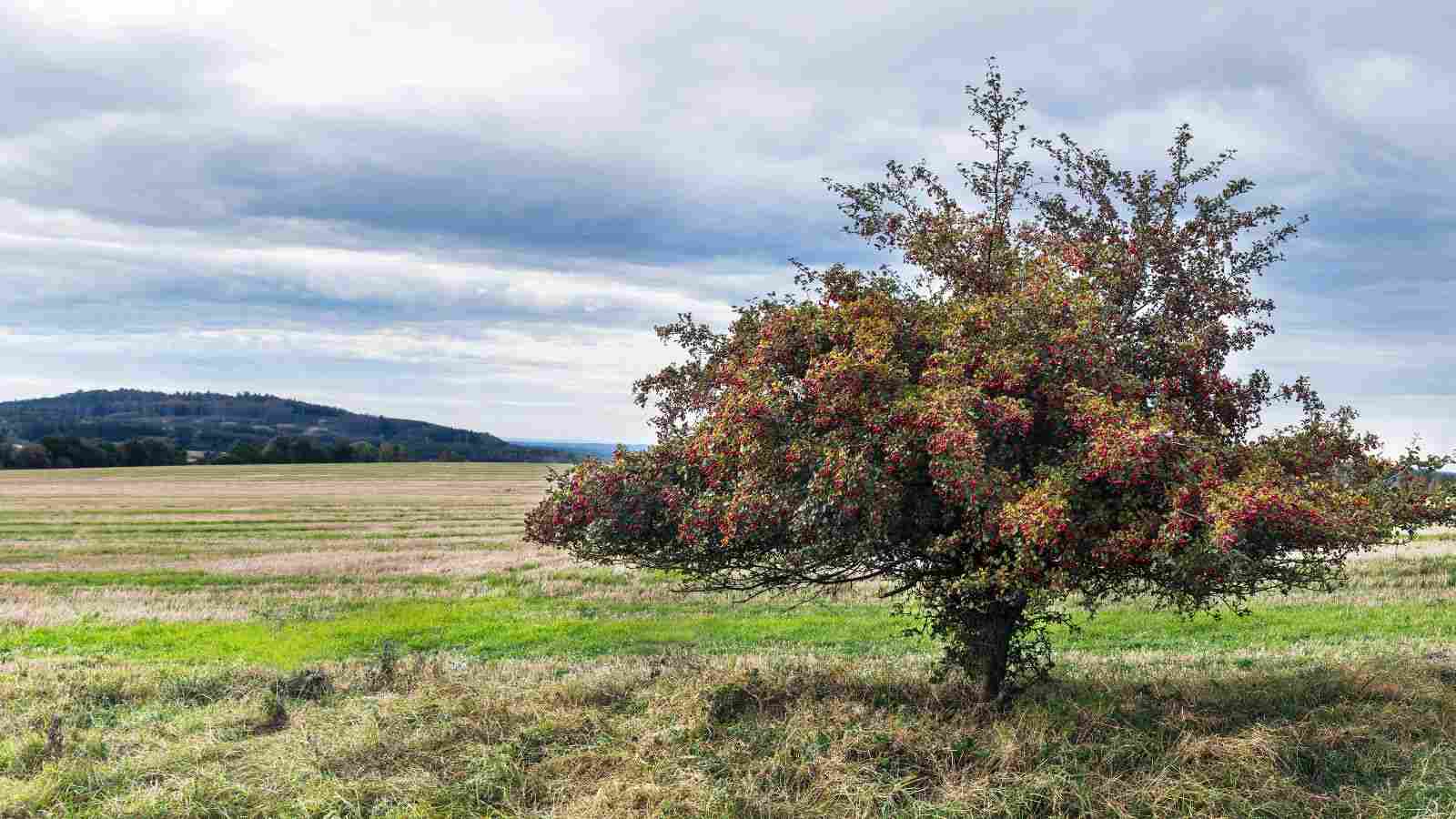
Hawthorn trees, belonging to the Crataegus genus, are deciduous trees or shrubs that cast a veil of mystique in woodlands. Their bark, often grey or brown, forms a rough exterior that conceals their true charm. Hawthorns are modest in stature, usually reaching 15 to 40 feet in height, with thorns adorning their branches, serving as nature’s sentinels. Their leaves are serrated and alternate, exuding a sense of unspoken elegance. What makes them truly captivating are the small, aromatic flowers they bear, followed by vivid red berries that glimmer like rubies in autumn. Its flowers appear in May, giving the hawthorn another name – maythorn. You may find many single hawthorns on farmland.
One cannot fully grasp the allure of hawthorn trees without delving into their unique characteristics. Bursting with symbolism and intrigue, these trees have been associated with protection and enchantment throughout history. Their thorns serve as both a deterrent to passersby and a safeguard for the tree, much like a knight’s armor. Hawthorns adapt to various environments, showcasing resilience and flexibility. Moreover, their intricate branches and clusters of flowers make them a haven for songbirds, adding an element of life and melody to any landscape.
Hawthorn trees come in many species, each with its distinct charm. From the common English hawthorn (Crataegus monogyna) to the majestic Washington hawthorn (Crataegus phaenopyrum), the diversity in types mirrors the vast expanse of human imagination. These trees can be found in various regions globally, with a significant presence in Europe, North America, and Asia. Whether nestled in an English hedgerow, standing proudly in an American park, or gracing a Chinese landscape, hawthorns have made their mark.
Throughout history, hawthorn trees have been interwoven into the tapestry of human culture. Their berries, known for their high vitamin C content, have been used in traditional medicine for centuries. In folklore, hawthorns are believed to be a portal to the mystical realm, and their blossoms were often used in Maypole dances and wedding ceremonies, symbolizing purity and happiness. The wood of the hawthorn tree is hard and durable, making it ideal for crafting tools, while its thorny branches were once fashioned into cudgels for protection.
As a master gardener, I’ve spent years studying the fascinating hawthorn tree. In this concise guide, I’ll provide essential insights about hawthorn trees, from their unique characteristics to simple care tips for successful cultivation.
Botanical Name: Crataegus
Common Name: Hawthorn Tree
Family: Rosaceae
Plant Type: Deciduous Tree or Shrub
Hardiness Zones: 4-8
Sun Exposure: Full Sun to Partial Shade
Soil Type: Well-drained, Loamy Soil
Soil pH: 6.0-7.5 (Slightly acidic to slightly alkaline)
Maturity: 5-10 years
Height: Ranges from 15 to 40 feet (4.5 to 12 meters)
Spacing: 10 to 15 feet (3 to 4.5 meters) apart.
Bloom Time: Spring, typically in May.
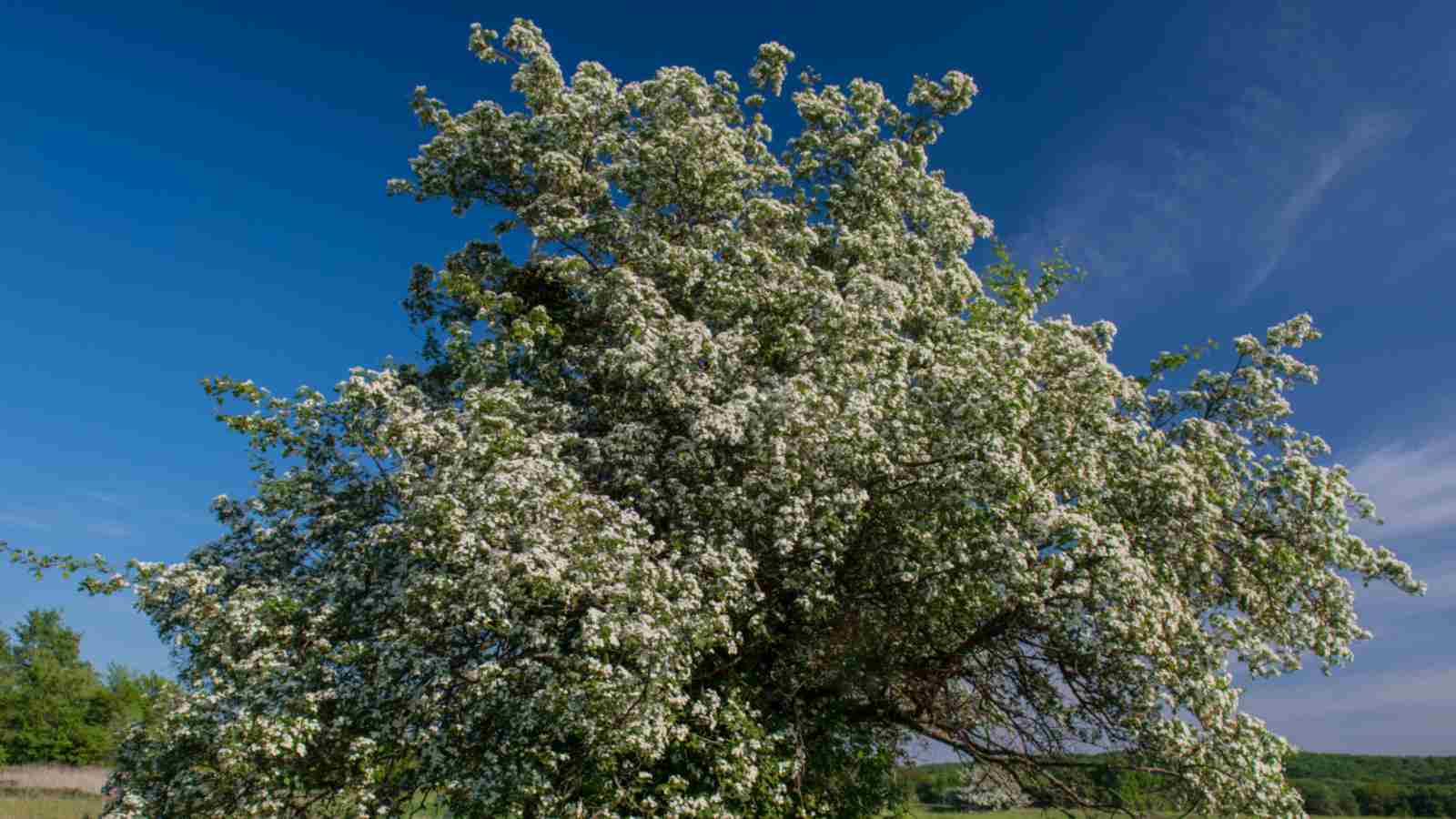
Flower Color: White or Pink
Native Area: Europe, North America, and Asia.
Hawthorn Tree Care
Caring for hawthorn trees involves a blend of appreciation for their natural beauty and some straightforward steps to ensure their health and vitality. These versatile trees thrive in various environmental conditions and can be a wonderful landscape addition.
When considering hawthorn tree care, the first step is proper planting. Choose a location with well-drained soil, as hawthorns do not tolerate waterlogged roots. Plant them in an area that receives full sun to partial shade, allowing them to bask in the sunlight for at least six hours a day.
While hawthorn trees are relatively drought-resistant once established, they benefit from regular watering during their initial years. Keep the soil consistently moist but not waterlogged. In hot, dry weather, providing extra water can be especially helpful.

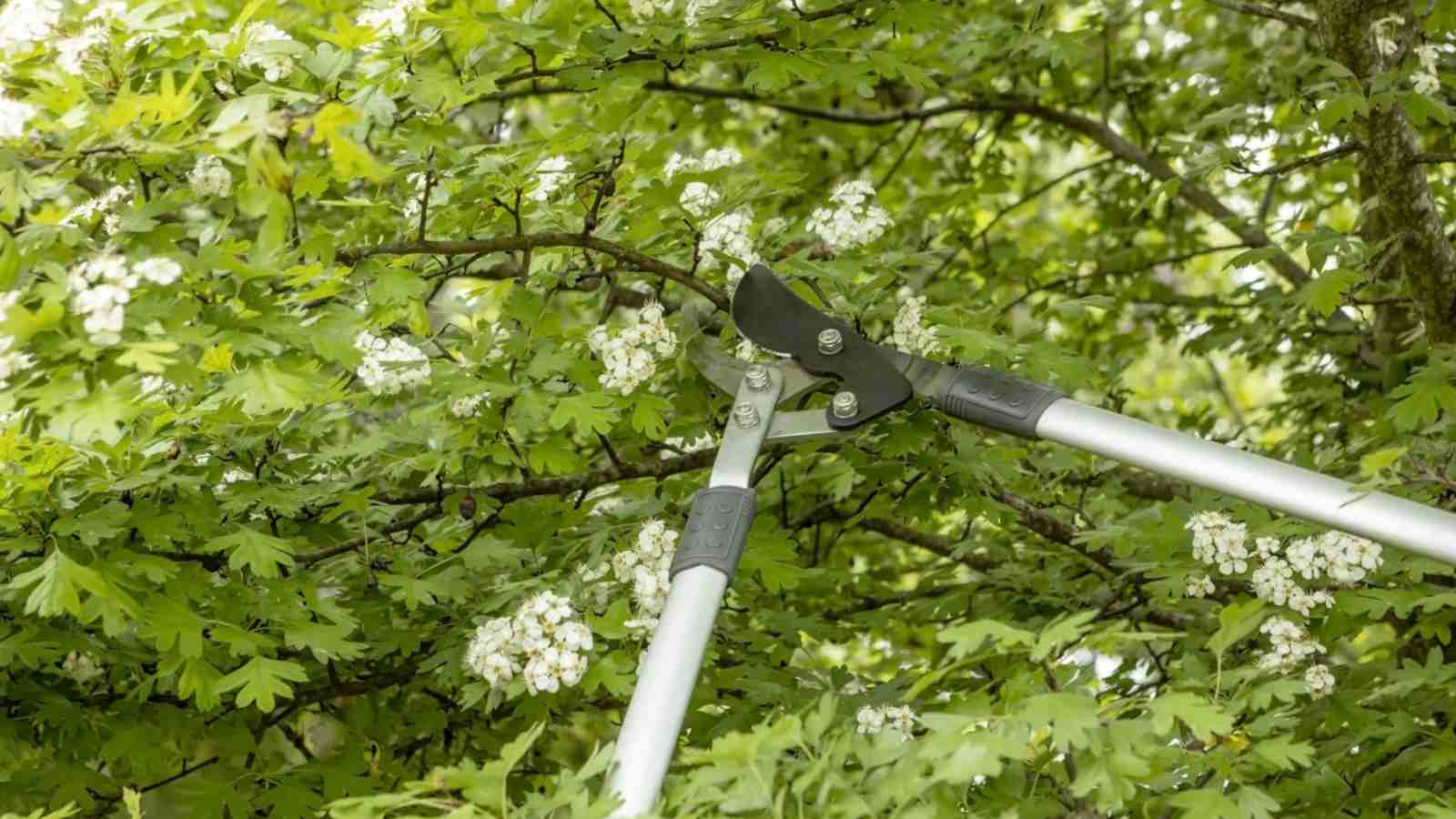
Pruning is essential to hawthorn tree care, helping maintain their shape and promoting air circulation. Trim dead or diseased branches and remove any unwanted growth. Prune in late winter or early spring before new growth begins.
Hawthorns typically don’t require heavy fertilization, but an annual application of a balanced, slow-release fertilizer can boost their growth and overall health. Apply the fertilizer in early spring.
Keep an eye out for common pests like aphids and spider mites. Additionally, hawthorn trees can be susceptible to fungal diseases. Early detection and treatment are key to maintaining their vitality.
Mulch around the tree’s base to conserve moisture, regulate soil temperature, and reduce competition from weeds. Be sure not to pile mulch against the trunk, which can lead to rot.
Light
These versatile trees can adapt to various lighting conditions but thrive best in full sun to partial shade. Giving them at least 6 hours of sunlight daily will ensure healthy growth and abundant blossoms. In regions with hot summers, partial shade during the hottest part of the day can be beneficial, preventing stress on the tree. It’s worth noting that proper light exposure not only encourages robust foliage and flowers but also enhances the tree’s ability to produce the vibrant red berries that hawthorns are known for.

Soil
Hawthorn trees thrive best in a well-drained, loamy soil. This soil type allows for adequate moisture retention while preventing waterlogging, which can harm the tree’s roots. Additionally, hawthorns prefer slightly acidic to slightly alkaline soil, with a pH range between 6.0 and 7.5. This pH range provides an ideal environment for nutrient uptake and overall growth. Ensuring that your hawthorn tree has the right soil foundation sets the stage for a robust and flourishing addition to your landscape.
Water
When it comes to water requirements, hawthorns typically thrive in well-drained soil. During their establishment period, which usually spans the first couple of years after planting, hawthorn trees benefit from consistent watering. Be sure to provide a deep soak about once a week, especially during dry spells. However, once established, hawthorns are relatively drought-tolerant and may not require frequent watering. It’s crucial to monitor soil moisture and adjust your watering schedule based on the tree’s specific needs and the local climate. Overwatering should be avoided to prevent root rot, as hawthorn trees prefer slightly drier conditions once they mature.

Temperature and Humidity
Hawthorn trees are known for their adaptability to various conditions but have limits. These hardy trees typically thrive in temperate climates, and they’re well-suited for hardiness zones 4 to 8, depending on the specific species. They can tolerate a variety of temperatures but prefer moderate conditions.
Regarding humidity, hawthorn trees are versatile and can adapt to different levels. However, they tend to prefer a moderately humid environment. If you’re in an area with very dry or humid conditions, hawthorns can still grow but may require extra care to ensure their well-being. Providing adequate watering and mulching can help maintain the right moisture levels around the root zone, promoting a healthy and happy hawthorn tree.
Fertilizer
Generally, a balanced, slow-release fertilizer applied in the early spring can benefit the tree. Ensure not to over-fertilize, as excessive nitrogen can lead to excessive foliage growth at the expense of flowers and berries. Always follow the manufacturer’s instructions and consider having your soil tested to determine the specific nutrient requirements of your hawthorn tree. Fertilizing at the right time and in the right amounts can contribute to lush foliage, abundant blossoms, and a healthy hawthorn tree.
Pruning
It’s typically best to prune hawthorn trees during late winter or early spring while they’re still dormant. When pruning, maintain the tree’s natural shape while removing crossing or crowded branches. Remember that hawthorns can be susceptible to fire blight and other diseases, so it’s essential to promptly remove infected branches to prevent the spread of illness within the tree. Remember to use sharp, clean tools to make clean cuts and reduce the risk of infection. Proper pruning enhances the tree’s appearance and promotes its overall health and longevity.
Overwintering
These hardy trees are well-adapted to temperate climates, but some precautions can help them thrive during the cold season. When preparing for winter, it’s advisable to stop fertilizing your hawthorn tree in late summer. This encourages the tree to enter a state of dormancy, making it less vulnerable to frost damage. To protect young or recently planted hawthorns, consider applying a layer of mulch around the base to insulate the roots from extreme temperature fluctuations. In areas with heavy snowfall, gently brush accumulated snow from the branches to prevent breakage.

Types of Hawthorn Trees
Hawthorn trees belong to a diverse genus, with numerous species and cultivars offering unique characteristics. Here are some notable ones:
-
Common Hawthorn (Crataegus monogyna)
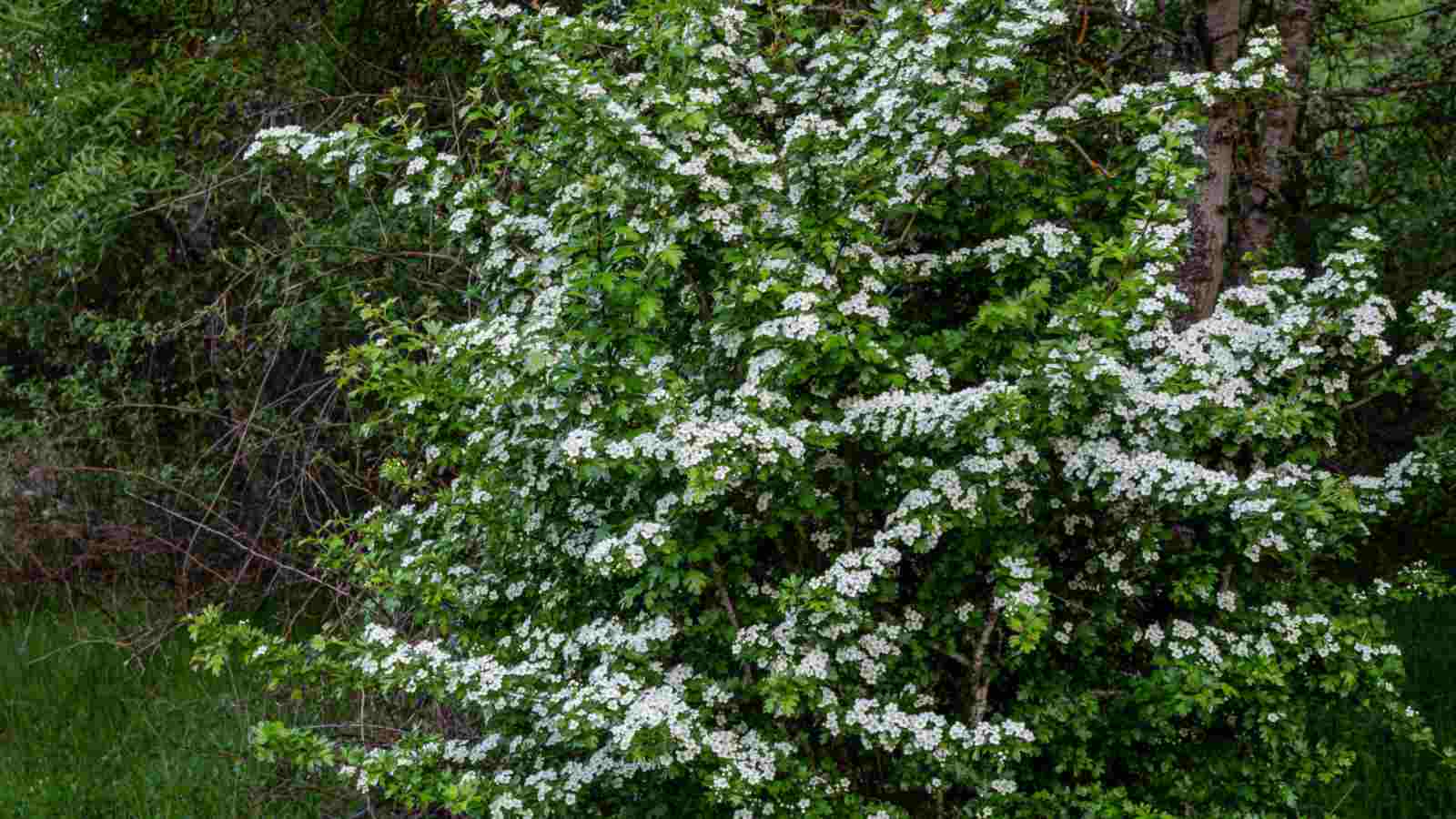
Commonly found in Europe, this species features deeply lobed, glossy green leaves and clusters of white or pink flowers in spring. It produces small, red berries that birds cherish.
-
Washington Hawthorn (Crataegus phaenopyrum)
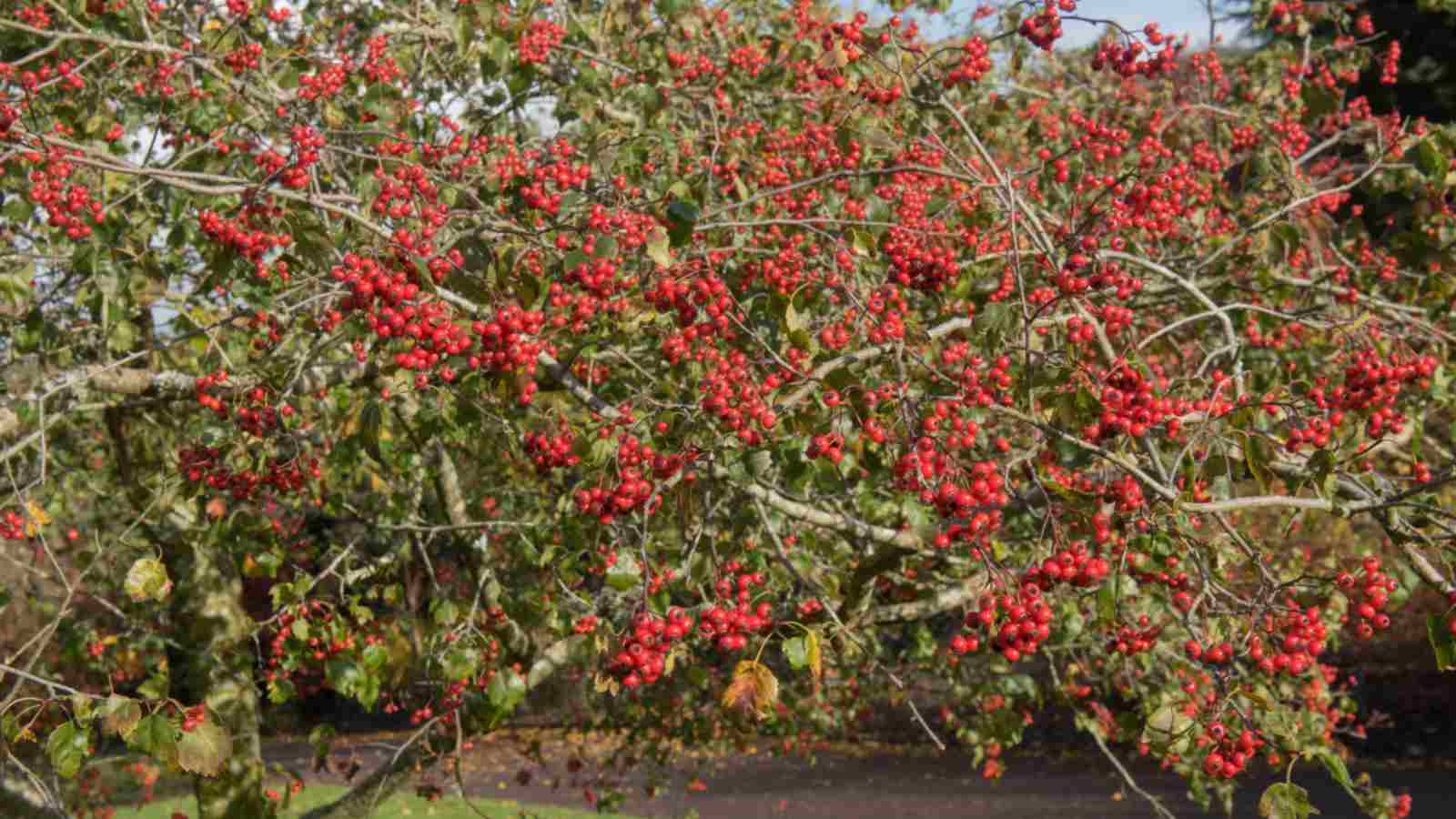
Native to North America, the Washington Hawthorn boasts lustrous green foliage, bright red berries, and striking white flowers in late spring. It’s known for its dense and thorny branches.
-
Cockspur Hawthorn (Crataegus crus-galli)

A native of North America, this hawthorn variety is renowned for its curved thorns resembling a rooster’s spurs, hence the name. It exhibits white flowers and produces vibrant red fruit. A thornless variety is also available.
-
Midland Hawthorn (Crataegus laevigata)
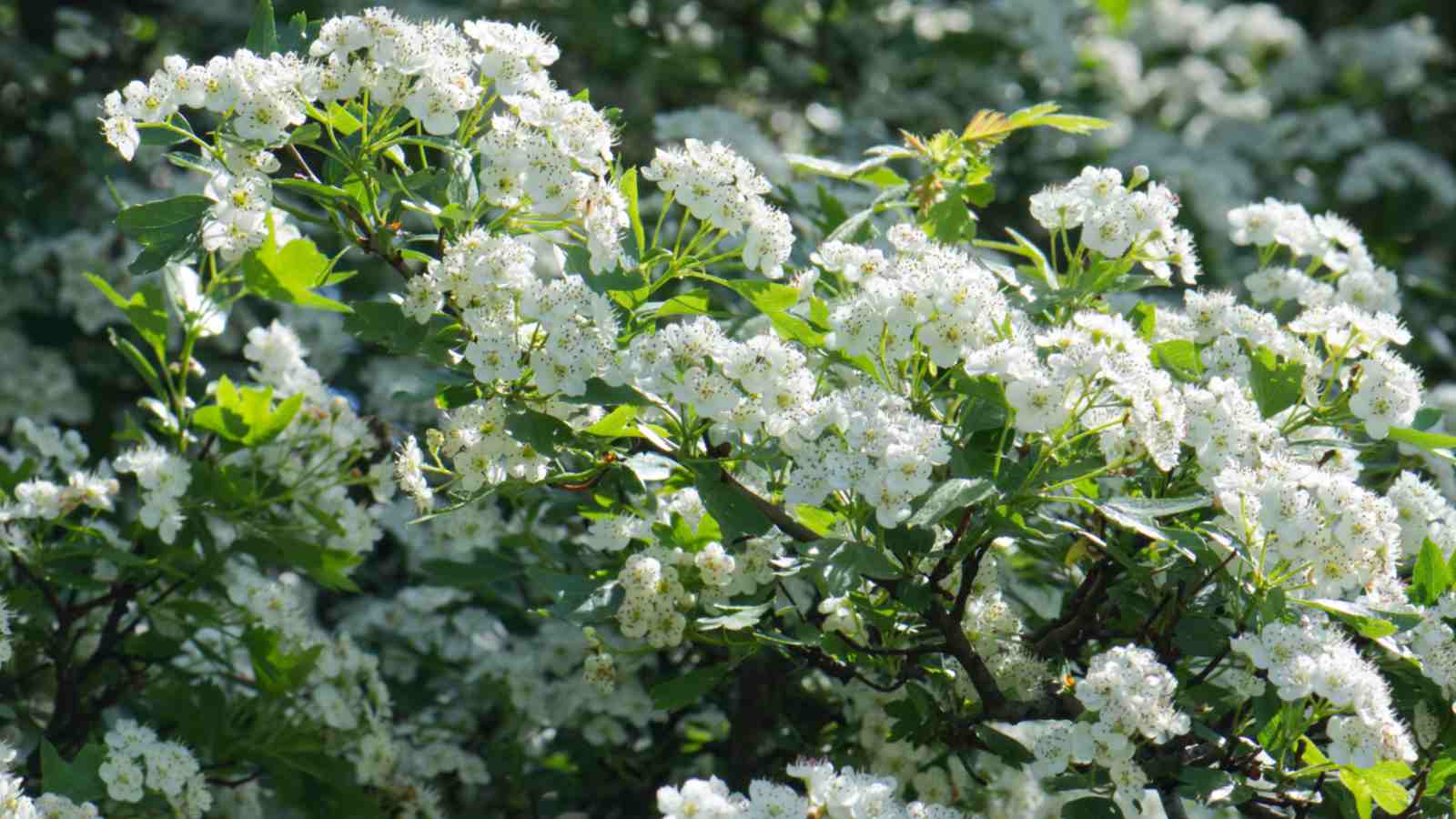
This European native hawthorn species is distinguished by its dark, deeply lobed leaves and fragrant pink or white flowers. Its compact form and attractive foliage make it popular for ornamental use.
-
Chinese Hawthorn (Crataegus pinnatifida)

Hailing from China, this species is also known as Chinese haw or mountain hawthorn. It is often used for its fruit in culinary applications and features pinnately lobed leaves and small, fragrant white or pink flowers. Its red fruit, known as “haw,” is used in traditional Chinese dishes and herbal remedies.
-
Russian Hawthorn (Crataegus ambigua)

A resilient species from Central Asia, Russian Hawthorn showcases unique characteristics, including grayish-green leaves and yellow to orange fruit. It is particularly tolerant of challenging growing conditions.
-
Paul’s Scarlet Hawthorn (Crataegus laevigata ‘Paul’s Scarlet’)

This cultivar is celebrated for its stunning double pink blossoms, making it a favorite in ornamental gardens. It’s a small tree that adds a touch of elegance to any landscape.
-
Autumn Glory Hawthorn (Crataegus spp. ‘Autumn Glory’)
Noted for its resistance to mildew, the Autumn Glory Hawthorn is a reliable choice for gardens. It produces clusters of white flowers and attractive red fruit, making it a picturesque addition to your landscape.
-
Large-sepalled Hawthorn (Crataegus rhipidophylla)
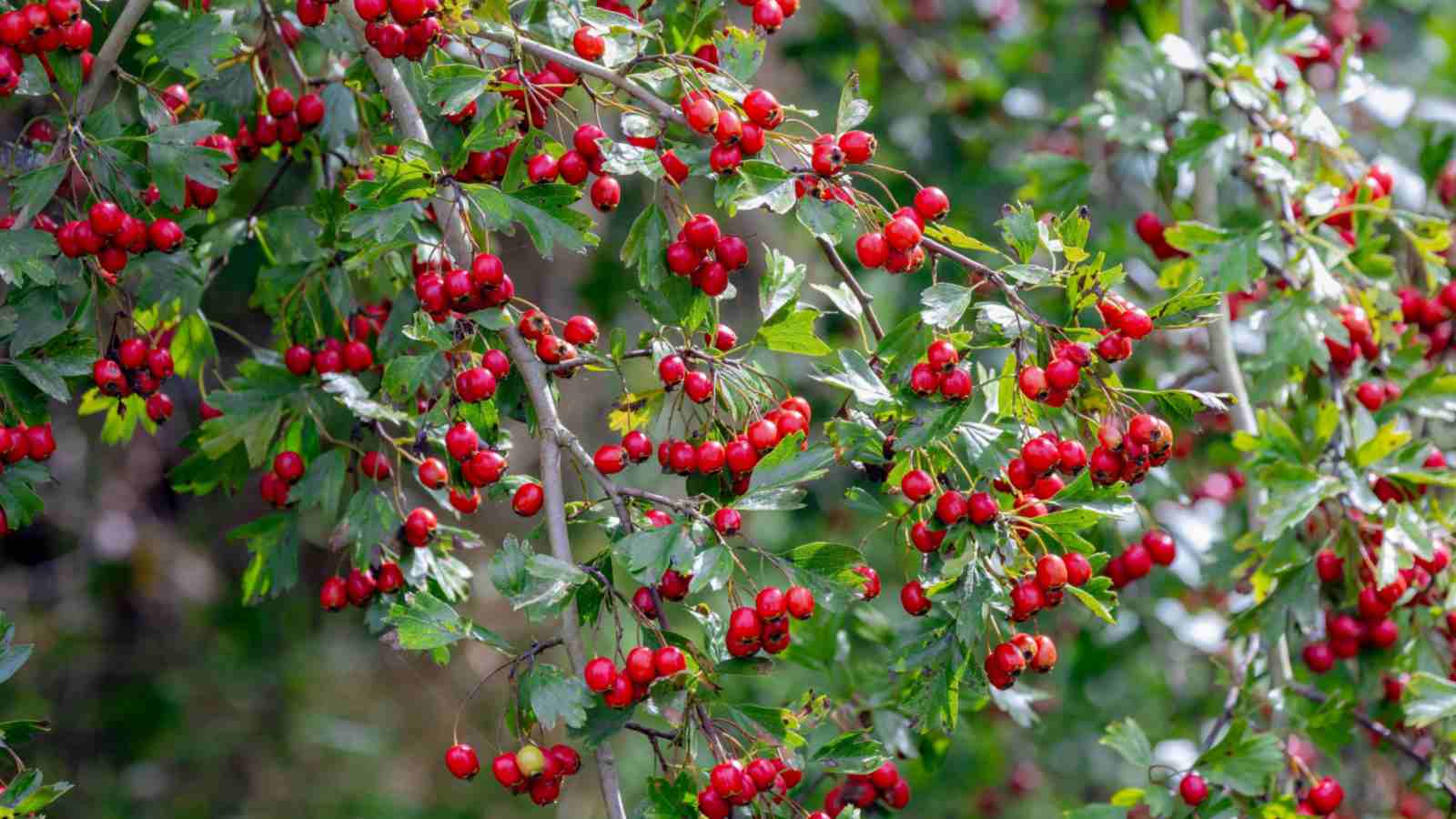
This hawthorn species is recognized for its unusually large sepals, which encircle the white or pink flowers. It’s a captivating variety that contributes to the hawthorn’s rich diversity.
How to Plant Hawthorn Tree From Seed
Planting a hawthorn tree from seed can be rewarding, allowing you to watch a majestic tree grow from a tiny kernel of life. In this guide, we’ll take you through the steps to sow hawthorn tree seeds successfully. Let’s get started!
Step 1: Preparing the Seed
Securing the right seeds is the first step in growing a hawthorn tree from seed. You can obtain them from mature hawthorn trees, typically in the wild or your local area. Once you have your seeds, it’s essential to prepare them for planting. Start by gently scrubbing off any remaining flesh from the seed. Soaking the seeds in water for 24 hours can help soften the seed coat and improve germination. After this, it’s time to move on to planting.
Step 2: Planting the Seed
Hawthorn seeds are best sown in the fall, allowing them to experience the natural temperature fluctuations of the changing seasons. Choose a well-draining soil with a slightly acidic to slightly alkaline pH level. Create a small furrow in the soil and plant the seeds at a depth of about half an inch, covering them with soil. Consider placing a mesh or protective barrier over the planting area to protect the seeds from hungry birds or rodents. Patience is key, as hawthorn seeds can take several months to germinate.

Step 3: Providing the Right Conditions
Once your seeds have germinated, providing the right growing conditions is essential. Hawthorn trees thrive in full sun or partial shade, so choose a suitable location. Keep the soil moist but not waterlogged during the tree’s early stages. As the hawthorn tree grows, it may need thinning to encourage proper development. Prune any weak or crossed branches to maintain a sturdy, well-shaped tree.
Step 4: Addressing Common Pests and Problems
Hawthorn trees are generally resilient but may face a few common pests and issues. Keep an eye out for aphids, caterpillars, and leaf spot diseases. To combat these, regular inspections and occasional pesticide applications may be necessary. If you notice any issues, don’t hesitate to address them promptly to ensure your tree’s health and vitality.
Step 5: Flowering, Fruiting, and Aftercare
The ultimate reward of growing a hawthorn tree from seed is the sight of beautiful white or pink flowers in the spring, followed by vibrant red berries in the fall. Ensure your tree receives adequate sunlight, and you’ll be treated to a magnificent display. After the initial years, your hawthorn tree will become self-sufficient, requiring minimal care. Regular pruning, cleaning up fallen leaves and fruit, and enjoying the natural beauty of your tree are the primary tasks during this phase.

How to Propagate Hawthorn Tree
Propagating hawthorn trees can be a patient gardener’s delight, as this process may take some time, but the rewards are certainly worth it. In this guide, we’ll walk you through the steps of propagating hawthorn trees from cuttings, sharing practical advice and insights to make the process as rewarding as possible.
Selecting a Proper Specimen
The first step in propagating hawthorn trees is selecting a healthy and well-established hawthorn tree as your parent plant. Look for a specimen that exhibits desirable traits such as vibrant foliage, an attractive structure, and a good track record of disease resistance. This parent tree will be the source of the cuttings you’ll use to propagate new trees, so choose wisely.
Cutting Preparation
With your parent hawthorn tree selected, the next step is to prepare cuttings. Winter is ideal for this, as the tree is dormant, making it easier to work with. Take cuttings of young, semi-hardwood stems, roughly 6-8 inches in length. Trim them just below a leaf node, ensuring the cut is clean and slanted. Remove any leaves from the lower portion of the cutting, leaving a few leaves at the top. This cutting will serve as the basis for your new hawthorn tree.
Rooting
Rooting your hawthorn cuttings is a pivotal stage in the propagation process. Fill a container or pot with a well-draining, sterile potting mix. Insert the cuttings into the soil, ensuring at least one leaf node is below the surface. Enclose the container in a plastic bag to create a mini greenhouse effect, maintaining high humidity. Place it in a cool but bright location. Over the next few weeks or months, the cuttings will develop roots, and you’ll see signs of growth.
Care and Maintenance
While your hawthorn cuttings develop into young trees, provide them with consistent care. Keep the soil consistently moist but not waterlogged. Ensure they receive adequate light but protect them from harsh sunlight. You can transplant them into larger containers or your garden as they grow, following proper spacing guidelines for hawthorn trees.
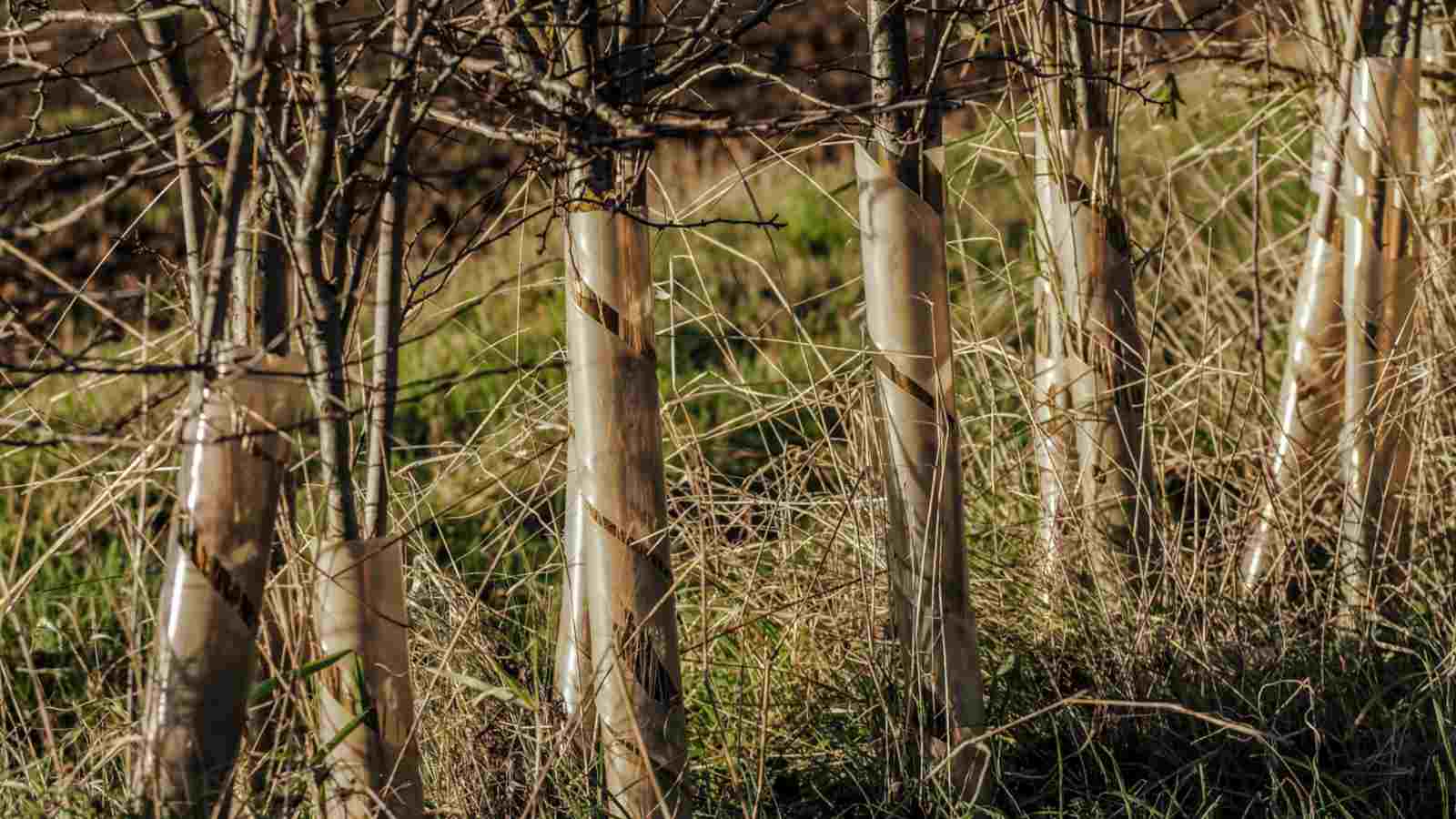
Finding a Suitable Location
Once your hawthorn tree cuttings have developed into young trees, finding them a permanent home is time. Choose a location with full sun to partial shade, ensuring the soil is well-draining. Space the trees according to the specific hawthorn species’ requirements, as they vary in size.
Monitoring for Pests and Diseases
Watch for potential pests and diseases as your newly propagated hawthorn trees establish themselves. Aphids, scale insects, and fungal diseases like rust can be common issues. Early detection and appropriate action, such as pruning and applying organic treatments, can help ensure the health and vigor of your new trees.
Common Uses of Hawthorn Tree
The hawthorn tree is a versatile and valuable addition to the natural world, offering a range of uses and significance that extend far beyond its aesthetic appeal. Let’s explore some of the many ways hawthorn trees enrich our lives and ecosystems.
Aesthetic and Ornamental Value
One of the most obvious uses of the hawthorn tree is its aesthetic and ornamental value. With its elegant form, lush foliage, and spring blossoms, hawthorns are often planted in gardens, parks, and urban landscapes to enhance their beauty. The vibrant red berries in the fall and early winter contrast the backdrop of the changing seasons. Whether used as a solitary specimen tree or incorporated into hedges and hedgerows, hawthorns bring an enchanting and picturesque charm to any environment.
Wildlife Habitat and Food Source
Hawthorn trees are champions of biodiversity, providing essential habitat, shelter, and sustenance for wildlife. The dense branches and thorny twigs offer bird protection and nesting sites, while the blossoms attract pollinators like bees and butterflies. However, the most remarkable contribution is the hawthorn’s berries, which serve as a vital food source for various animals. Songbirds, in particular, rely on these berries during the winter months, making hawthorns a lifeline for wildlife.

Cultural Significance and Folklore
Hawthorn trees have deep-rooted cultural significance in many parts of the world. In Celtic traditions, the hawthorn is associated with Beltane, a festival celebrating the arrival of summer. It’s also considered a symbol of protection and is often planted near homes. In some cultures, hawthorn trees are linked to love and fertility. The practice of decorating hawthorn branches and Maypole dances during May Day festivities showcases their cultural importance.
Medicinal Uses
Hawthorn has a long history of medicinal use. It is known for its heart-healthy properties and is used in herbal medicine to support cardiovascular health. The berries, leaves, and flowers are employed in various preparations, such as tinctures and teas. Before using hawthorn for medicinal purposes, it’s essential to consult a healthcare professional, as improper use can lead to adverse effects.
Craftsmanship and Woodwork
Hawthorn wood, known for its hardness and durability, has been used in traditional craftsmanship and woodwork. It is valued for creating tool handles, walking sticks, and intricate carvings. The dense wood is prized for its longevity and resilience, making it an excellent choice for functional and decorative items.

Common Pests and Plant Diseases for Hawthorn Tree
While hawthorn trees are known for their resilience, they aren’t entirely immune to pests and diseases. Being prepared and vigilant can go a long way in keeping these issues at bay. Let’s explore some common adversaries your hawthorn tree may encounter and how to deal with them effectively.
Aphid

Aphids, those tiny, pear-shaped insects, can sometimes find their way to your hawthorn tree. These little critters are sap-suckers and can appear in various colors. They feed on the tree’s vital juices, which can cause leaves to curl and distort. To tackle aphid infestations, consider introducing natural predators like ladybugs or spraying soapy water onto the affected areas. Pruning heavily infested branches can also help control their population.
Scale Insects

Scale insects are stealthy sap drainers, often mistaken for small bumps on your hawthorn’s branches. They secrete a protective covering that makes them challenging to target. Look for signs of sticky honeydew on the leaves or a black sooty mold to indicate their presence. Pruning and removing affected branches can help. Applying horticultural oil in early spring or late fall, when the insects are most vulnerable, can be an effective control measure.
Cedar Hawthorn Rust

Cedar hawthorn rust, a fungal disease, is another potential threat to your tree. It typically appears as small, bright orange, gelatinous growths on hawthorn leaves. Controlling cedar hawthorn rust involves managing alternate hosts, such as cedar trees, and pruning and disposing of infected branches. Ensuring good sanitation practices in your garden can help prevent its spread.
Fire Blight

Fire blight is a bacterial disease that can infect hawthorn trees. It appears as wilted, blackened branches, resembling the aftermath of a fire, hence its name. Pruning affected branches below the infected areas is the primary method of control. Be sure to disinfect your pruning tools to prevent further spread. In severe cases, applying antibiotics may be necessary.
Powdery Mildew

Powdery mildew is recognizable by its white, powdery coating on hawthorn leaves and stems. It’s a fungal disease that can hinder photosynthesis and weaken the tree. To combat powdery mildew, ensure your hawthorn tree has good air circulation and adequate sunlight. Regularly prune to remove infected growth, and consider using fungicidal sprays when needed.
Common Plant Problems and Solutions for Hawthorn Tree
As you nurture your hawthorn tree, you may encounter some common plant problems. While these issues can be frustrating, they are also opportunities to better understand your tree and enhance its health. Let’s explore these common hawthorn tree challenges and the solutions that can help you keep your tree flourishing.
Yellowing Leaves and Poor Growth
If you notice your hawthorn tree’s leaves turning yellow and stunted growth, it could be due to a lack of essential nutrients. Hawthorns, like many plants, require a balanced diet. The solution is simple: fertilize. Use a balanced, slow-release fertilizer to provide the necessary nutrients. Applying fertilizer in the early spring and late fall can work wonders.
Leaf Curl and Distortion
Leaf curl and distortion can be caused by aphid infestations. These tiny insects feed on the tree’s sap, causing leaves to pucker and curl. A solution is to introduce natural aphid predators like ladybugs into your garden. You can also create a homemade soapy water solution and spray it on the affected leaves. Remove heavily infested branches through pruning to reduce the aphid population.
Wilted, Blackened Branches
Wilted and blackened branches, resembling fire damage, may indicate the presence of fire blight, a bacterial disease. Prune the affected branches below the infection, making sure to disinfect your pruning tools. If the issue is severe, consider applying antibiotics to halt the spread.
Frequently Asked Questions
Are hawthorn tree berries poisonous to dogs?
Yes, hawthorn tree berries can be toxic to dogs if consumed in large quantities. While the small red berries are not typically considered highly poisonous, they contain compounds that can cause digestive issues, such as vomiting and diarrhea, in dogs. It’s best to prevent dogs from ingesting hawthorn berries and seek immediate veterinary attention if you suspect your dog has consumed a significant amount.
Are hawthorn trees good to have?
Hawthorn trees are generally considered good to have for various reasons. They offer several benefits, including their ornamental value with beautiful flowers and attractive red berries, which are visually appealing. Additionally, they provide a habitat for wildlife, serving as a food source for birds and insects. Some hawthorn species also have medicinal and culinary uses. However, choosing the right hawthorn variety for your specific landscaping needs is essential, as some species may have thorns or other features that could be less desirable in certain contexts.
Where do hawthorn trees grow?
Hawthorn trees have a widespread geographic range, growing in Europe, North America, Asia, and other regions. They thrive in temperate climates and can adapt to various soil types if the soil is well-drained. You can find hawthorn trees in woodlands, hedgerows, parks, and gardens in many parts of the world.
What do hawthorn trees look like?
Hawthorn trees typically have lobed, glossy green leaves with serrated edges. Their appearance can vary slightly depending on the species, but most produce clusters of fragrant white or pink flowers in the spring, followed by small red or orange berries in the fall. Hawthorn trees often have thorny branches, and their size can range from 15 to 40 feet, with some cultivars and hybrids being smaller.
What are the cons of hawthorn trees?
While hawthorn trees offer many advantages, there are a few potential drawbacks to consider. The thorns on some hawthorn varieties can make maintenance and pruning more challenging. The fallen berries can create a mess, and if ingested in large quantities, they can be harmful to pets. Additionally, the density of hawthorn branches may require regular pruning to maintain the tree’s shape and health.
Where are hawthorn trees found?
Hawthorn trees can be found in various parts of the world, primarily in Europe, North America, and Asia. They often grow in woodlands, hedgerows, roadsides, gardens, and parks. The specific hawthorn species and varieties found in a region may vary based on climate and local conditions.
How tall do hawthorn trees get?
Hawthorn trees’ height can vary depending on the species, growing conditions, and local climate. Generally, they range from 15 to 40 feet (4.5 to 12 meters) in height. Some hawthorn cultivars or hybrids may be smaller, making them suitable for smaller gardens or landscaping projects.
Other Tree Guides from Planet Natural:


